
Not every leaf can become a new plant
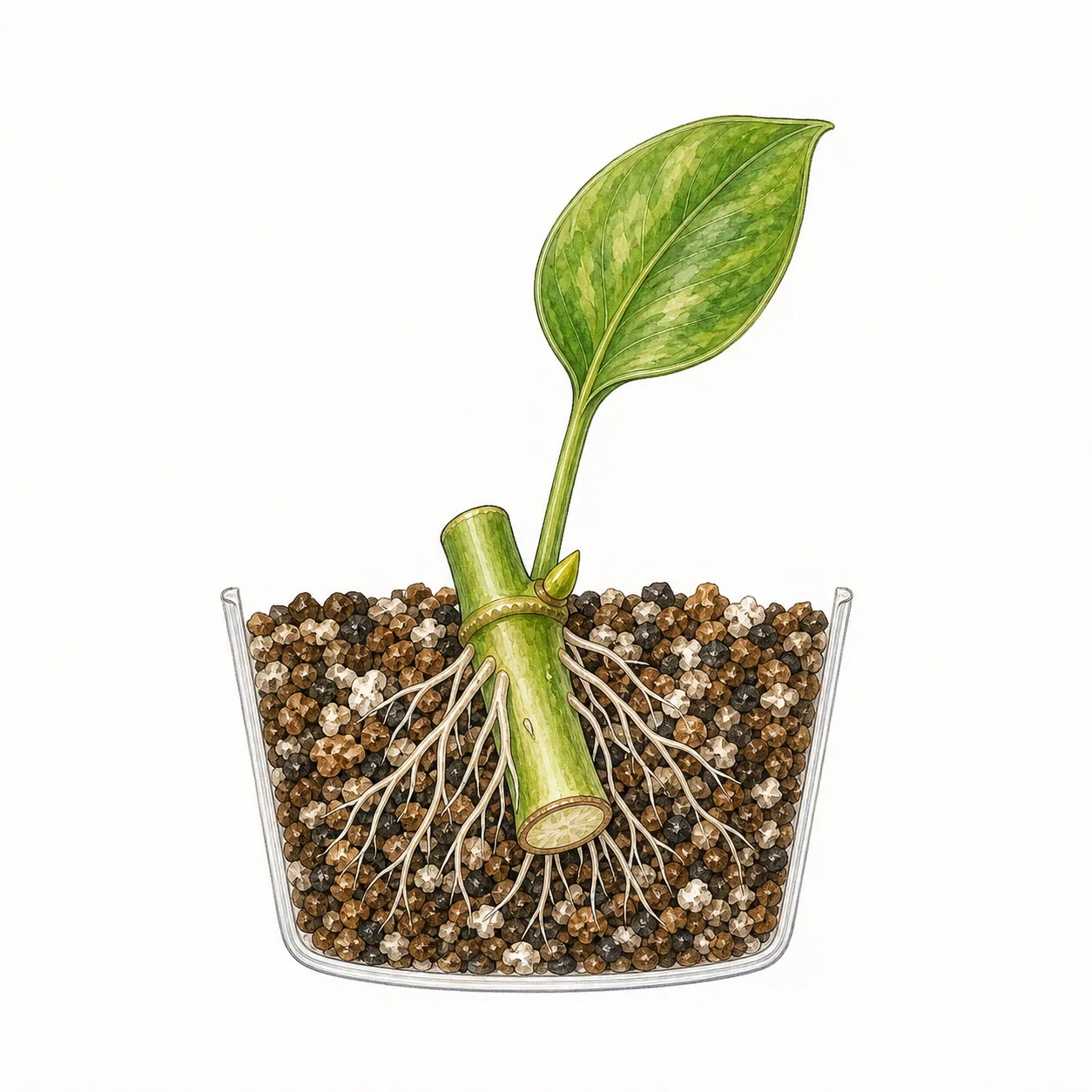
Cutting propagation uses part of a plant to grow a new plant. The easiest example is a stem cutting: a piece of stem is separated from the parent plant and placed in a suitable environment until it forms new roots.
This is not magic, and it does not work with every plant or every plant part. Cutting propagation uses the regenerative ability of living plant tissues. A cutting must stay alive long enough to rebuild the organs it is missing.
For a stem cutting, the piece may already have stem, leaves, nodes, and buds. What it lacks is an independent root system. Whether it can continue depends partly on whether new roots form before the cutting loses too much water or decays.
Cuttings and seeds start from different places
Seeds begin with an embryo formed through the reproductive process of flowering plants. Seedlings may differ from their parent plants because sexual reproduction reshuffles genetic material.
Cutting propagation starts with part of the parent plant, such as a stem, leaf, or root section. It is a form of asexual or vegetative propagation. In plain language, it uses plant parts that were already involved in growth, water movement, or light capture to form another plant.
Because the new plant comes from parent tissue, it often keeps the parent’s traits. But keeping traits does not mean guaranteed success, and one method cannot be applied to all plants.
New roots often form from places that were not roots
A useful term here is adventitious root.
An adventitious root is a root that forms from an unusual or non-root position, such as a stem, node, leaf, or cut surface. It is not an “abnormal” root. It describes where the root starts.
Stem cuttings are good examples. A stem piece may form roots from the cut end, stem surface, base, or node region. Once those roots can absorb water and anchor the cutting, the piece has a better chance of becoming independent.
Nodes and buds also matter. A node is a stem position where leaves, buds, or branches often occur. A bud can become a new shoot or leaf. In some foliage plants, a leaf without a node may produce roots but still lack a growth point for a complete new plant.
Cutting materials are not all the same
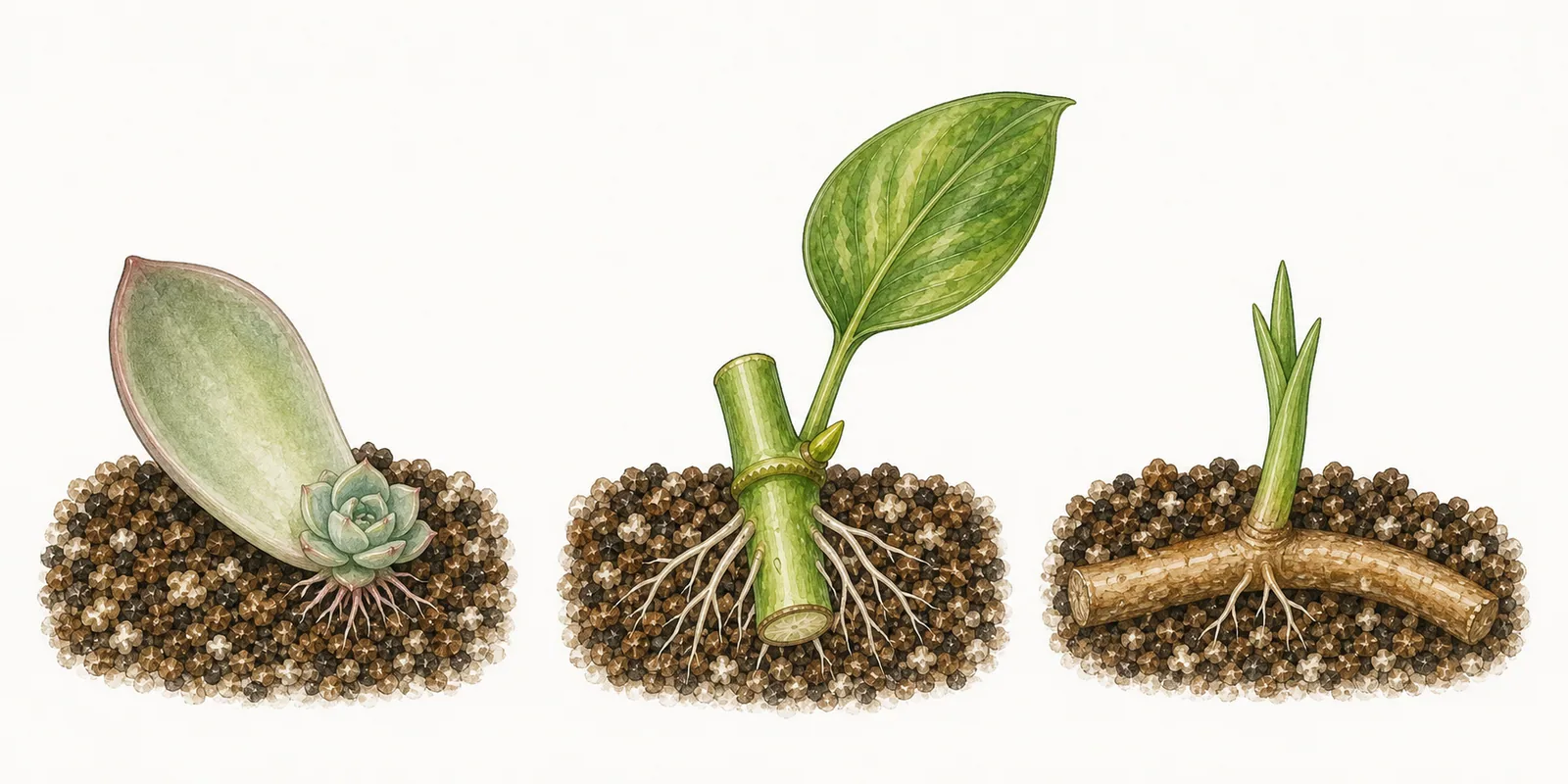
Entry-level cutting propagation can be grouped into three common material types.
Stem cuttings use a piece of stem or branch. This is common in many foliage plants, herbs, and some woody plants.
Leaf cuttings use a leaf, petiole, or leaf section. This works only for some plants and should not be generalized.
Root cuttings use a section of root that can form new shoots or roots in certain plants.
Water, air, and leaves must stay in balance
Cuttings are vulnerable because they are separated from the parent plant and temporarily lack a full root system. If they lose water too quickly, living tissues may not last until new roots form.
But moisture alone is not enough. Living cells near the cut surface and new roots also need oxygen. A medium that stays constantly waterlogged can become too air-poor. This is why cutting discussions often involve moisture, drainage, and aeration together.
Leaves also create a balance. They can receive light and make sugars, but they also lose water through transpiration. More leaves are not always better, and removing all leaves is not always better. The right balance depends on plant type and cutting material.
This article explains the principle and does not guarantee propagation success or provide a fixed formula.
Common confusions
- ✕ Cutting propagation simply means putting a piece in water.
- ✓ Water propagation is one possible method. The core idea is regenerating roots or shoots from plant parts.
- ✕ Every plant can be propagated from a leaf.
- ✓ Leaf cuttings work only for some plants.
- ✕ Seeing roots means the new plant is fully established.
- ✓ Root formation is one stage. The plant still needs to support new shoots, leaves, and stable growth.
- ✕ Asexual propagation only happens in advanced laboratories.
- ✓ Cuttings, division, and layering are common forms of vegetative propagation.
Frequently Asked Questions
How is cutting propagation different from sowing seeds?
Seeds begin with embryos formed through reproduction. Cuttings begin with part of a parent plant, such as a stem, leaf, or root. Cutting-grown plants often preserve parent traits.
Why do people talk about nodes in cuttings?
Many buds or shoot growth points are associated with nodes. In some plants, a cutting without a node may root but fail to make a complete new shoot system.
What is an adventitious root?
It is a root that forms from a non-root location, such as a stem, node, or cut surface.
Can all plants be propagated from leaves?
No. Leaf propagation works only for certain plants. Some leaves may root without forming a complete new plant.
Why does cutting media need air as well as moisture?
Living tissues and new roots need oxygen. A medium that stays wet but air-poor can increase stress and decay risk.
Related Terms
- Cutting propagation: growing a new plant from part of a parent plant.
- Asexual propagation: reproduction without seed formation through fertilization.
- Vegetative propagation: propagation using stems, leaves, roots, or other vegetative organs.
- Adventitious root: a root forming from a non-root position.
- Node: a stem position where leaves, buds, or branches often occur.
- Bud: a growth point that may form a shoot, leaf, or flower.
- Aeration: the presence of air spaces around roots or cuttings.
Read Next
Evidence
References
These sources were used to check the plant-science concepts and gardening context in this article.