Bud drop means flowering has been interrupted
A flower bud is not a finished flower. It is a developing organ that needs steady water, organic materials made by leaves, suitable temperature, and continuing root support. When the plant cannot support flowering, buds may shrink, yellow, brown, dry, or drop.
Bud drop does not automatically mean the plant is dying, and it does not prove one single mistake. It is better understood as a signal that the plant may be under stress and that flowering has been postponed or interrupted.
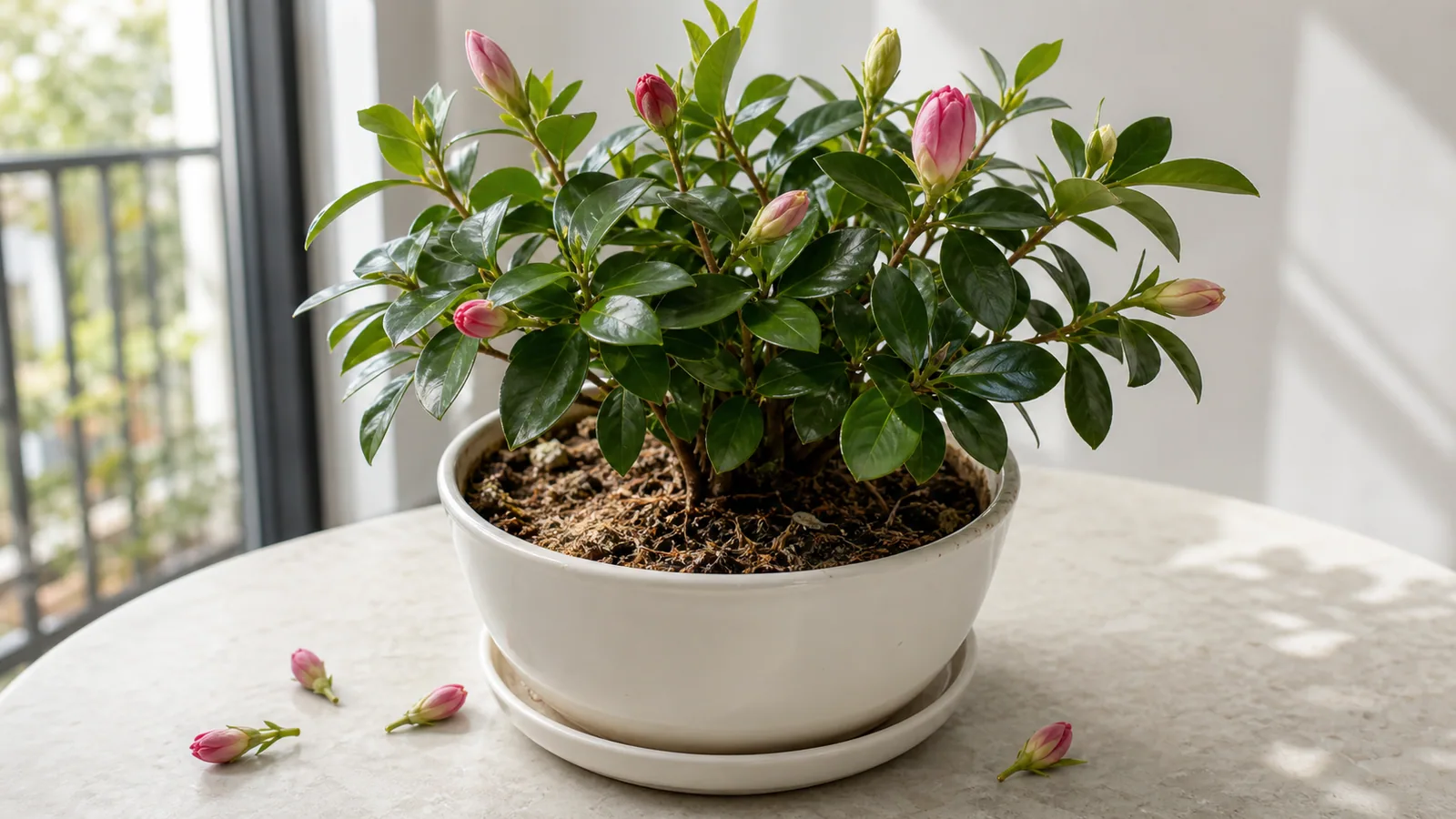
Why buds may drop while leaves still look fine
Mature leaves may tolerate stress for a while, but buds are actively developing and need continuous supply. If water is irregular, roots cannot supply water well, light is too low, temperatures swing sharply, or air is very dry, a plant may abandon buds before leaves show major damage.
In plain language, flower buds are high-cost projects. Flowering matters, but it is not always the plant’s first priority. Under unstable conditions, the plant may maintain leaves, stems, roots, and new vegetative growth first.
Several stresses often happen together
Bud drop rarely has one isolated cause. A newly purchased flowering plant may move from production greenhouse to transport, store, and home. Light, temperature, humidity, airflow, and watering rhythm all change.
Useful directions to check include irregular watering, wet and air-poor media, low light, sudden temperature changes, heaters or air-conditioning vents, dry air, recent repotting, and moving the plant to a new location.
These clues help organize observation, but they are not a diagnosis chart. Different plants form flower buds under different seasonal and environmental conditions.
Plants can actively shed organs
Bud drop is not simply a bud being “knocked off.” Plants have mechanisms for shedding organs. A separation zone called an abscission layer may form where a flower, fruit, leaf, or bud detaches.
Ethylene is one plant hormone involved in aging, stress responses, and organ drop. This does not mean every bud drop case is caused only by ethylene. It means bud drop can involve internal plant signaling, not just visible external damage.
Orchid growers often call unopened buds drying and dropping “bud blast.” In Phalaenopsis orchids, temperature swings, airflow, location change, water conditions, and root status can all be part of the stress picture.
Separate dry bud drop from rot or mold
Under general environmental stress, buds may slowly yellow, dry, brown, and drop. In that case, first check water, light, temperature, humidity, and roots.
If buds are water-soaked, blackened, moldy, or covered with gray fungal growth, do not explain it only as ordinary bud drop. Ventilation, humidity, flower diseases, and plant health may need more specific evaluation.
Those signs should be considered separately from a bud that slowly yellows and shrivels, with a closer look at air movement, humidity, and possible flower disease.
What the buds themselves can show
A firm, plump green bud is still developing. A bud that turns yellow, wrinkles, and dries has stopped developing and may later detach. That change describes what you can see, but it does not identify one cause by itself. Read it alongside the leaves, roots, growing medium, and any recent change in conditions.

Common confusions
- ✕ Dropped buds mean the plant is dying.
- ✓ Bud drop means flowering was interrupted. Severity depends on leaves, roots, stems, and future growth too.
- ✕ Bud drop always means underwatering.
- ✓ Dryness, over-wet roots, low light, temperature change, dry air, and moving the plant can all contribute.
- ✕ Fertilizer will make dropped buds come back.
- ✓ Fertilizer does not replace light, water balance, or healthy roots.
- ✕ All plants drop buds for the same reason.
- ✓ Flower timing and bud sensitivity vary by plant species.
Frequently Asked Questions
Does bud drop mean my plant is dying?
Not necessarily. It often means the plant has stopped flower development under stress. Check whether leaves, roots, stems, and new growth remain stable.
Why do buds drop before leaves look damaged?
Buds are developing rapidly and need steady supply. A plant may abandon them before mature leaves show obvious stress.
Why did a plant drop buds soon after I brought it home?
The move from greenhouse to store to home can change light, temperature, humidity, airflow, and watering. That transition alone can stress buds.
Will new buds form later?
Possibly, but not guaranteed. It depends on species, season, plant health, roots, and whether the environment becomes stable.
Are black or moldy buds the same as ordinary bud drop?
Not always. Dry yellowing buds point first to stress observation. Water-soaked, blackened, or moldy buds may require a different disease and humidity check.
Can fruit nearby really make flower buds drop?
Some buds and flowers are sensitive to ethylene, a gas released by ripening fruit and other sources. It is one possible clue, not a default explanation. If a budding plant shares a confined space with ripening fruit, consider that detail alongside light, water, temperature, humidity, and root conditions.
Related Terms
- Flower bud: an unopened developing flower.
- Bud drop: dropping of buds before they open.
- Abscission layer: a separation zone that allows an organ to detach.
- Ethylene: a gaseous plant hormone involved in ripening, aging, stress, and organ drop.
- Photosynthesis: production of sugars and other organic materials using light.
- Root stress: root problems caused by dryness, saturation, damage, low oxygen, or media issues.
Read Next
Evidence
References
These sources were used to check the plant-science concepts and gardening context in this article.
View sources and further reading (8)
- missouribotanicalgarden.org — Indoor Plants21.pdf
- missouribotanicalgarden.org — problems common to many indoor plants
- aos.org — bud blast
- aos.org — phalaenopsis culture sheet
- extension.oregonstate.edu — how hormones growth regulators affect your plants
- extension.umd.edu — lighting indoor plants
- extension.umn.edu — gray mold flower garden
- plants.ces.ncsu.edu — phalaenopsis