
Fruit is part of a plant’s reproductive story
In everyday life, people often think of fruit as something sweet to eat. In botany, fruit has a broader meaning. A fruit is a structure associated with seed development, often formed from the ovary of a flower after successful reproduction.
The main plant functions of fruit are to protect developing seeds and help seeds move away from the parent plant. Some fruits are fleshy, some are dry, some split open, and some do not. Their shapes are tied to how seeds are protected, held, released, or dispersed.
This article explains fruit as a plant structure, not as a food-safety or nutrition guide.
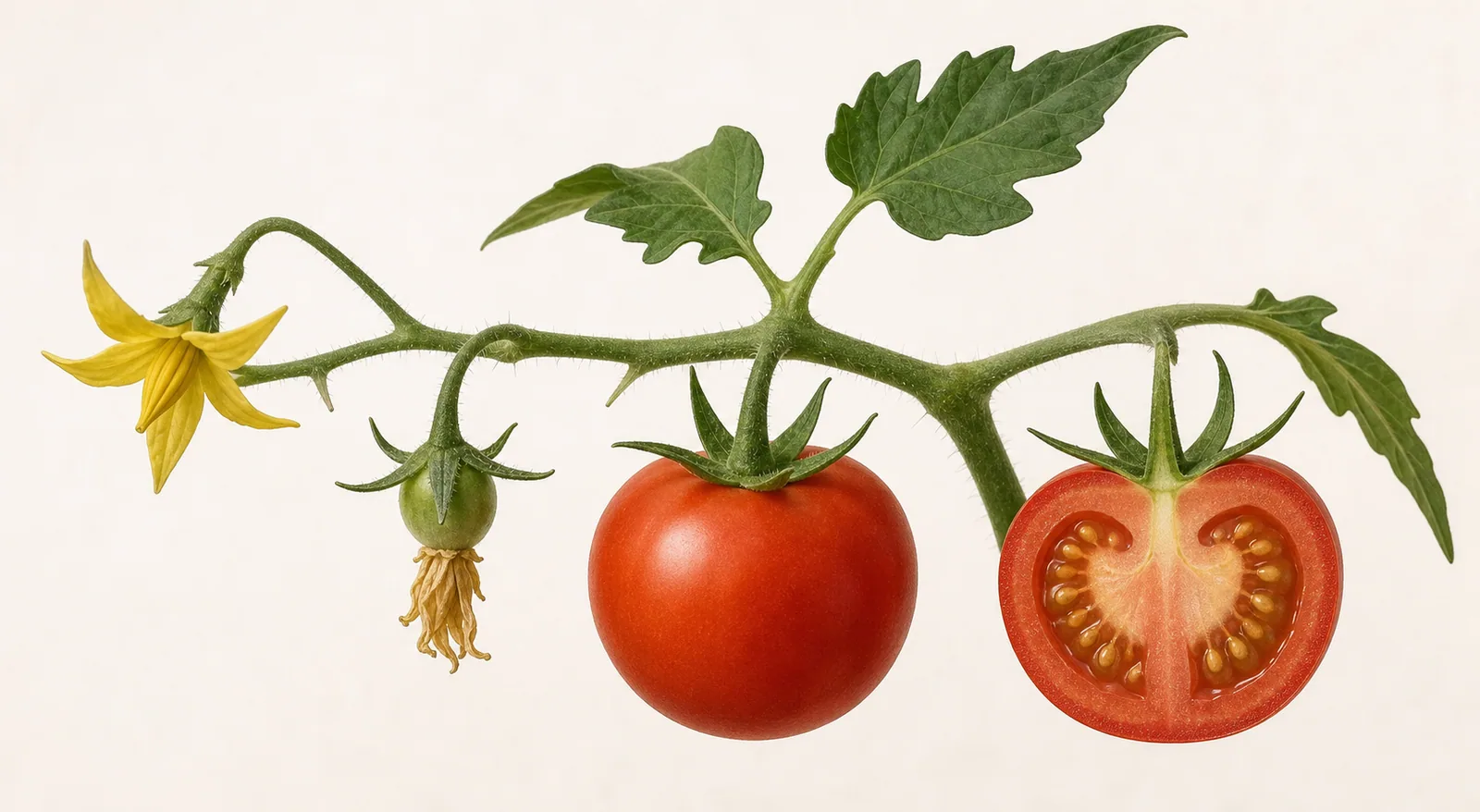
The ovary and ovules are the key starting points
Inside many flowers, the ovary contains ovules. After pollination and fertilization, ovules may develop into seeds. The ovary wall may develop into the fruit wall, also called the pericarp.
This is the basic reason fruit belongs with flower structure and the plant life cycle. Fruit is not an unrelated add-on after flowering. It is one possible result of successful reproductive development.
Some fruits also include tissues beyond the ovary. This is why botanical fruit types can become complicated. For a beginner, the important entry point is simple: fruit is closely tied to flowers, ovaries, ovules, and seeds.
Fruit protects seeds while they develop
One major function of fruit is protection. A developing seed needs time to mature. Fruit tissues may shield seeds from drying, physical damage, or being released too early.
Protection does not always mean the fruit is hard. A fleshy fruit can protect seeds by surrounding them with moist tissue. A dry fruit can protect seeds with a firm wall or pod. The form depends on the plant.
This also explains why unripe and mature fruits can look very different. The plant structure changes as seeds develop and dispersal timing approaches.
Fruit helps seeds disperse
The second major function is seed dispersal. If every seed fell directly under the parent plant, seedlings would compete strongly with the parent and with each other. Dispersal helps seeds reach new spaces.
Different fruits support different dispersal routes. Fleshy fruits may be eaten by animals that later move seeds elsewhere. Dry fruits may split open and release seeds. Some fruits or seed-containing structures catch on fur, float, or use wind.
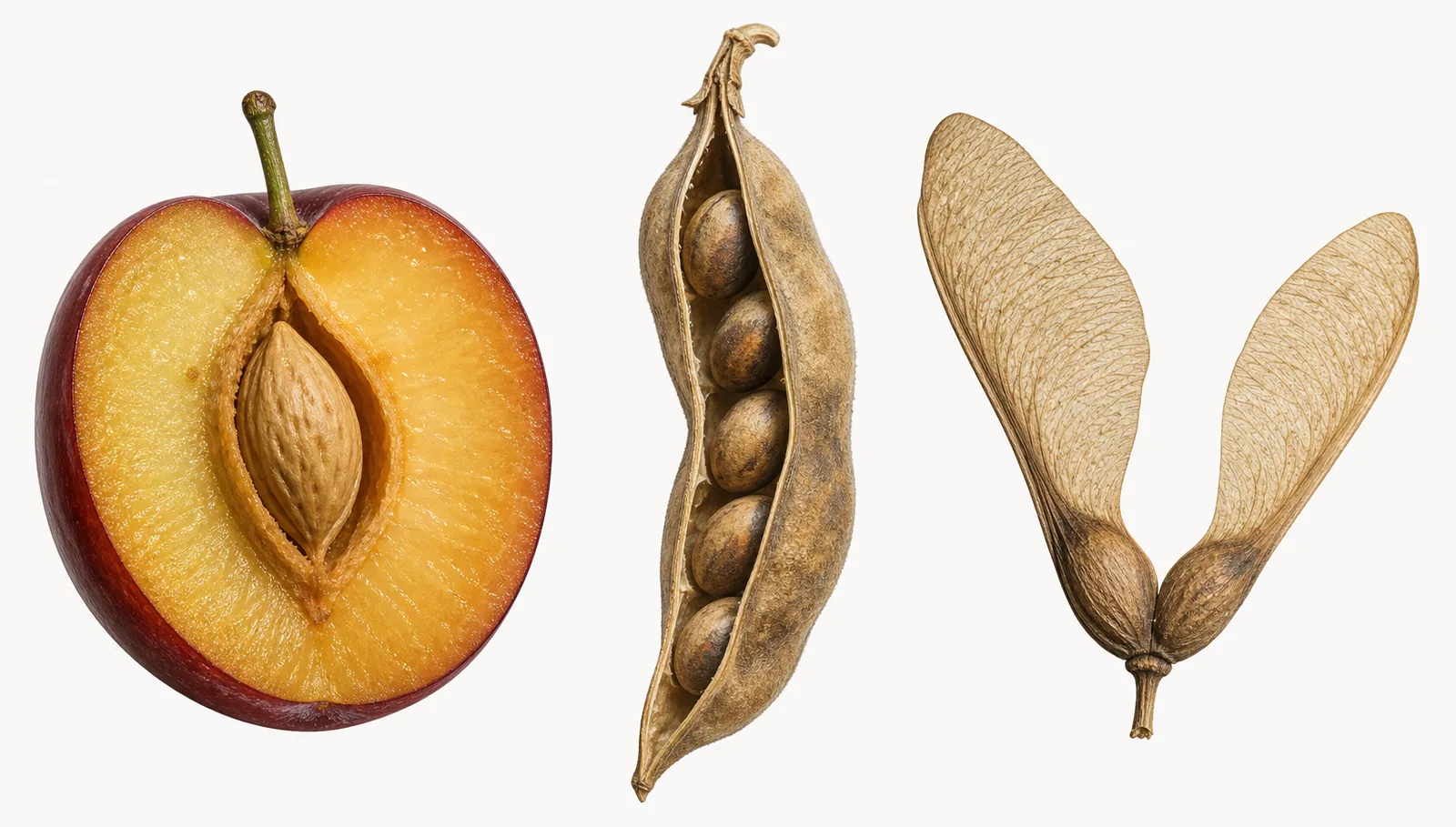
Fleshy, dry, dehiscent, and indehiscent are observation categories
Fleshy fruits have soft or juicy tissues at maturity. Dry fruits are drier and often firmer. A dry fruit may split open at maturity; this is called dehiscent. A dry fruit that does not split open is called indehiscent.
These words describe structure and behavior, not quality. A dry fruit is not a failed fruit. A fruit that splits open is not broken. These are normal patterns in different plants.
Learning these categories helps readers understand why a pea pod, a tomato, a nut-like fruit, and a grain-like fruit can all be discussed under the larger idea of fruit in botany.
Everyday “fruit” and botanical fruit are not the same category
Everyday language groups foods by taste and cooking use. Botanical language groups plant structures by origin and function. That is why some plant parts called vegetables in the kitchen can be botanical fruits.
This does not mean everyday language is wrong. It means the word fruit changes meaning with context. In a plant-science article, fruit means a reproductive plant structure associated with seeds.
Flowering does not always mean fruit will form
A plant may flower without forming mature fruit. Pollination may fail, fertilization may not happen, the plant may drop flowers or young fruits, or environmental stress may interrupt development.
This article is not a diagnosis guide for fruit drop or poor fruit set. It gives the basic structure: flower, ovary, ovule, seed, and fruit are connected in a reproductive sequence.
Common confusions
- ✕ Fruit exists mainly for humans or animals to eat.
- ✓ In plant biology, fruit protects seeds and supports seed dispersal.
- ✕ A vegetable in the kitchen cannot be a fruit in botany.
- ✓ Culinary and botanical categories use different rules.
- ✕ If a plant flowers, fruit must form.
- ✓ Flowering is only one stage. Pollination, fertilization, and development still need to succeed.
- ✕ Dry fruits are not real fruits.
- ✓ Many fruits are dry. Fruit type depends on plant structure, not juiciness.
Frequently Asked Questions
Is every fruit sweet?
No. Sweetness is not the definition of fruit in botany. Some fruits are dry, hard, bitter, small, or not eaten by people.
What part of the flower becomes fruit?
In many flowering plants, the ovary develops into fruit, and ovules develop into seeds. Some fruits also include other floral tissues.
Why do plants make fleshy fruits?
In many cases, fleshy fruit helps protect seeds and can encourage animals to move seeds away from the parent plant. The details vary by species.
Are seeds inside every fruit?
Fruit is closely tied to seed development, but seed number and visibility vary. Some cultivated forms may have reduced or undeveloped seeds, while wild plant examples often show the connection more clearly.
Is fruit the same as seed?
No. Seeds develop from ovules. Fruit usually surrounds, holds, protects, or helps disperse seeds.
Related Terms
- Fruit: a seed-associated plant structure, often developing from the ovary after flowering.
- Ovary: the part of the flower that contains ovules.
- Ovule: the structure that can develop into a seed.
- Seed: the structure containing a young plant embryo and stored resources or protective tissues.
- Pericarp: the fruit wall, often derived from the ovary wall.
- Fleshy fruit: a fruit with soft or juicy tissue at maturity.
- Dry fruit: a fruit that is relatively dry at maturity.
- Dehiscent: splitting open at maturity to release seeds.
- Indehiscent: not splitting open at maturity.
- Dispersal: movement of seeds away from the parent plant.
Read Next
Evidence
References
These sources were used to check the plant-science concepts and gardening context in this article.