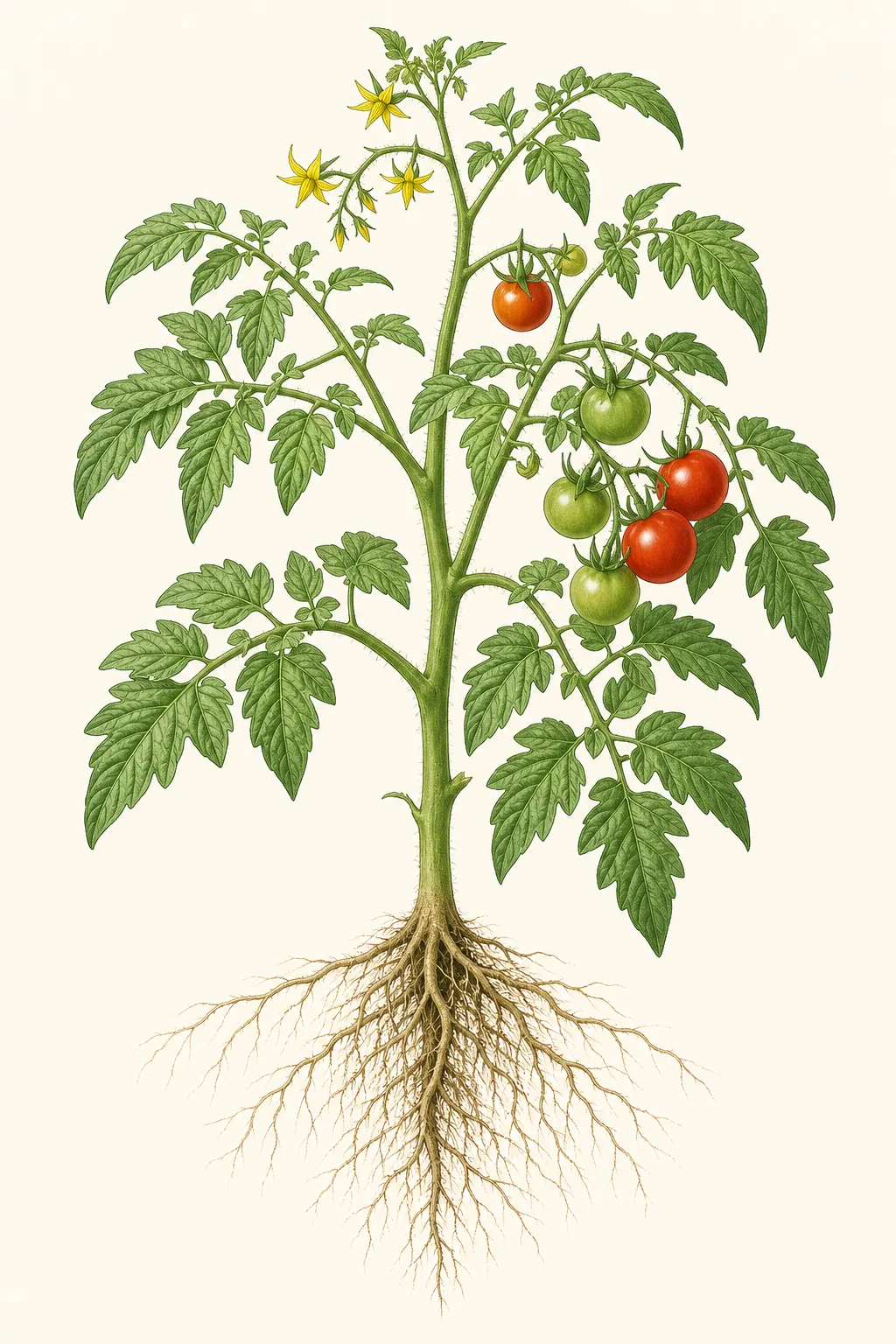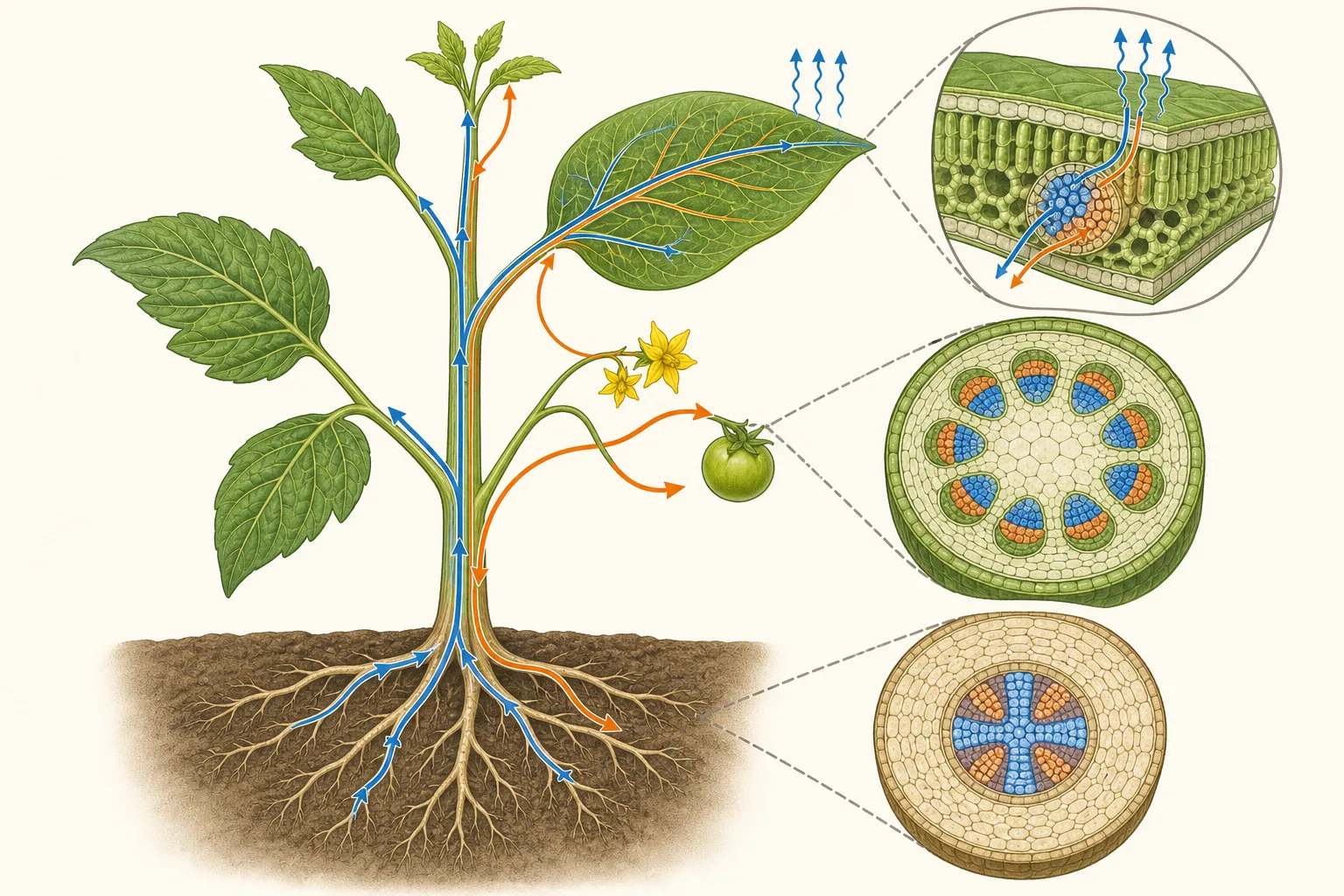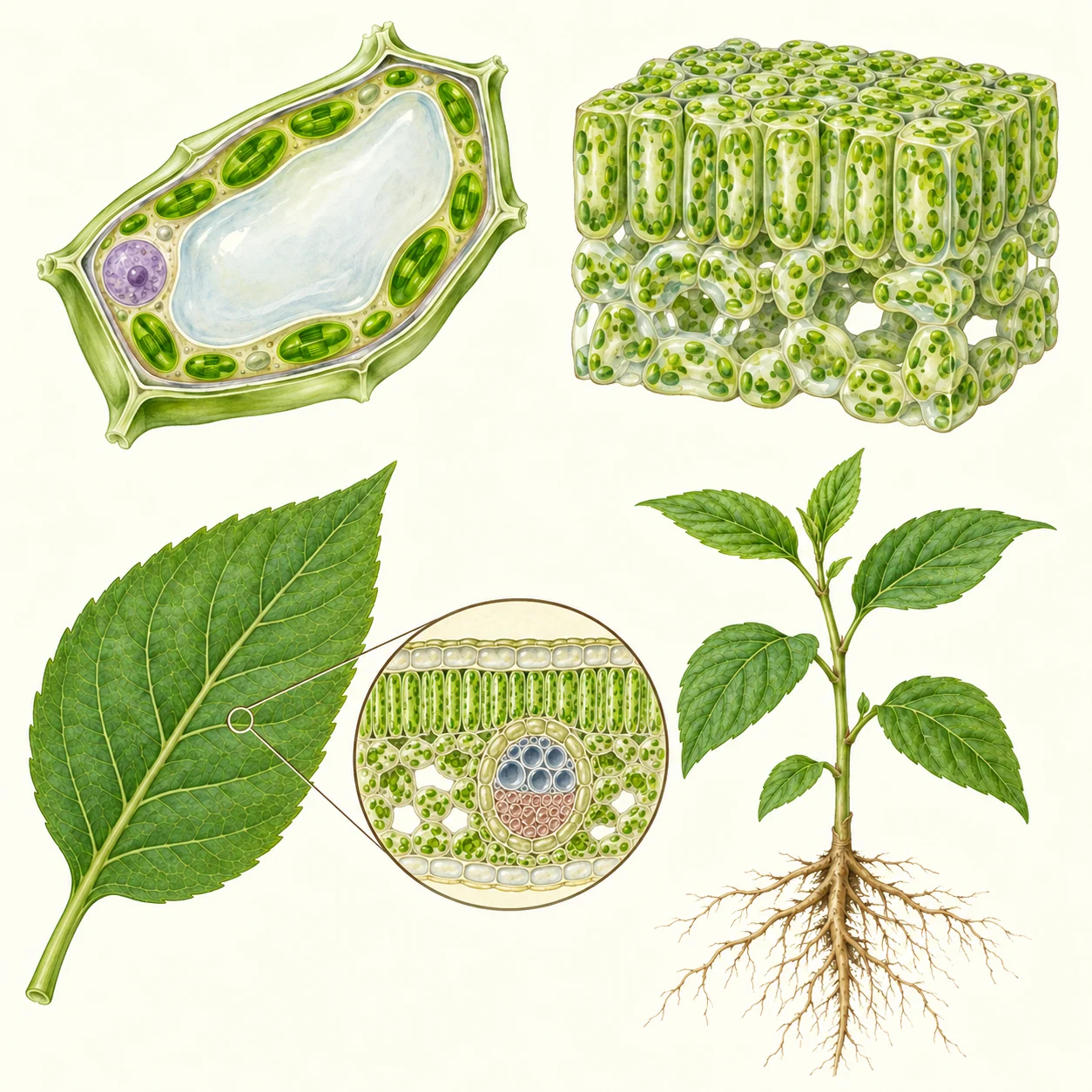
What are the basic organs of a plant?
Build a simple map of roots, stems, leaves, flowers, fruits, and seeds.
Topic A
This section builds the vocabulary for the whole site: roots, stems, leaves, flowers, fruits, and seeds, then connects those parts to photosynthesis, germination, flowering, and potted plant observations.
Reading Path
Each topic gives a simple route first, then connects to individual articles.
Build a simple map of roots, stems, leaves, flowers, fruits, and seeds.
Move from anchoring and water uptake to root hairs, aerial roots, taproots, fibrous roots, and prop roots.
Understand how flowering plants form the next generation.
Interactive Explorer
This is the quick entry point for the topic page. Start with the simple function, then move into articles as English pages become available.
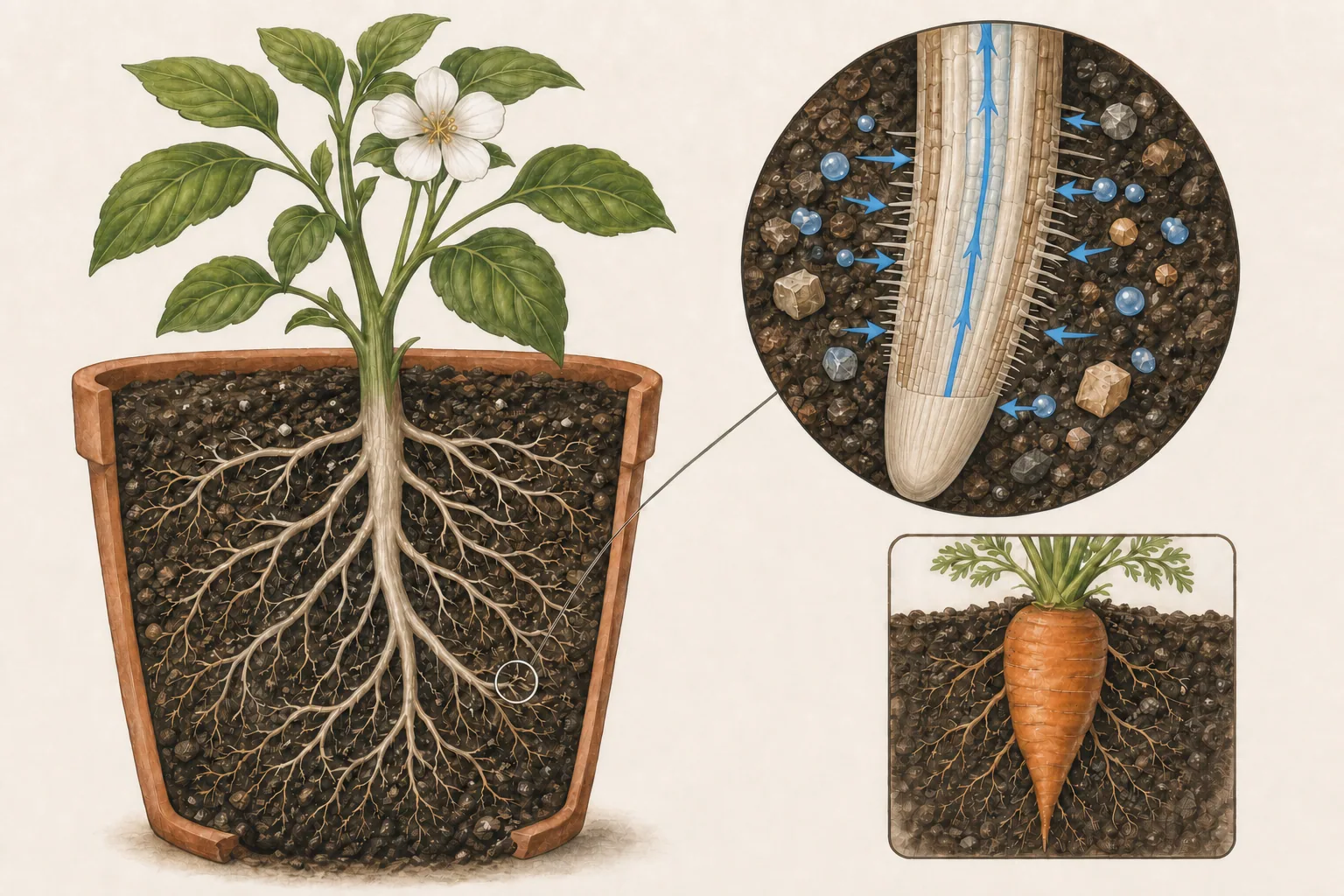
Roots usually grow below the surface, absorb water and minerals, and help anchor the plant. Some roots grow in air, such as orchid aerial roots.
Observation point: are the roots getting both water and air? Is the potting mix too compact or wet?
Explore rootsAvailable Now
What are the basic organs of a plant? Learn the six basic organs of a typical flowering plant with clear diagrams and plain-language explanations of where they are and what they do.
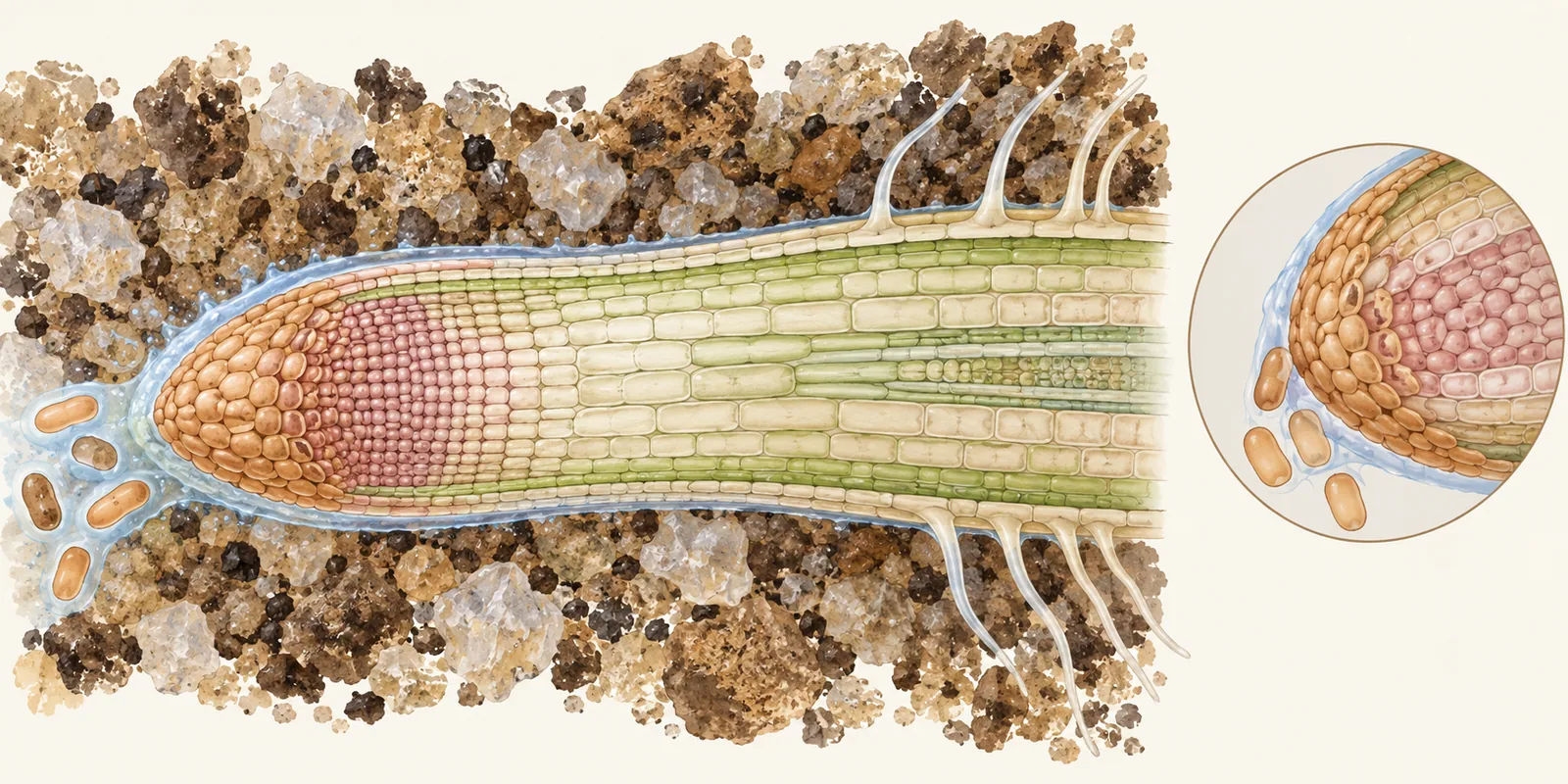
What do roots do? Roots do more than hold a plant in the soil. They anchor the plant, absorb water and mineral nutrients, and some roots also store resources.
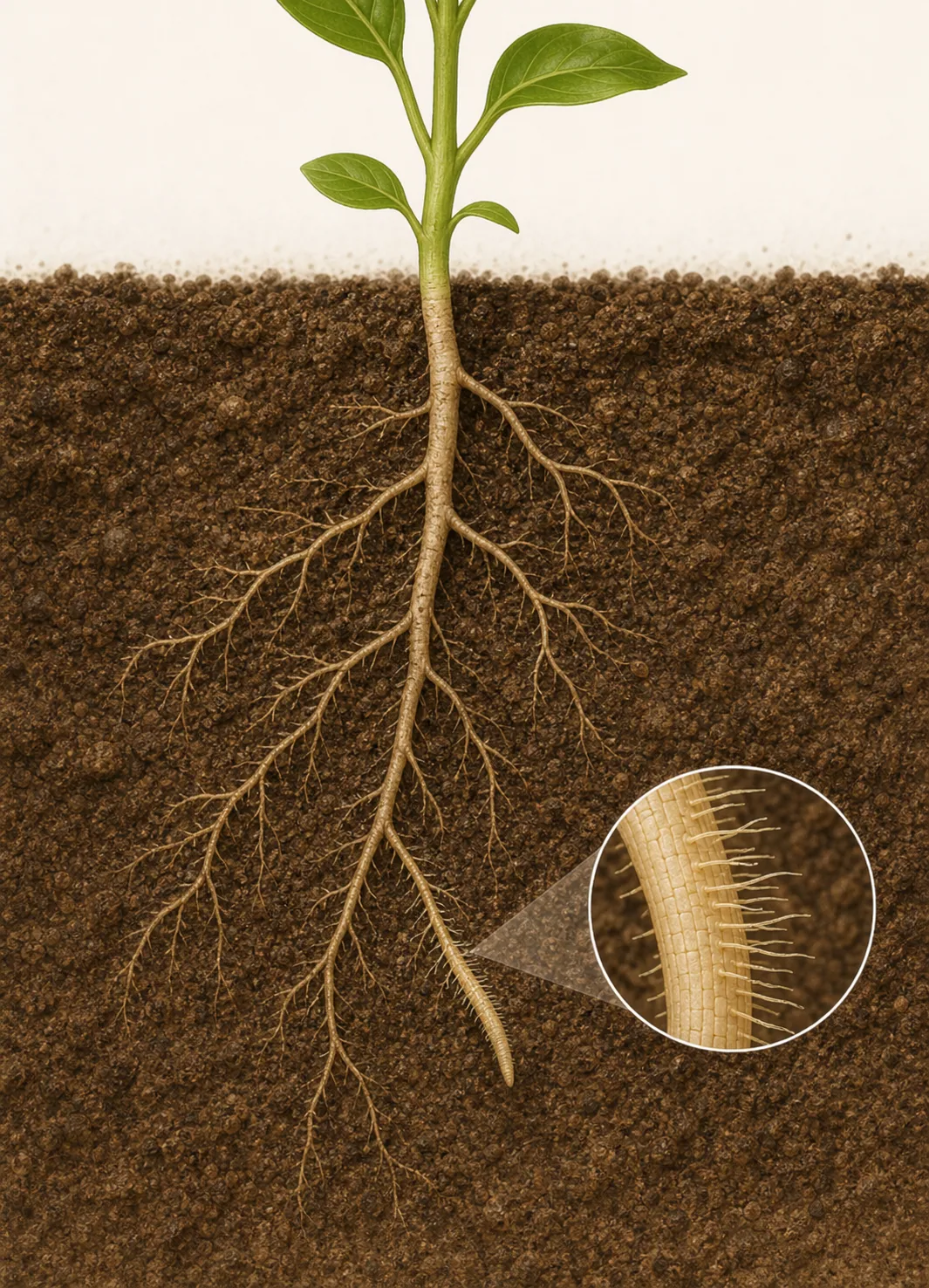
What are root hairs, and why do plants need them? Root hairs are not separate little roots. They are tiny extensions from root surface cells that increase contact area and help plants absorb water and dissolved minerals.
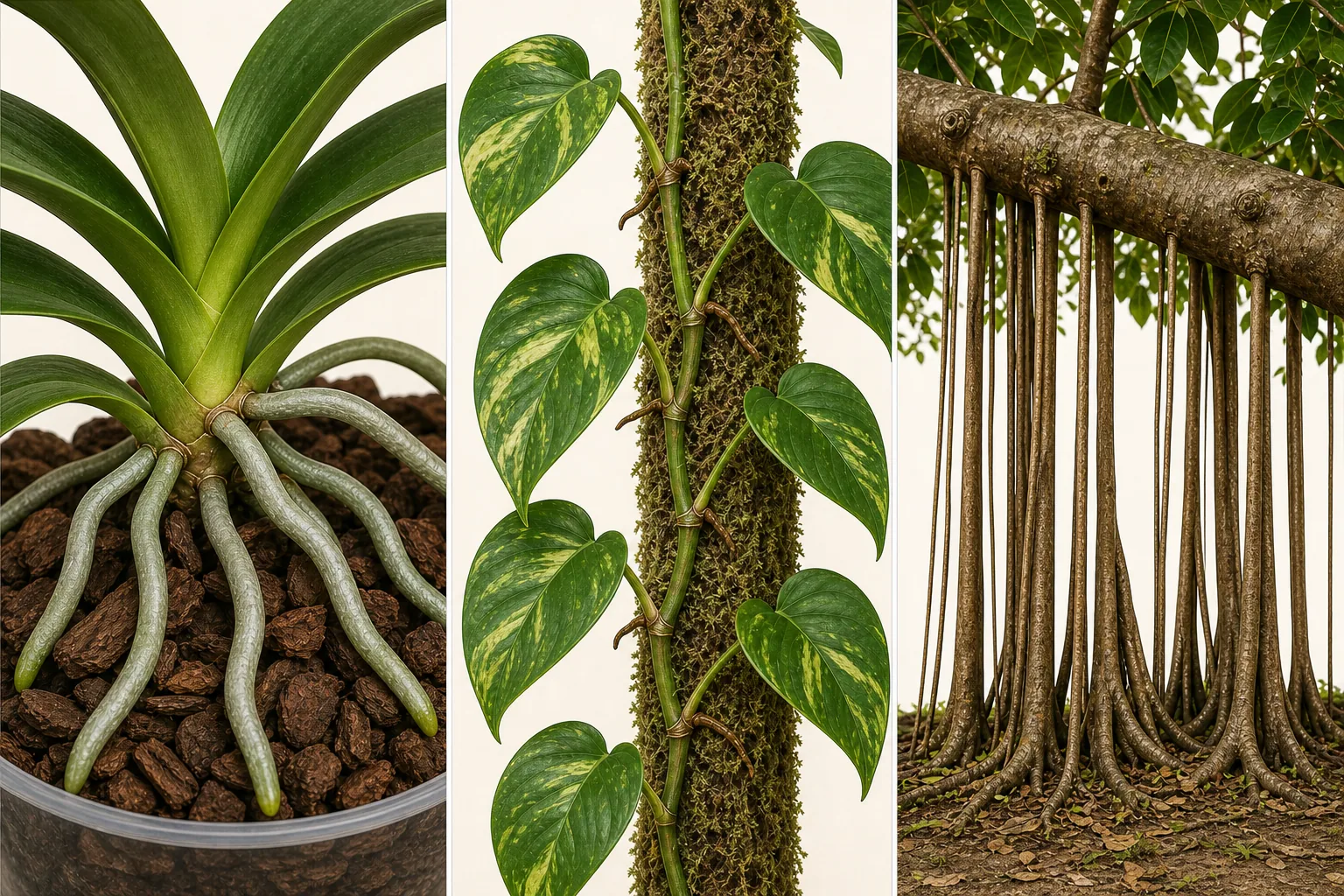
What are aerial roots? Aerial roots grow in the air or outside the potting media. Depending on the plant, they may help with water uptake, attachment, climbing, or support.
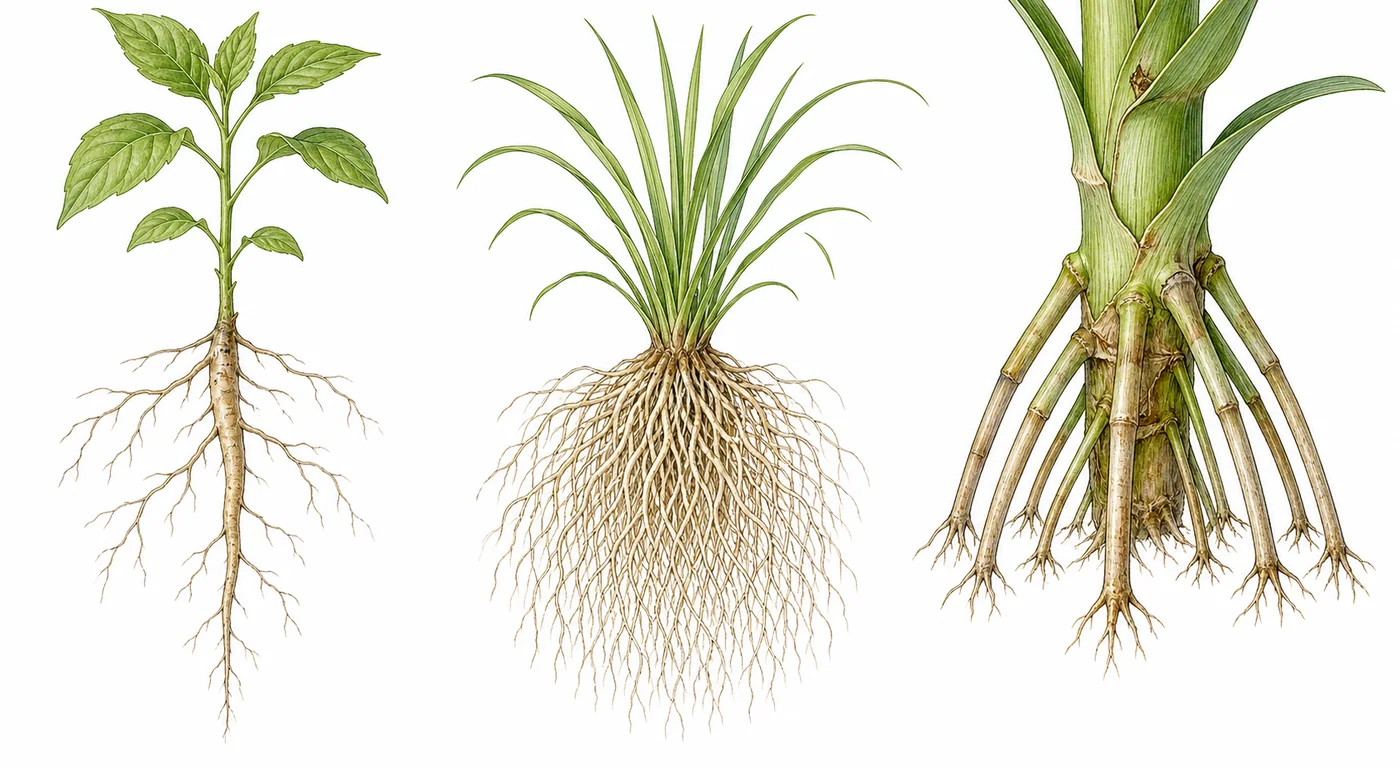
How are taproots, fibrous roots, and prop roots different? Taproots have a clear central root, fibrous roots form a bundle or network, and prop roots act like support legs. Learn how these terms differ in appearance, origin, and function.
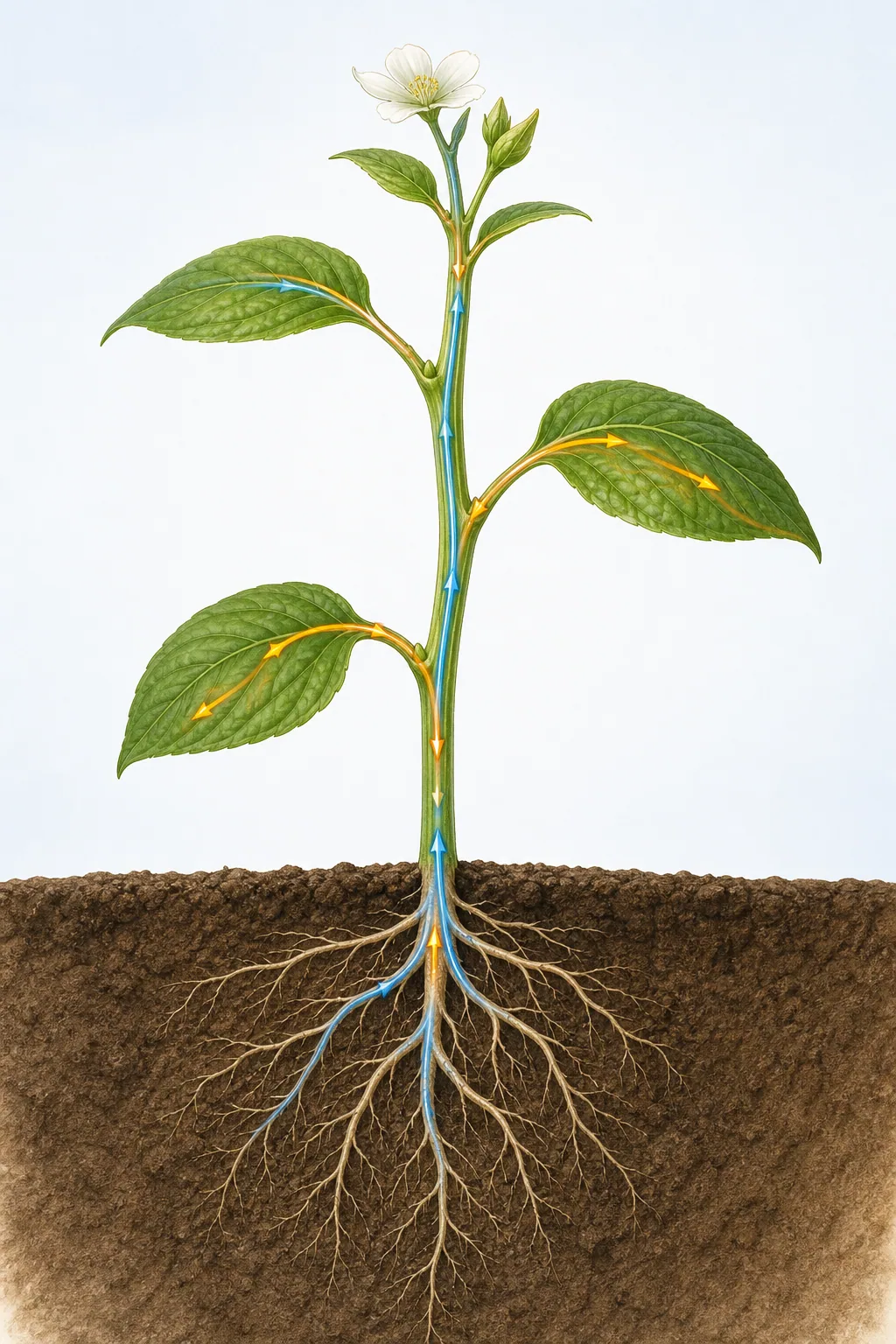
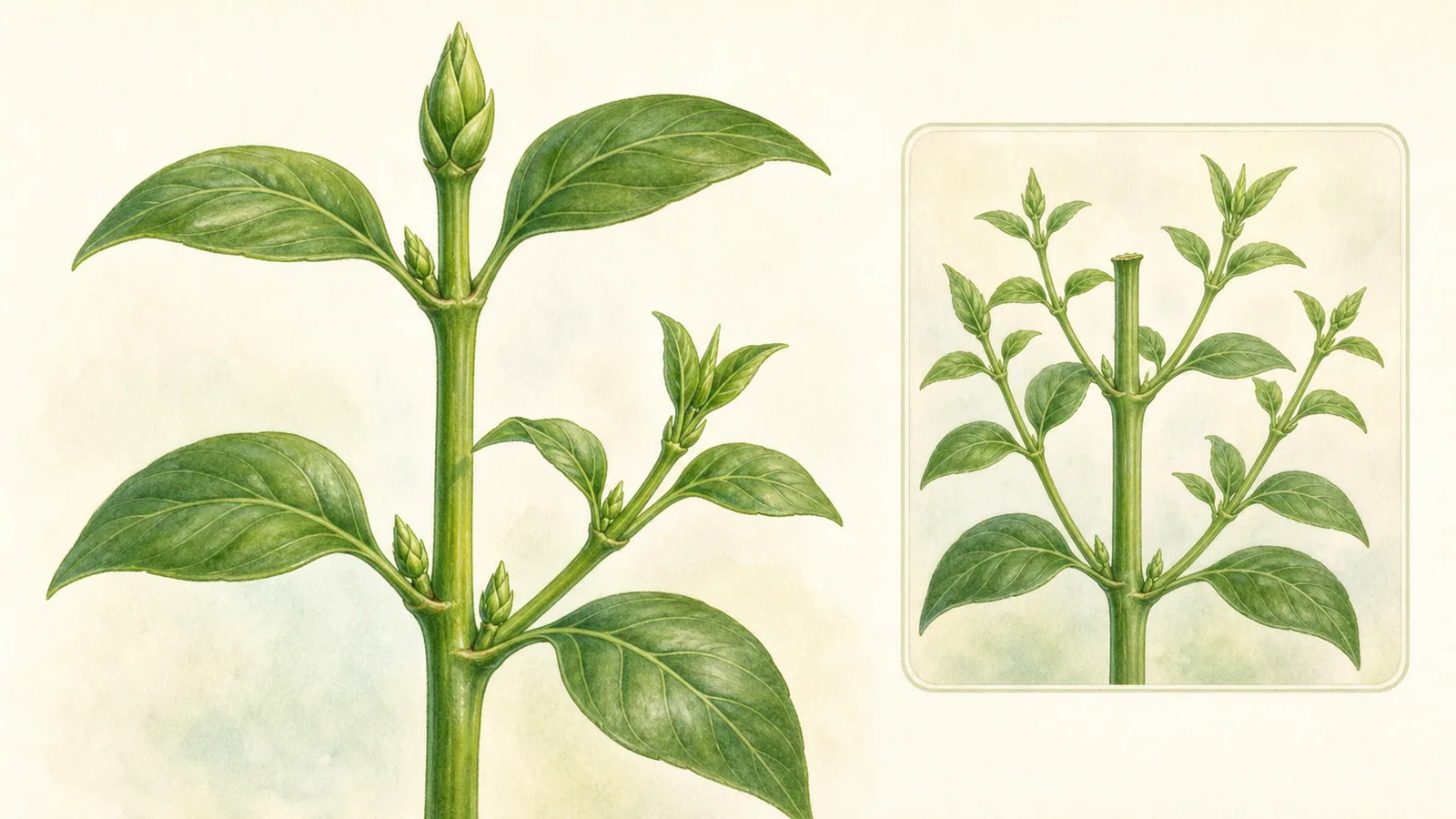
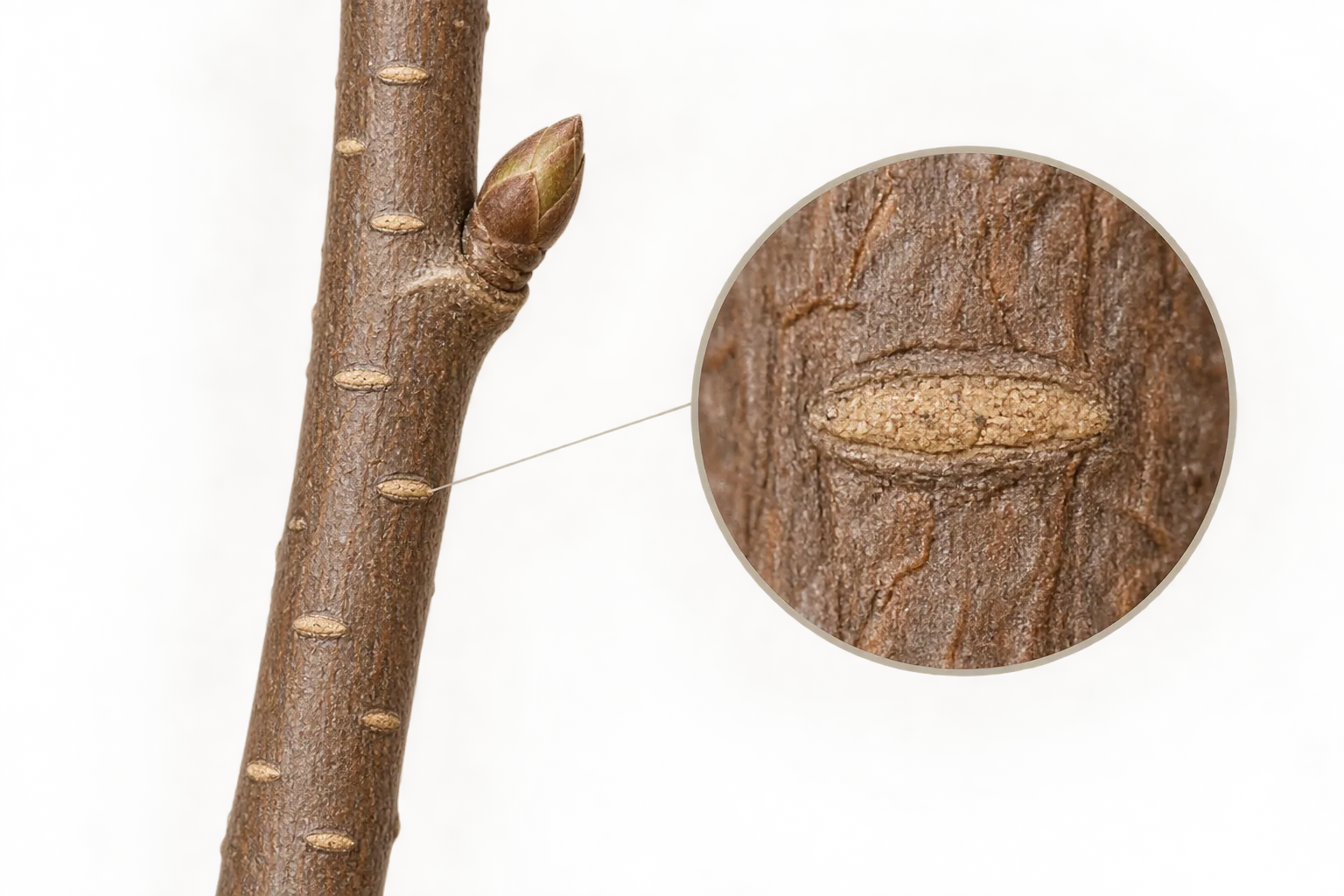
What do stems do? A stem is not just the middle stick of a plant. It supports leaves and flowers, connects roots and leaves, transports water and sugars, and holds nodes where new growth can begin.
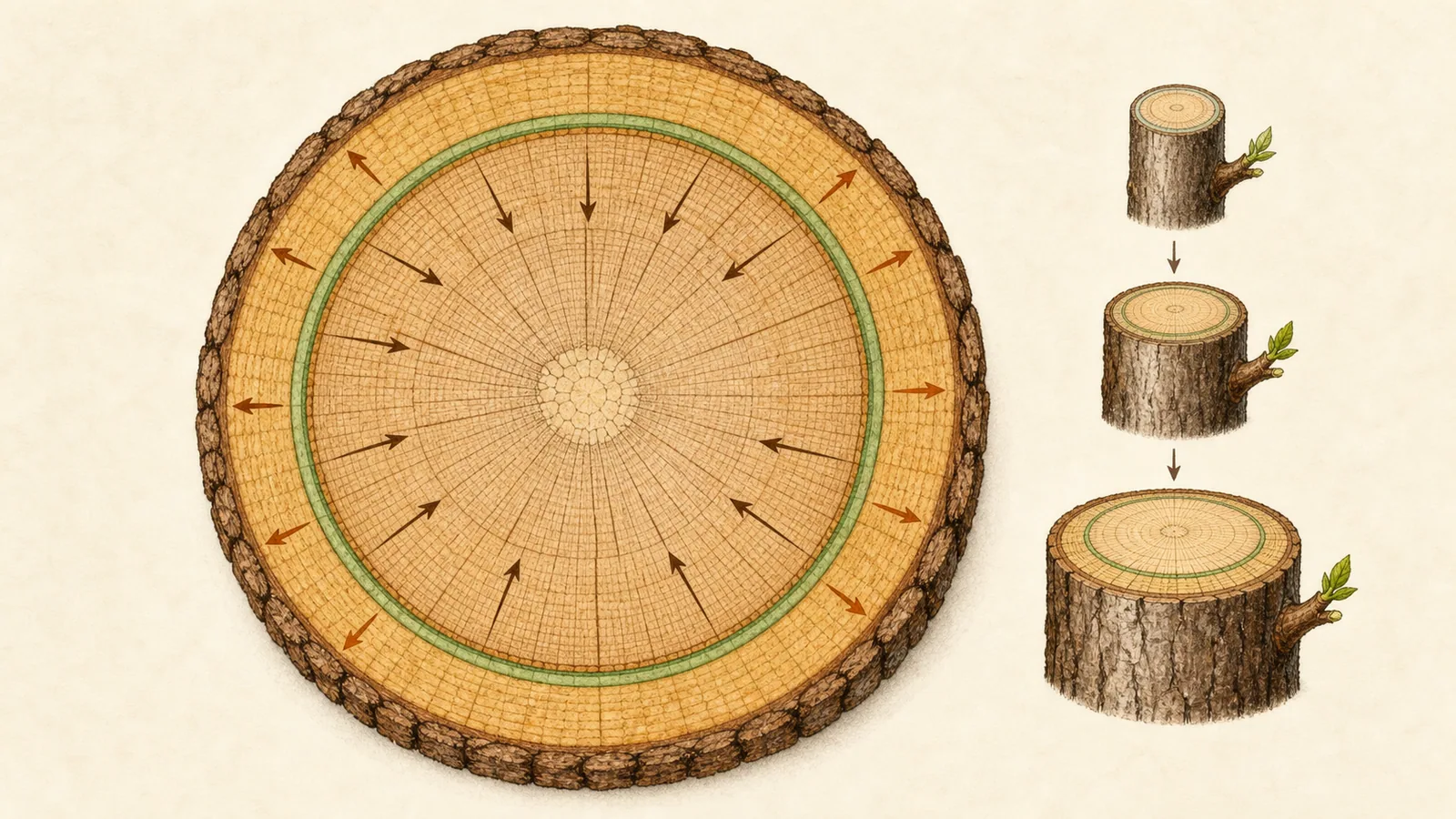
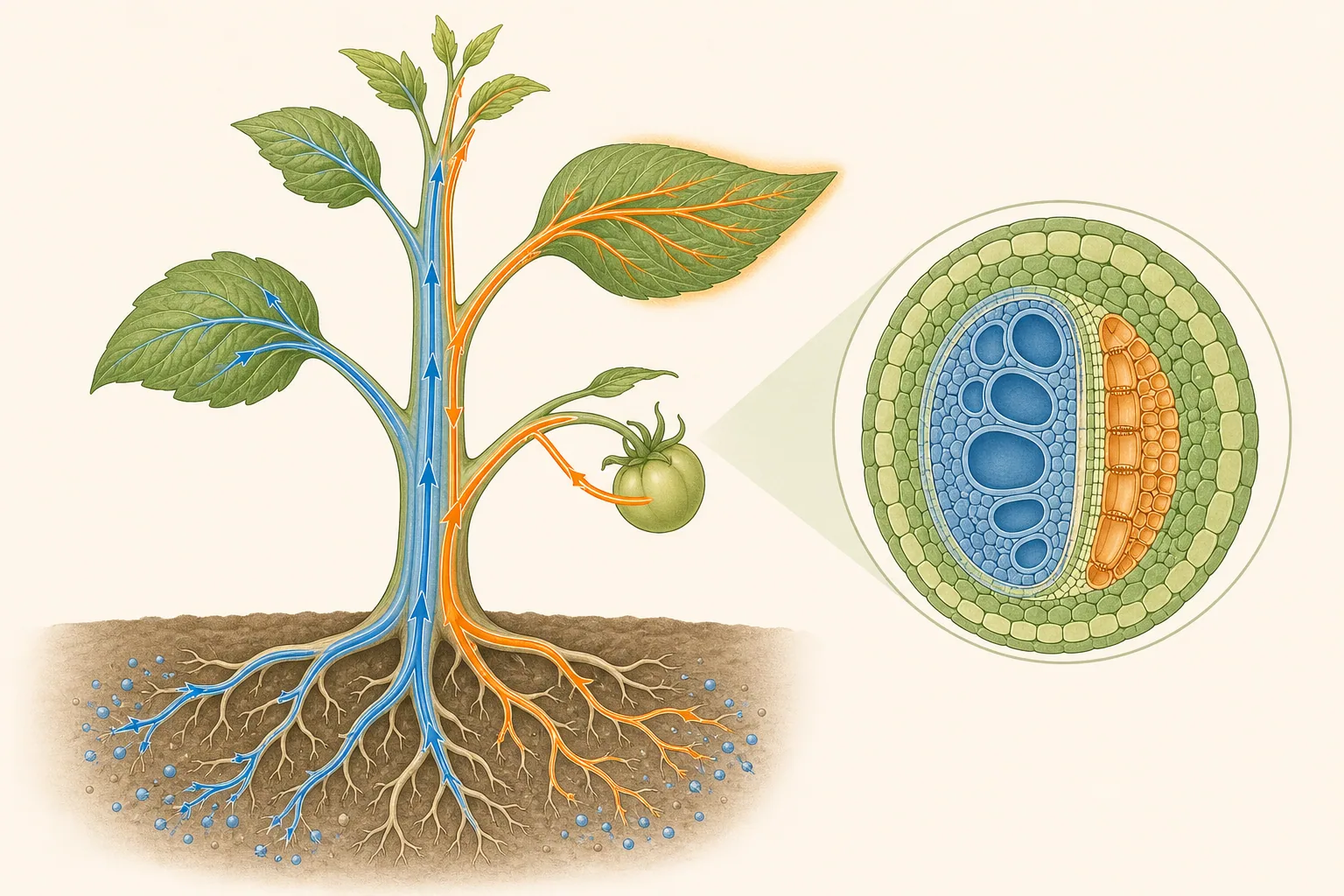
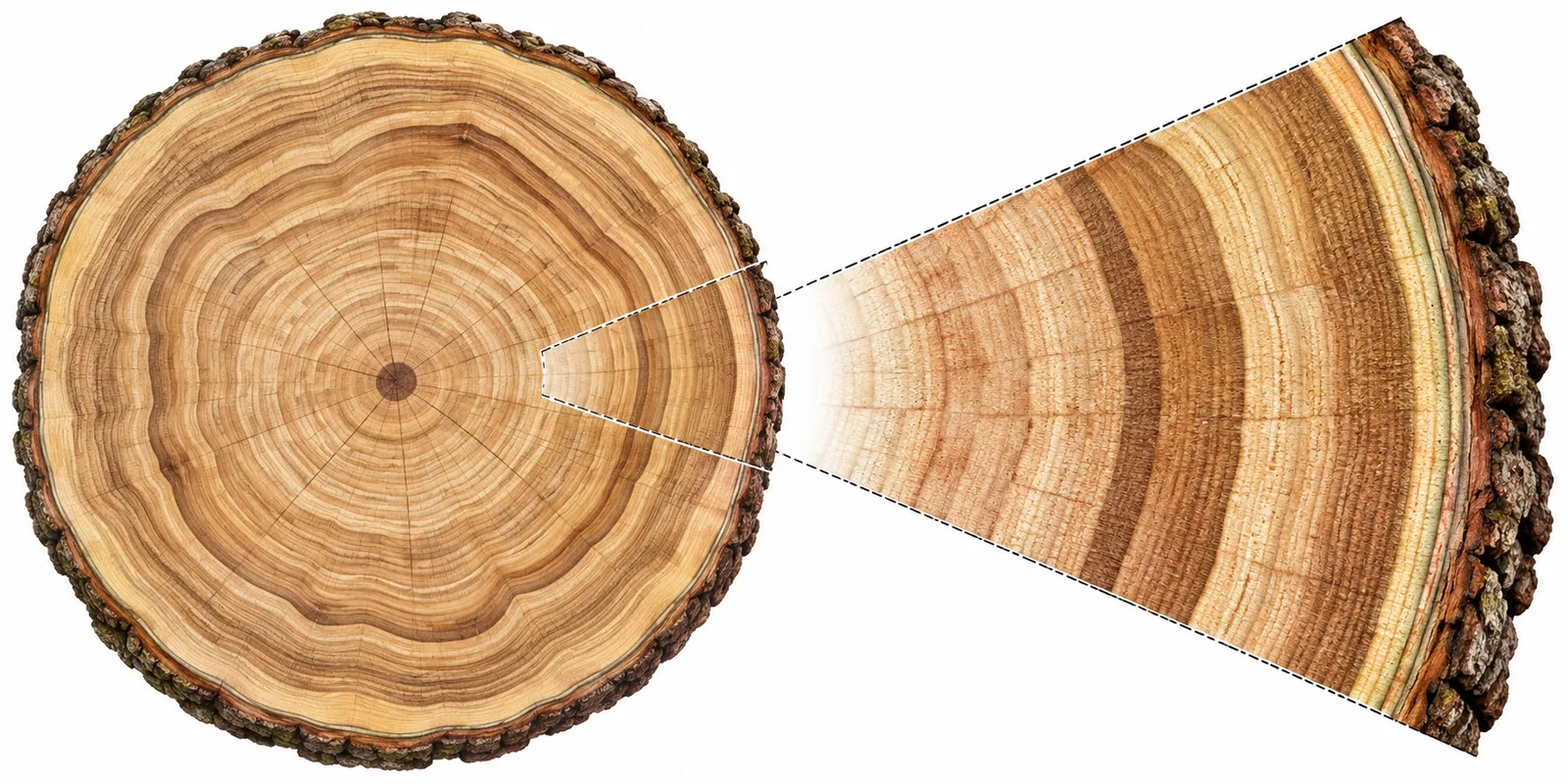
Why do some stems get thicker? Some stems get thicker because plants add new tissues from the sides. Learn secondary growth, vascular cambium, xylem, phloem, wood, bark, and why herbaceous and monocot stems need caution.
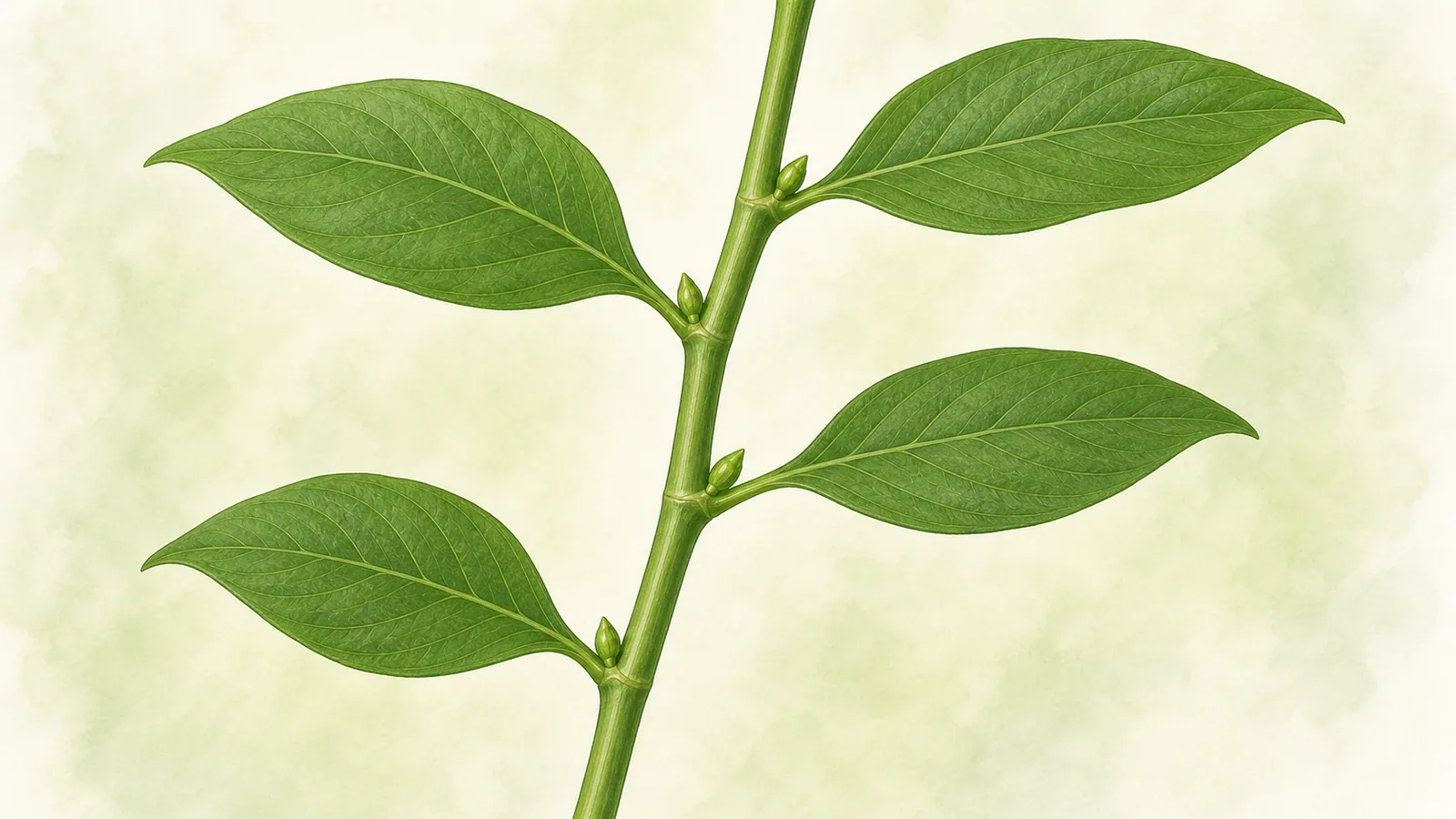
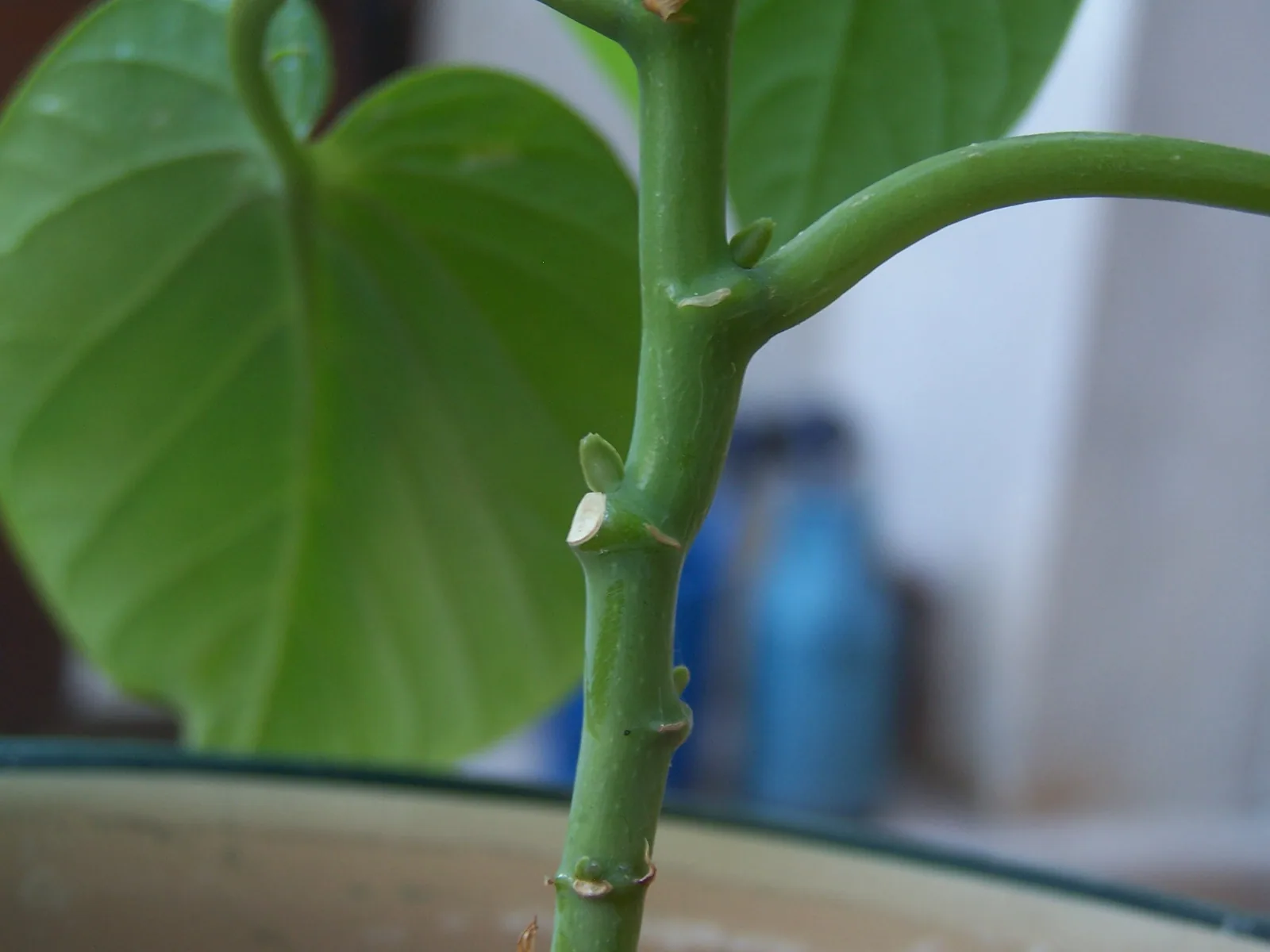
What are nodes and internodes? A node is a position on a stem where leaves, buds, branches, flowers, or sometimes adventitious roots attach. An internode is the stem section between two nodes.
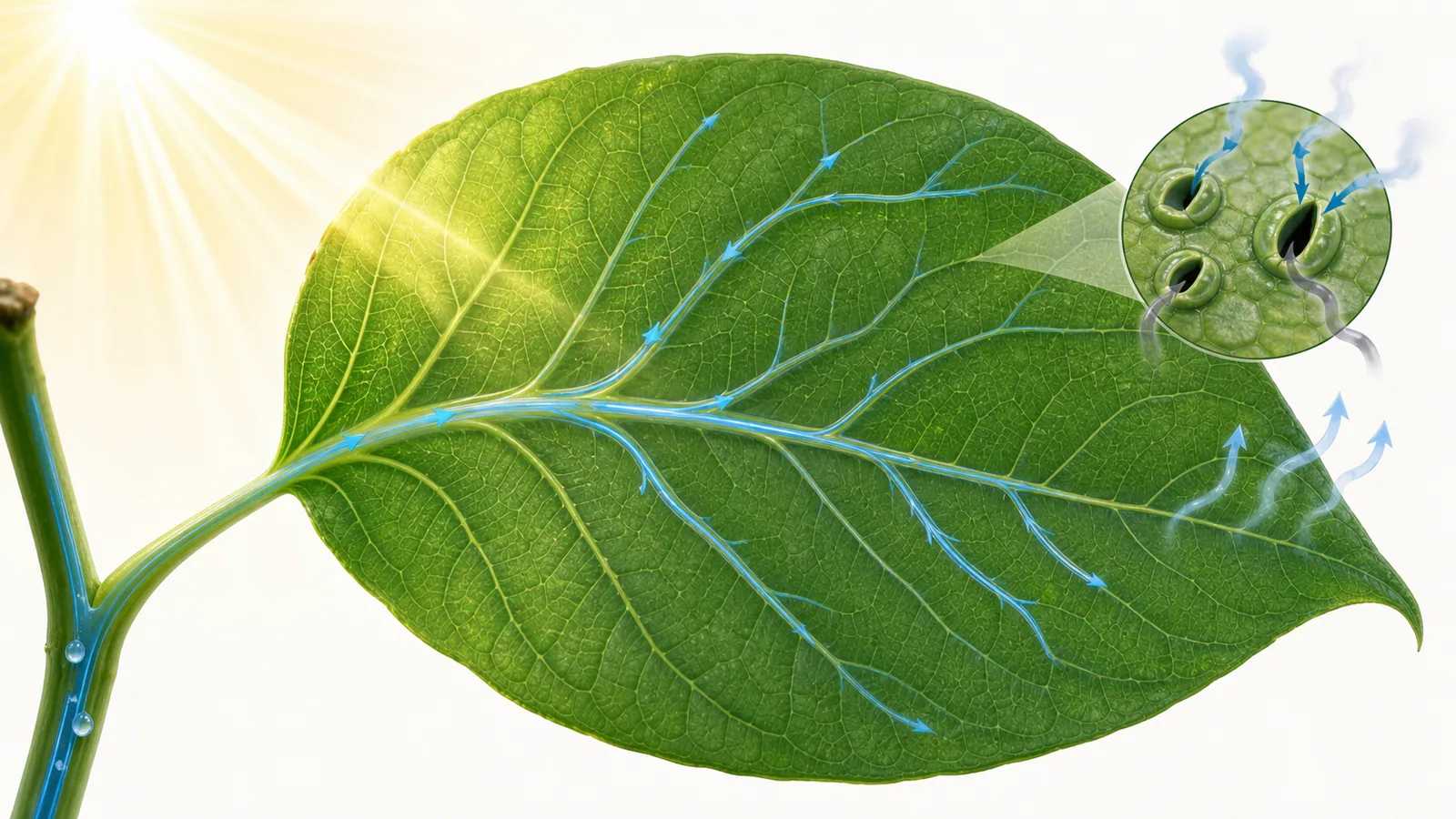
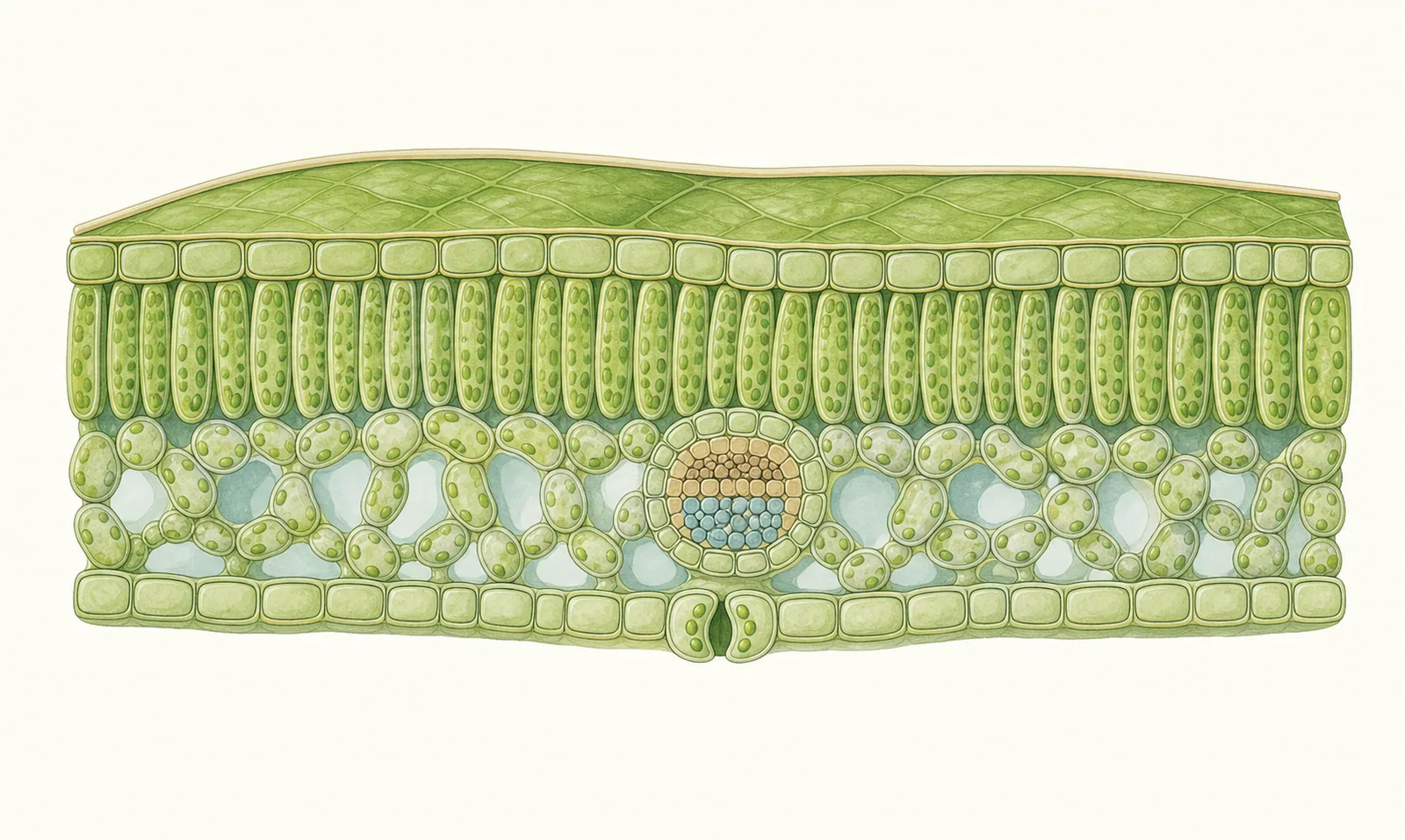
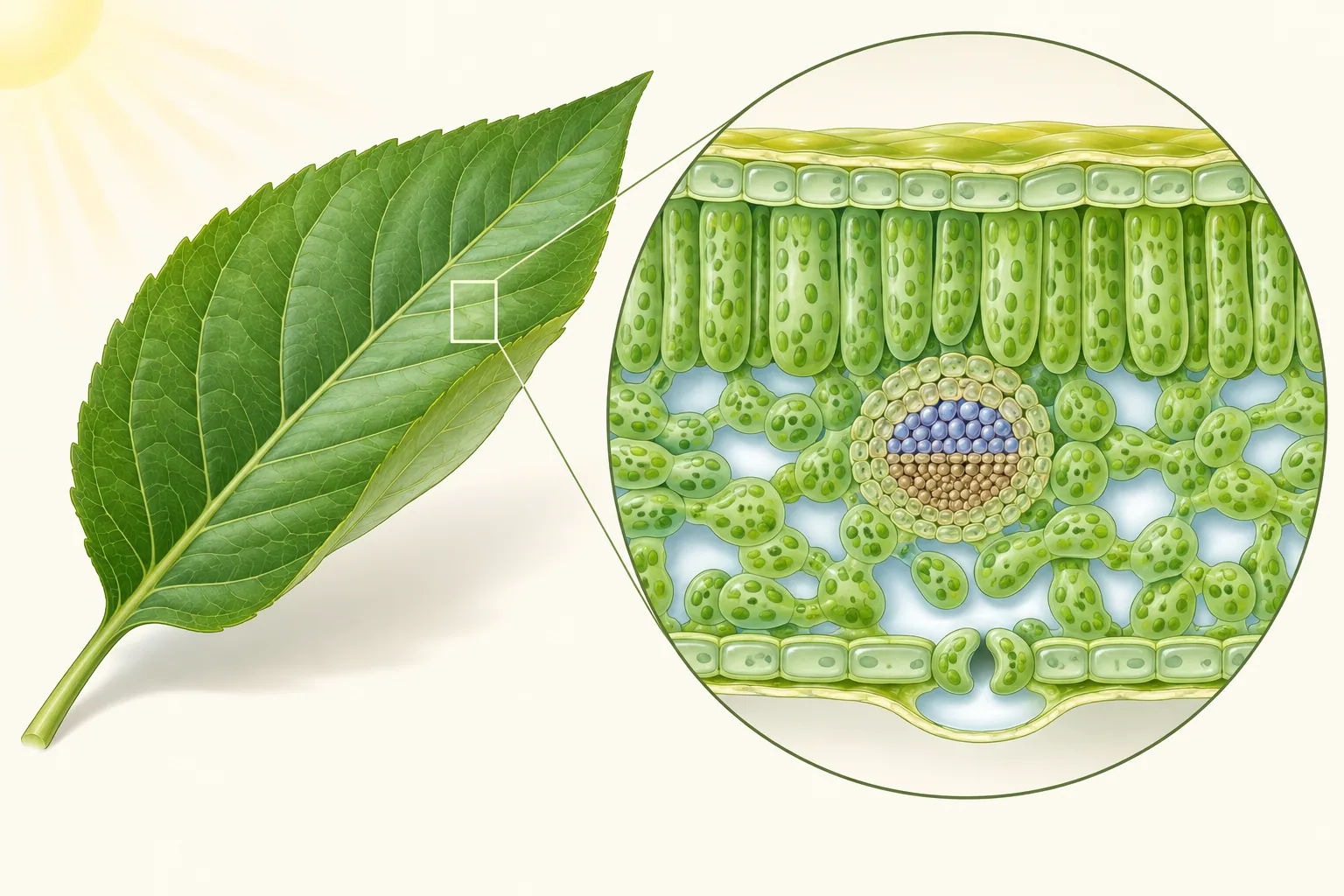
What do leaves do? A leaf is not just a green flat part. Leaves receive light, carry out photosynthesis, exchange gases, lose water vapor, and connect to the whole plant through veins.
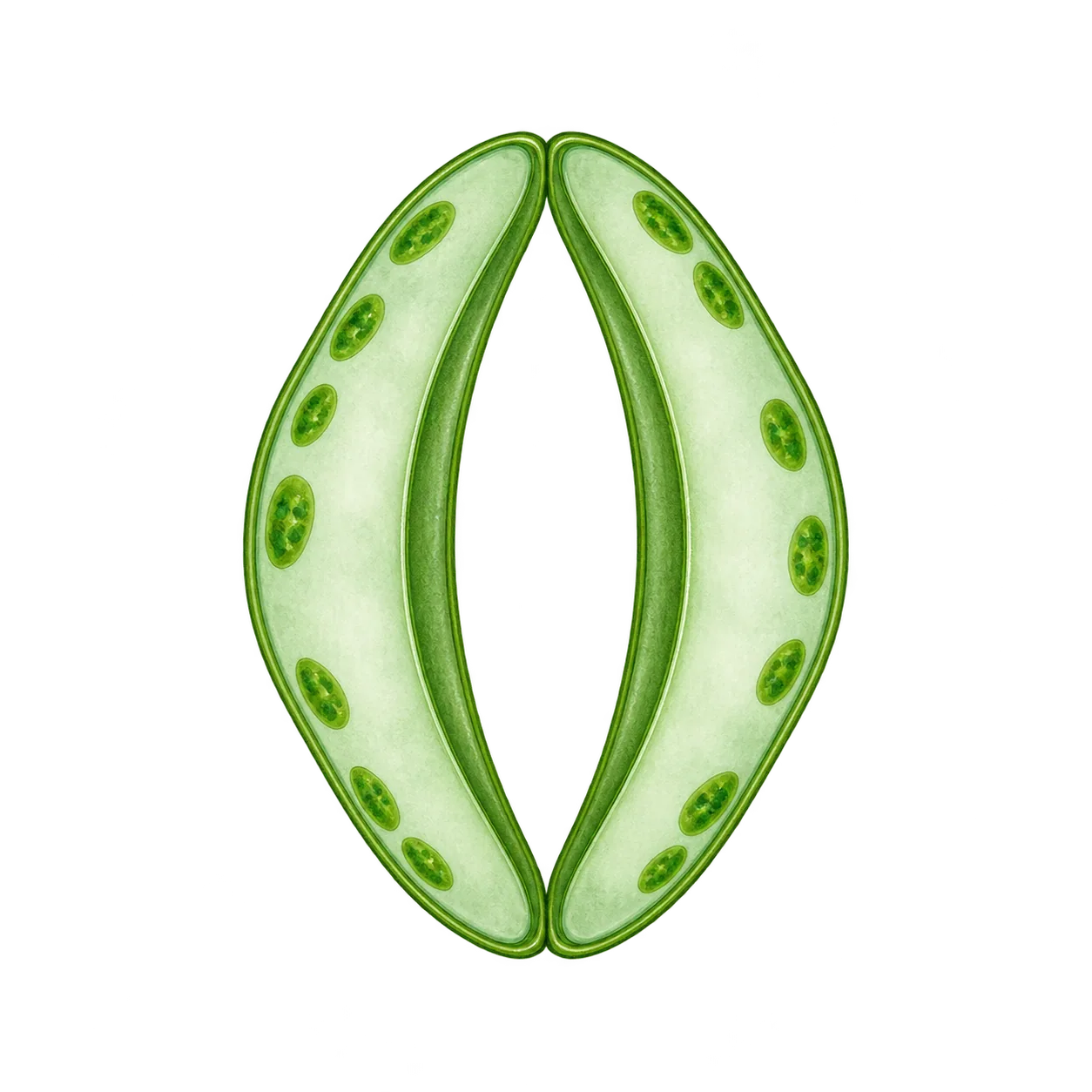
What are stomata? Stomata are tiny openings in the leaf epidermis controlled by guard cells. They let carbon dioxide enter and allow oxygen and water vapor to leave.
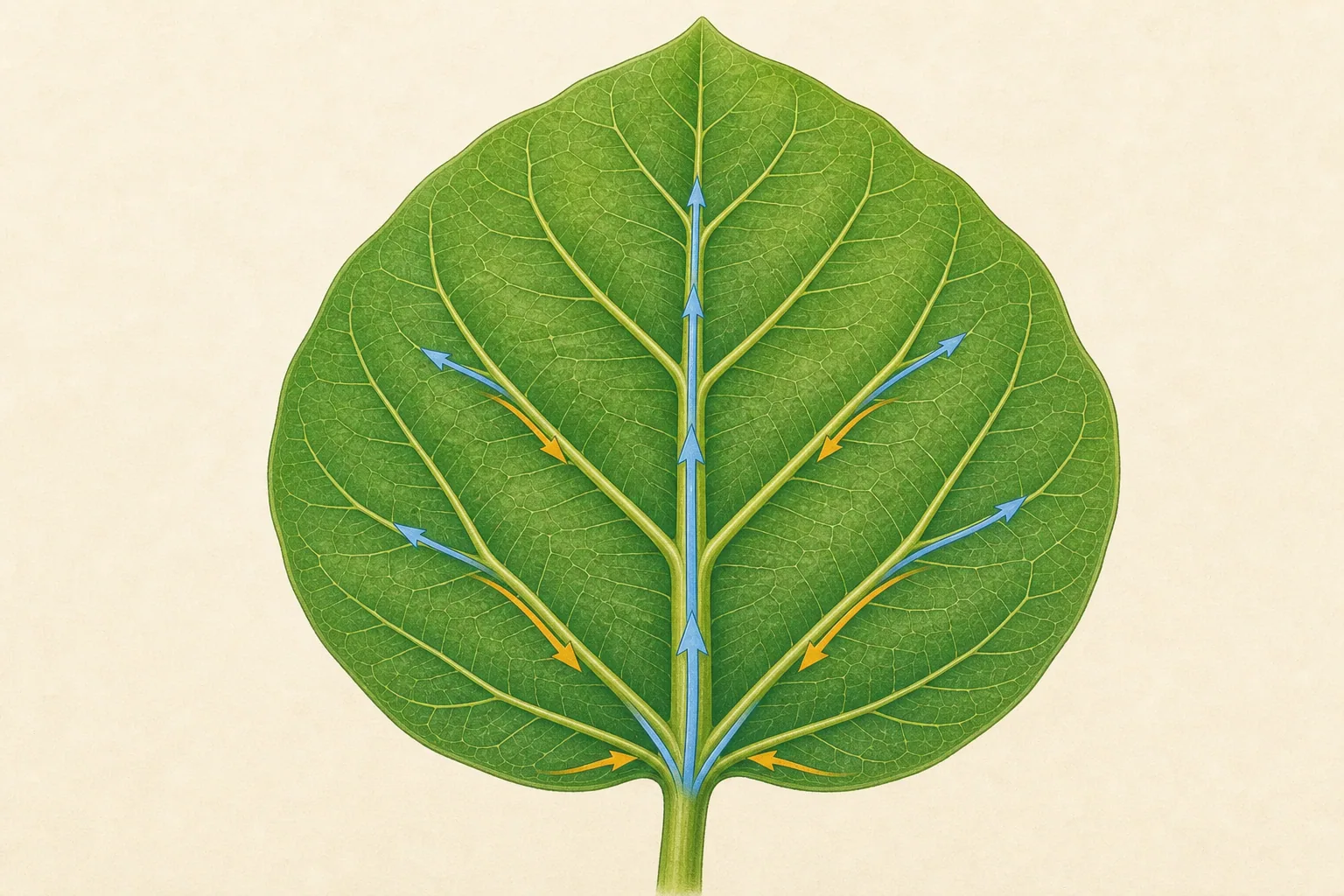
What do leaf veins do? Leaf veins are not decorative lines. They are vascular bundles that support the leaf, bring water and minerals in, and carry photosynthesis products to the rest of the plant.
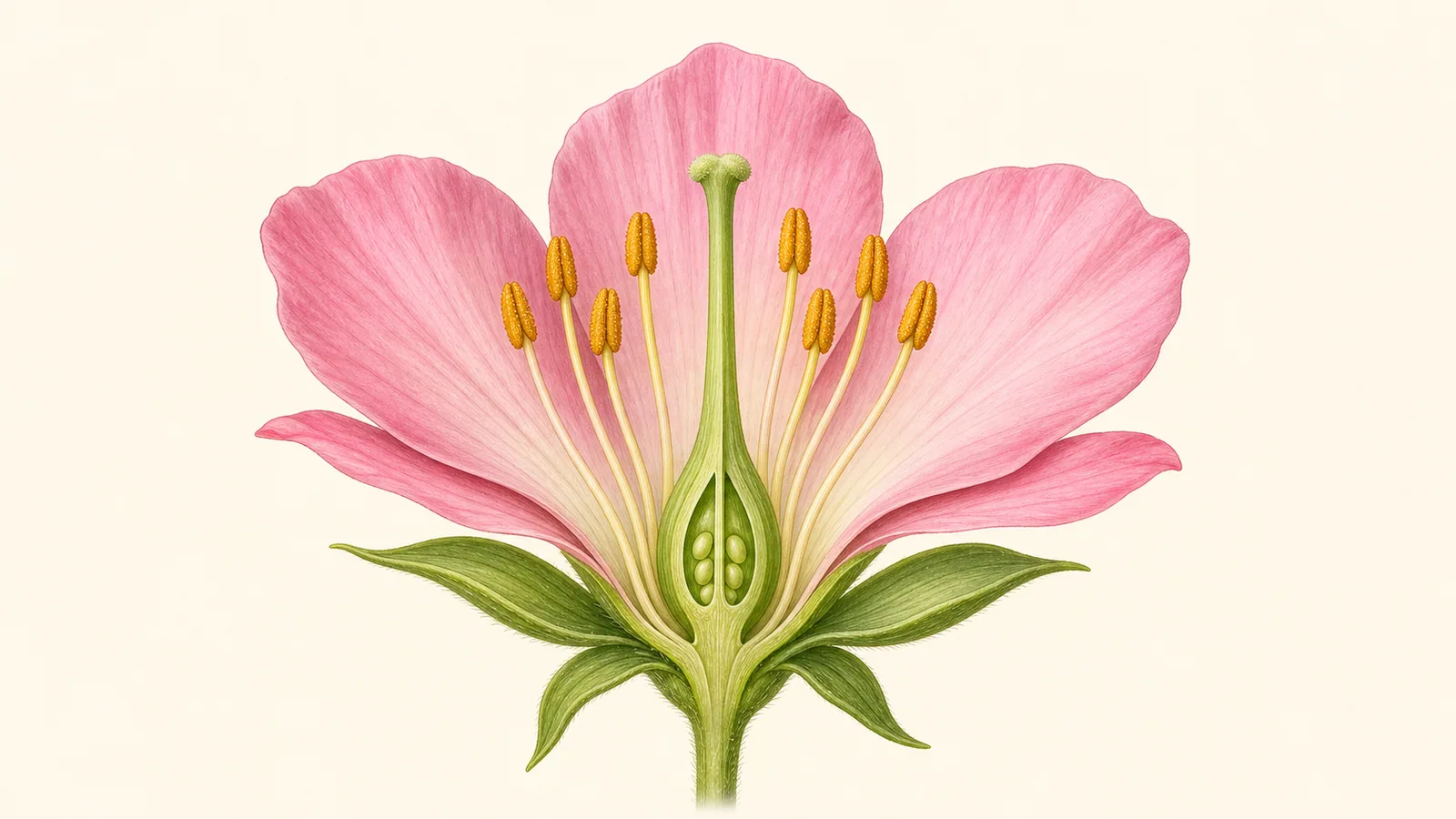
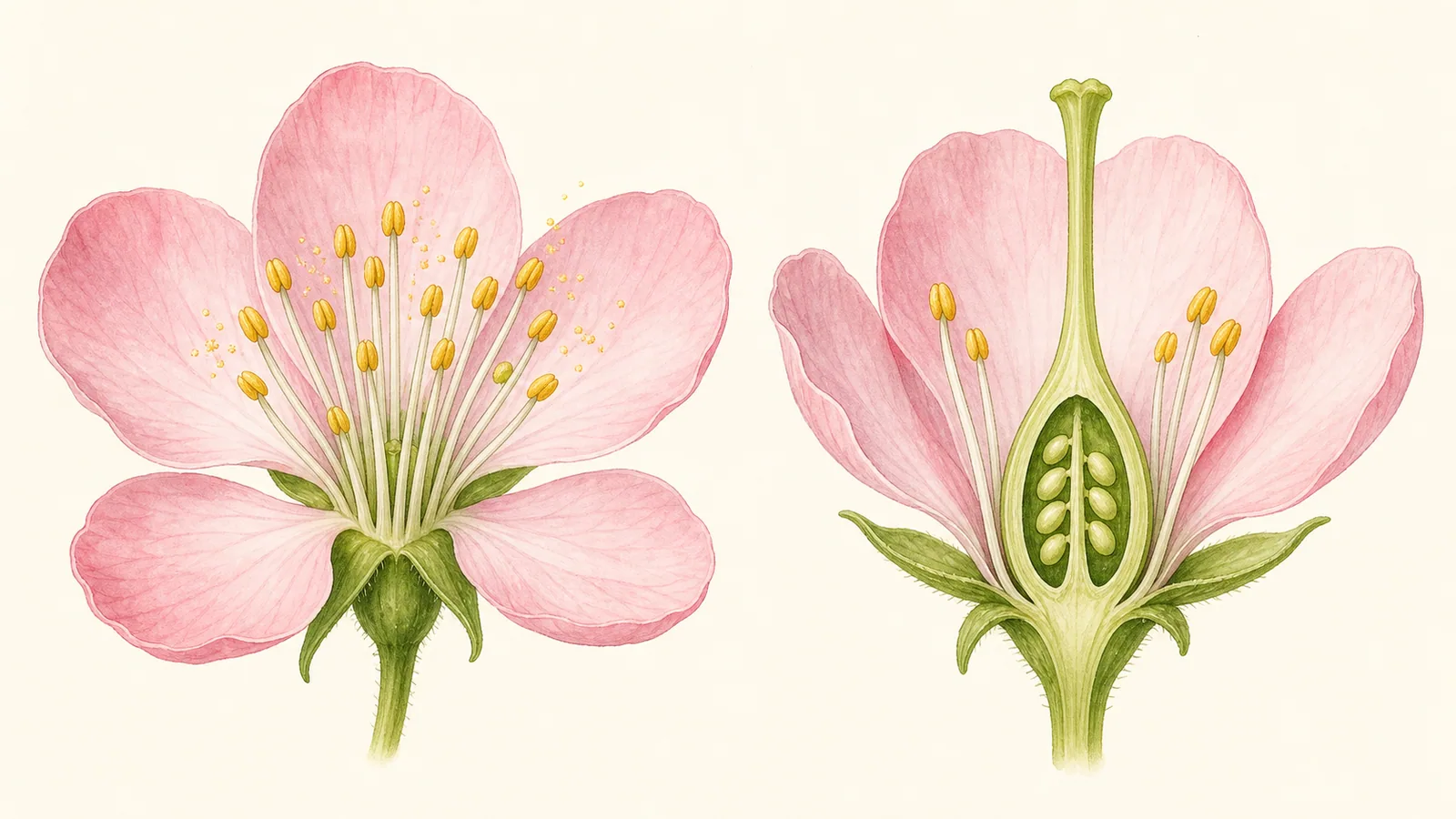
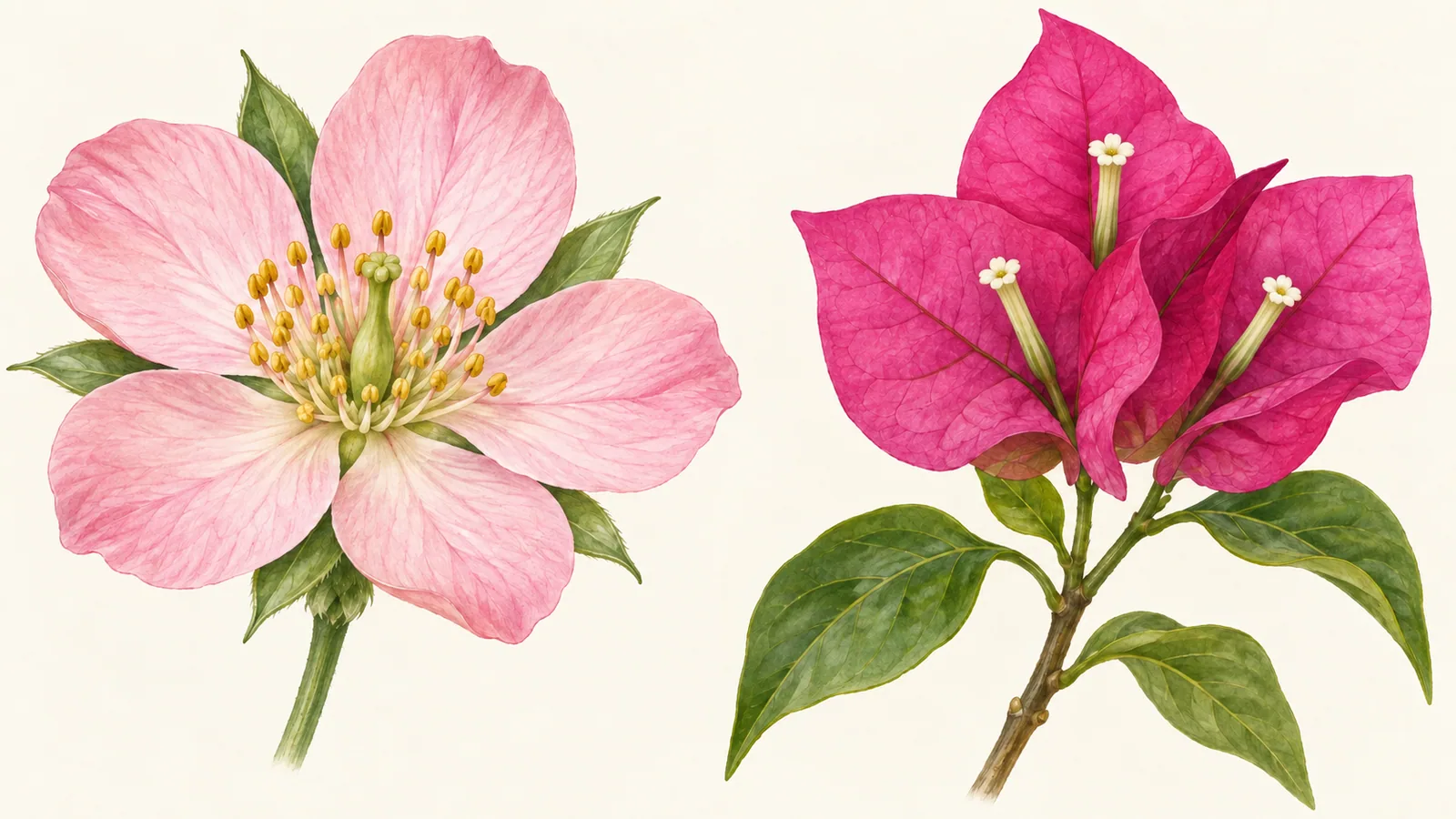
What are the main parts of a flower? A flower is not only its petals. Learn how sepals, petals, stamens, pistils, ovaries, and ovules fit together in a plain-language guide to flower structure.
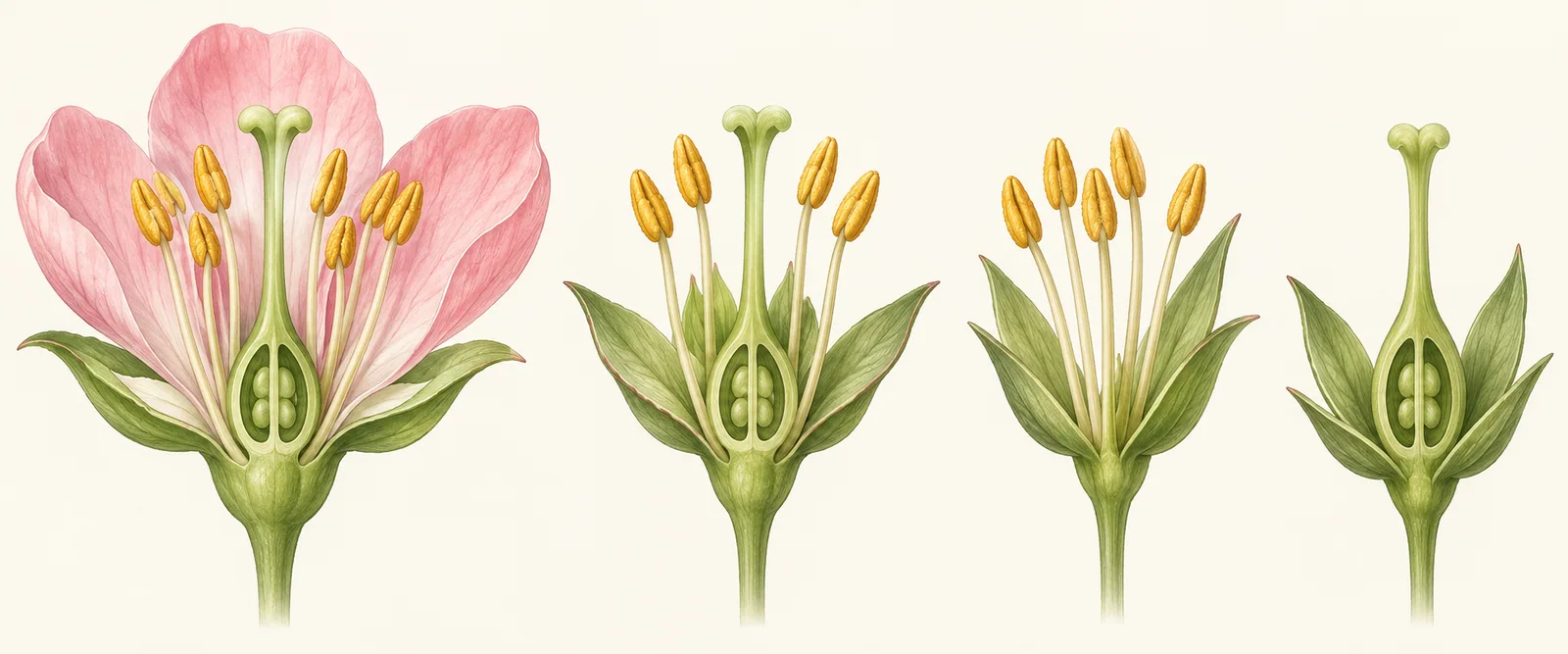
What is the difference between stamens and pistils? Stamens produce pollen, while the pistil/carpel structure receives pollen and contains ovules. Learn the difference in plain language with flower observation examples.
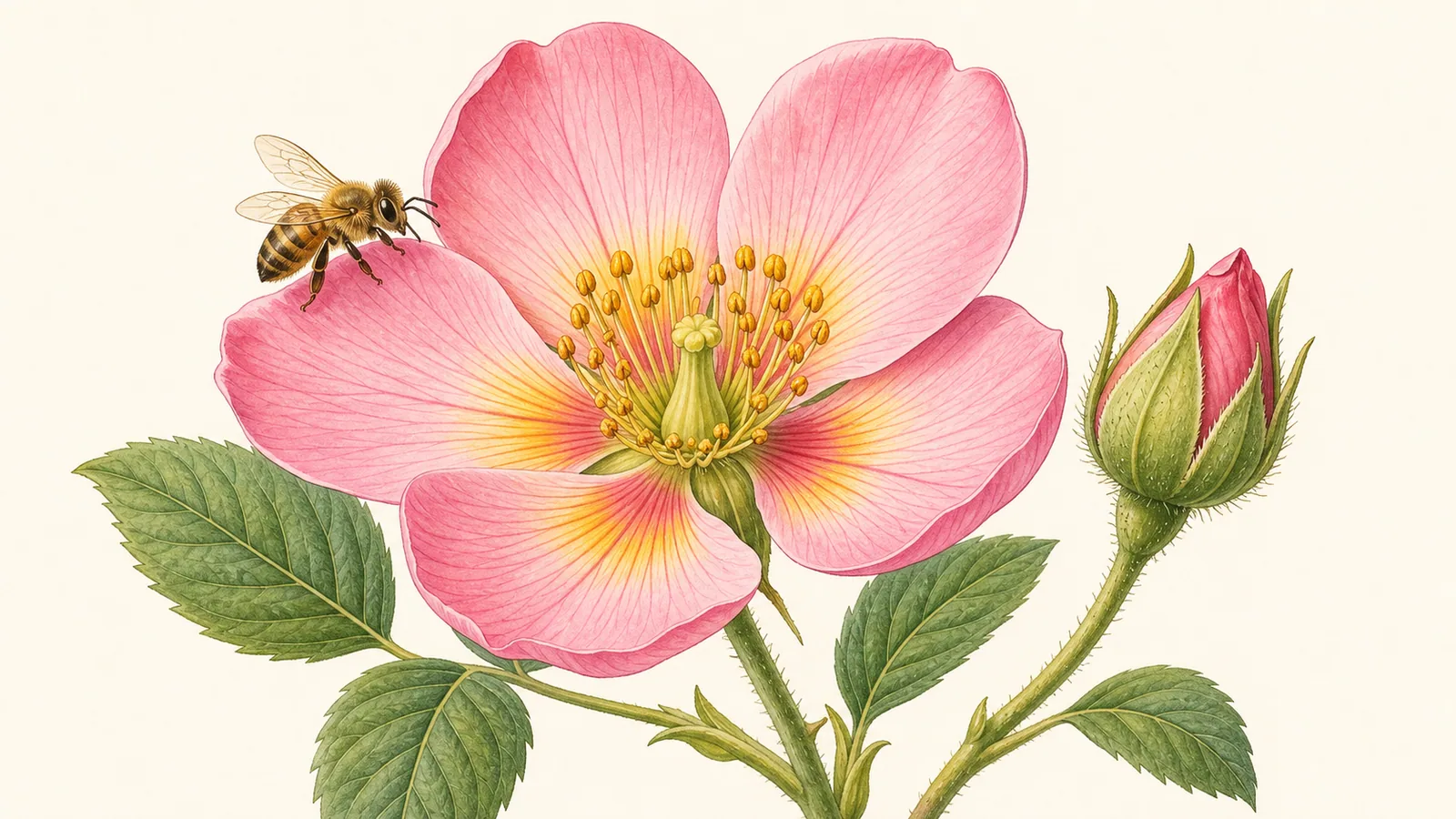
What Do Petals Do? Petals are not only the pretty part of a flower. Learn how petals, sepals, tepals, visual cues, scent, pollinators, and orchid lips fit together.
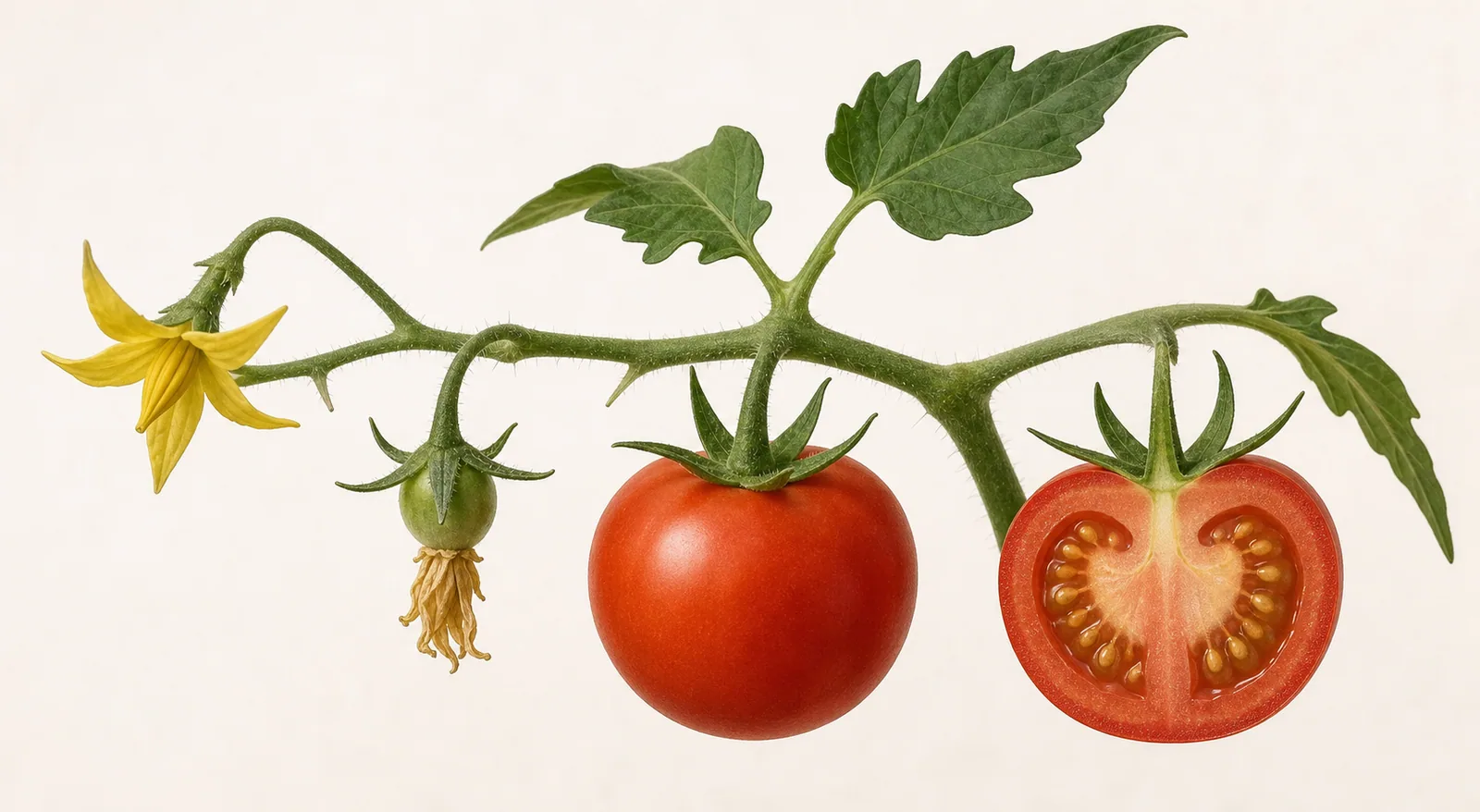
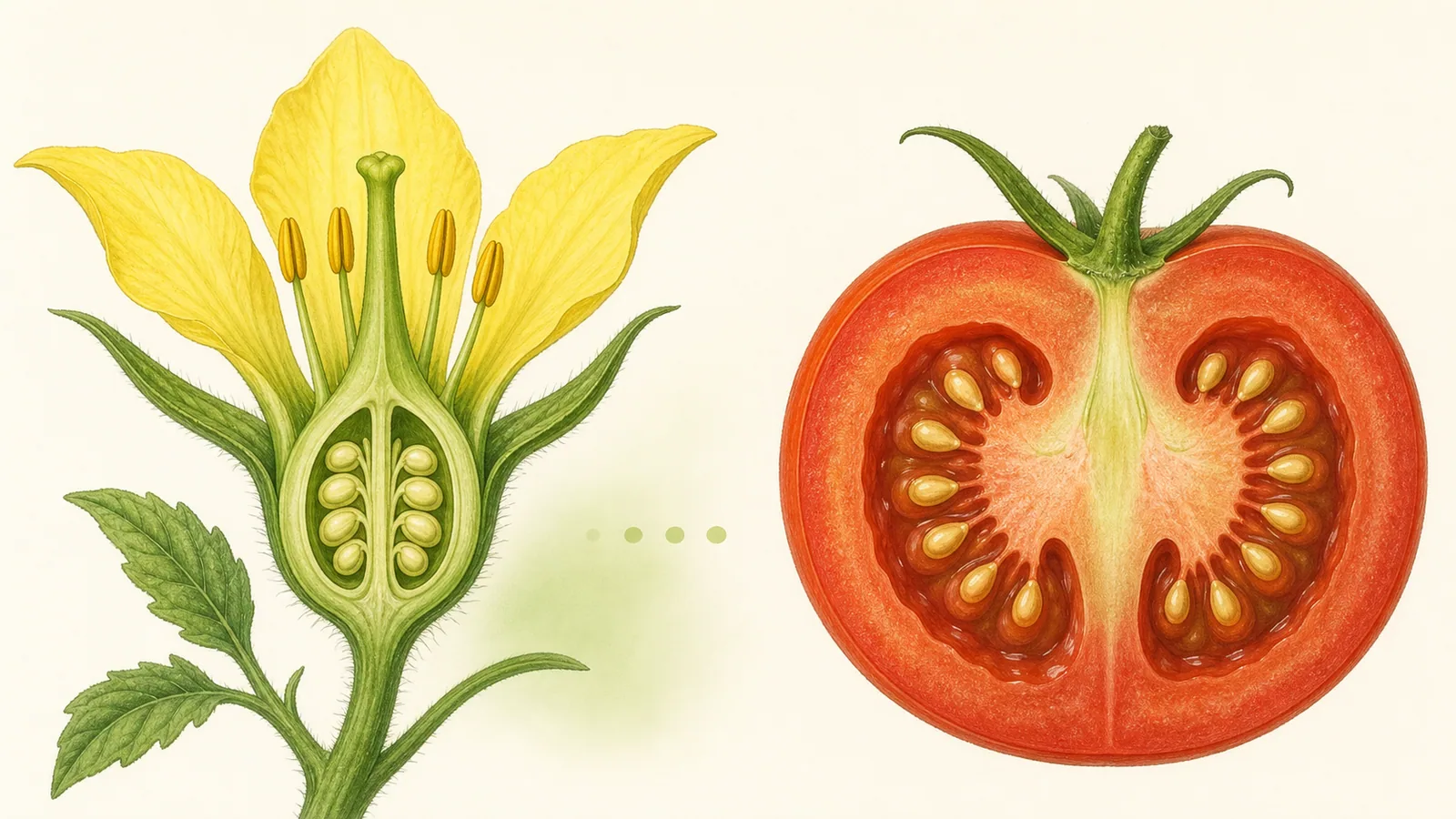
What does fruit do for a plant? In botany, fruit is connected to flowers, ovaries, seeds, and dispersal. Learn why fruit is more than food for people and how it helps plants complete reproduction.
What Is the Difference Between a Fruit and a Seed? A fruit is often the mature structure that surrounds or carries seeds, while a seed contains the embryo that can start a new plant. Learn how ovaries, ovules, fruit tissue, and seeds fit together in flowering plants.
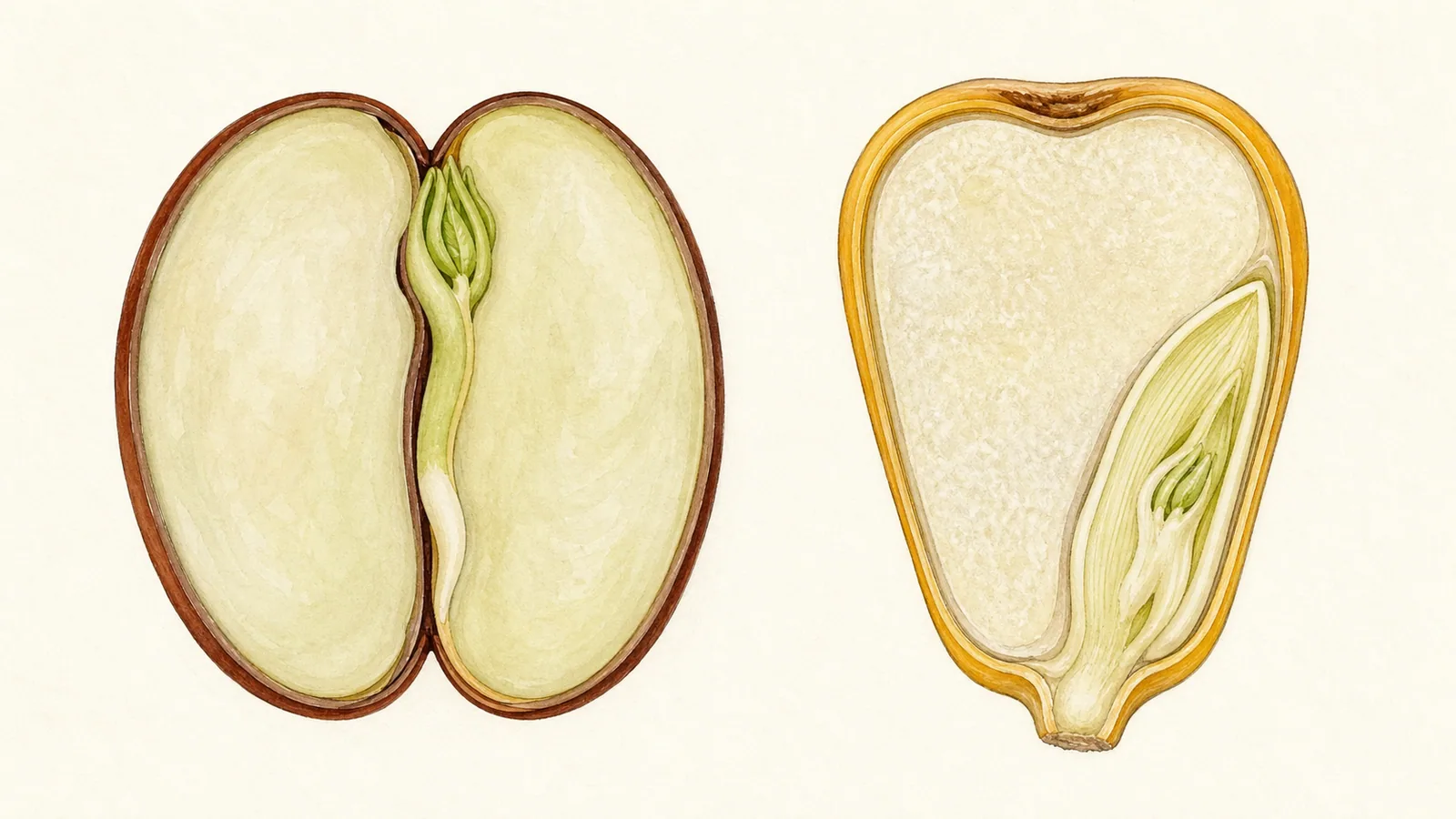
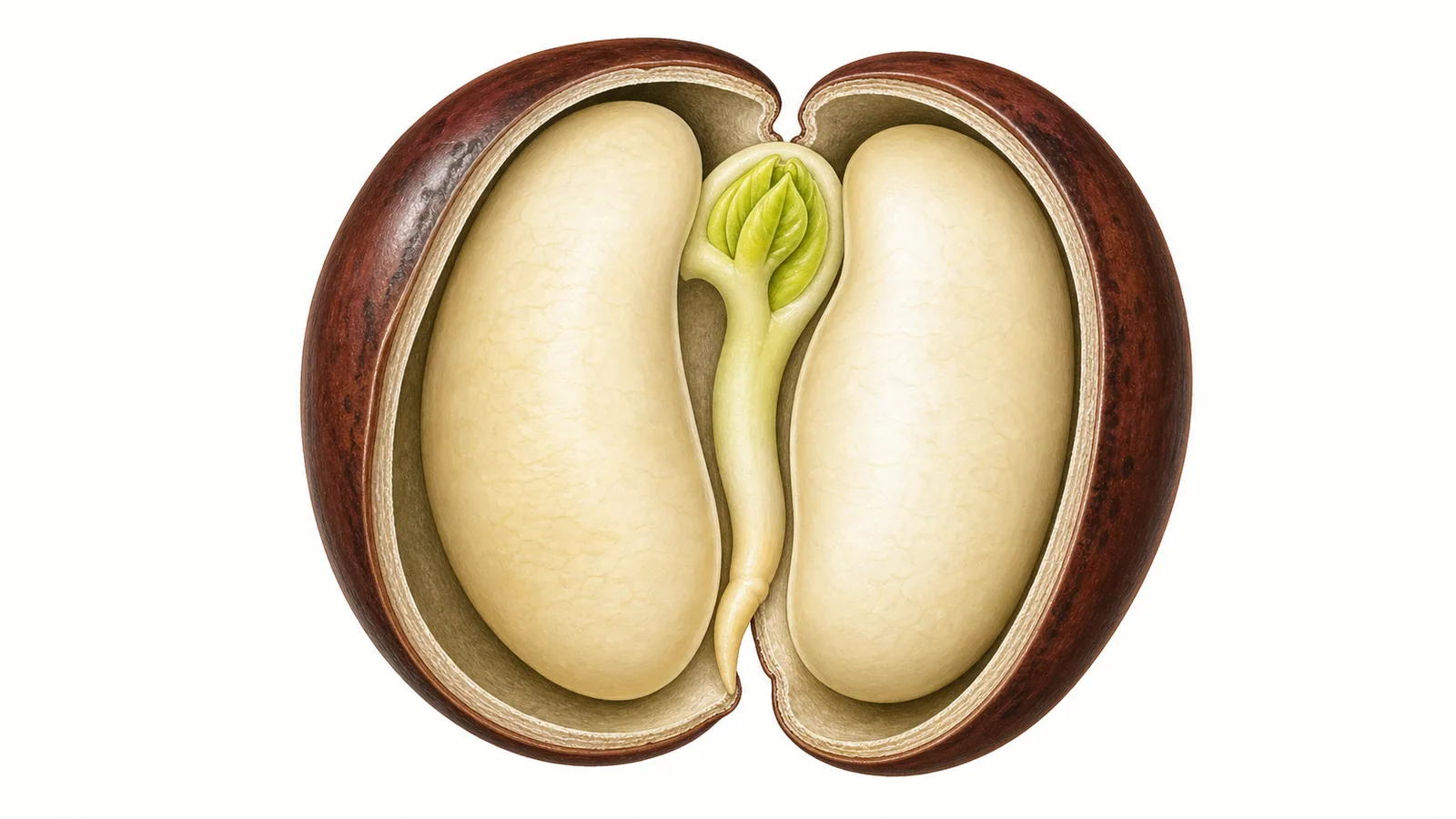
What Are the Parts of a Seed? Learn the main parts of a seed with a clear dicot and monocot diagram. Understand the seed coat, embryo, radicle, cotyledon, endosperm, and stored resources.
What Is a Seed Embryo? A seed embryo is the early form of a new plant inside a seed. Learn how the radicle, plumule, cotyledons, and endosperm differ, and what the embryo does during germination.
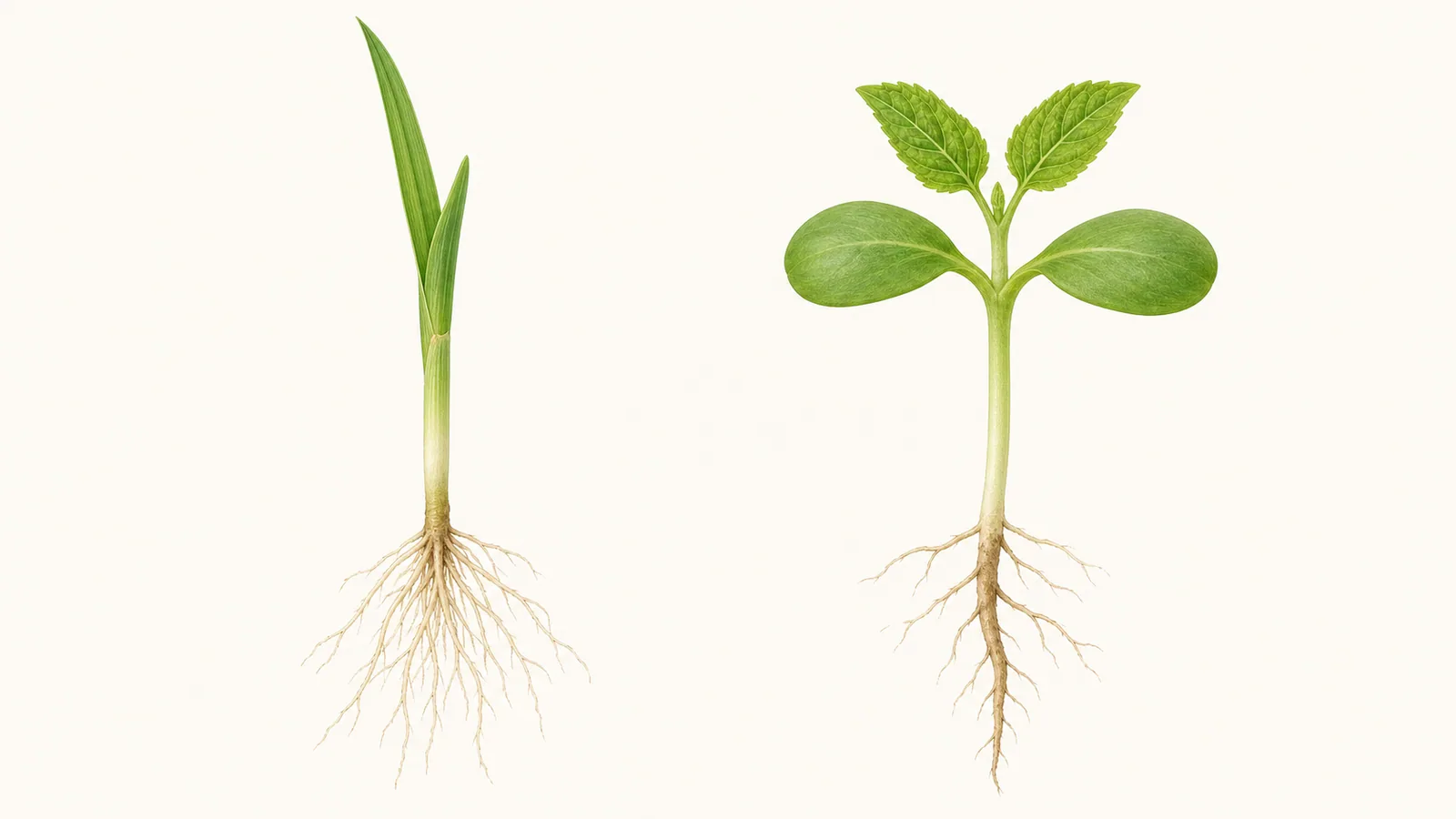
What are cotyledons, and how are monocots and dicots different? Cotyledons are part of the seed embryo and often support early seedling growth. Learn how cotyledons, true leaves, monocots, and dicots fit together without treating every feature as an absolute rule.