Bright to human eyes does not always mean enough light for plants
Human eyes adapt to dim and bright spaces. A room may look bright to you because your eyes adjust. Plant leaves do not use that perception. They respond to the actual light reaching the leaf surface and whether it can support photosynthesis.
Outdoors, the whole sky can act as a broad light source. Even shade outdoors may receive substantial scattered light. Indoors, light often enters through a window opening and is reduced by glass, screens, curtains, eaves, trees, buildings, and distance.
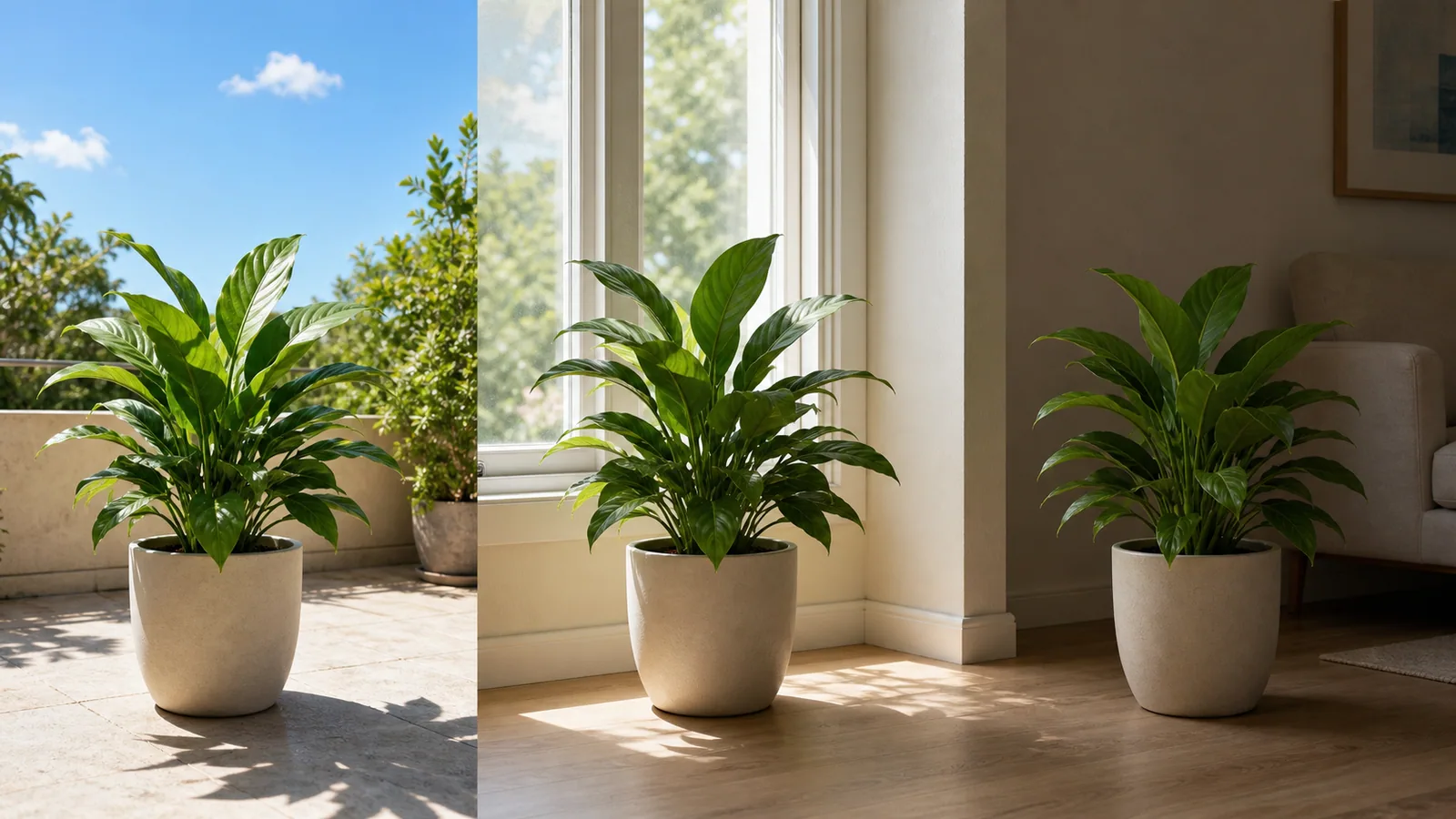
Outdoor light is broad; indoor light is filtered through openings
The biggest difference is the size and strength of the light source. Outdoors, plants can receive sun, sky light, and reflected light from surrounding surfaces.
Indoors, light must pass through windows and obstacles. It may be weakened by curtains, screens, balcony roofs, nearby buildings, or trees. The farther a plant is from the window, the less light usually reaches it.
This is why outdoor shade is not the same as a dark indoor corner. People can still see furniture clearly in a room where plant leaves receive little usable light.
For those everyday light labels, compare direct sun, bright indirect light, and bright shade.
Plants need light they can use for photosynthesis
Plants do not need light only in the sense of visibility. Photosynthesis uses light energy, water, and carbon dioxide to make sugars and other organic materials.
Useful light for plants has several dimensions: intensity, duration, quality, and direction. Intensity is how much light reaches the leaf. Duration is how long useful light is available. Quality describes wavelength composition. Direction asks whether light comes broadly or mostly from one side.
Many ordinary indoor lamps are designed for human vision, not long-term plant growth. This does not mean all lamps are useless; it means room lighting should not automatically be treated as plant-growing light.
Window direction, distance, and shade change everything
South, west, east, and north windows can differ greatly. Outdoor shade from buildings, trees, balconies, screens, and curtains also changes light. Season, cloud cover, and time of day change the same location.
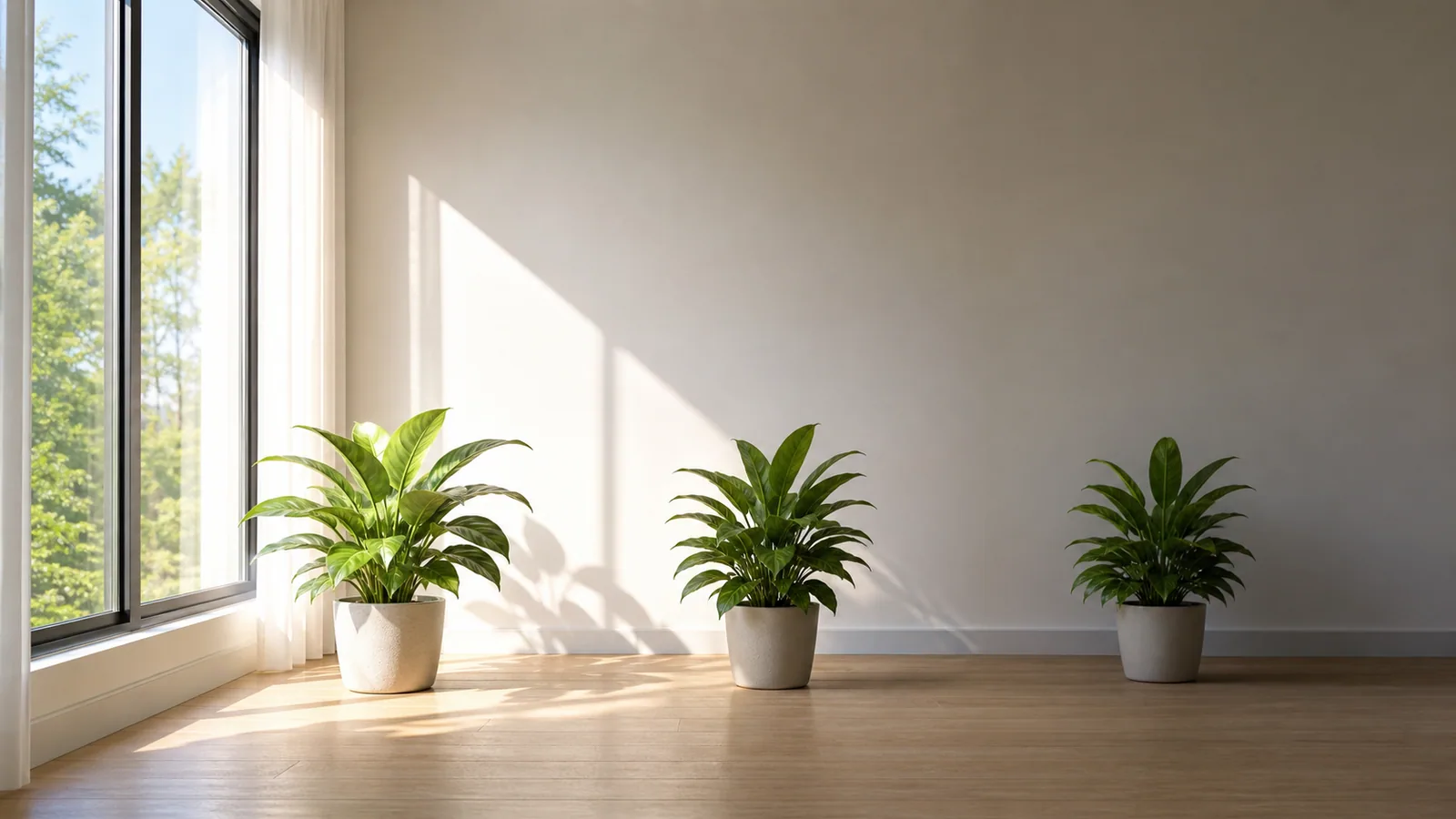
Useful questions include: is the plant far from the window, does light come only from one side, is the window shaded outside, is summer window heat intense, and does winter light become much weaker?
Light differences appear in growth patterns
In low light, some plants may produce longer internodes, lean toward the window, become paler, grow slowly, or flower less. These clues often connect to leggy growth and phototropism.
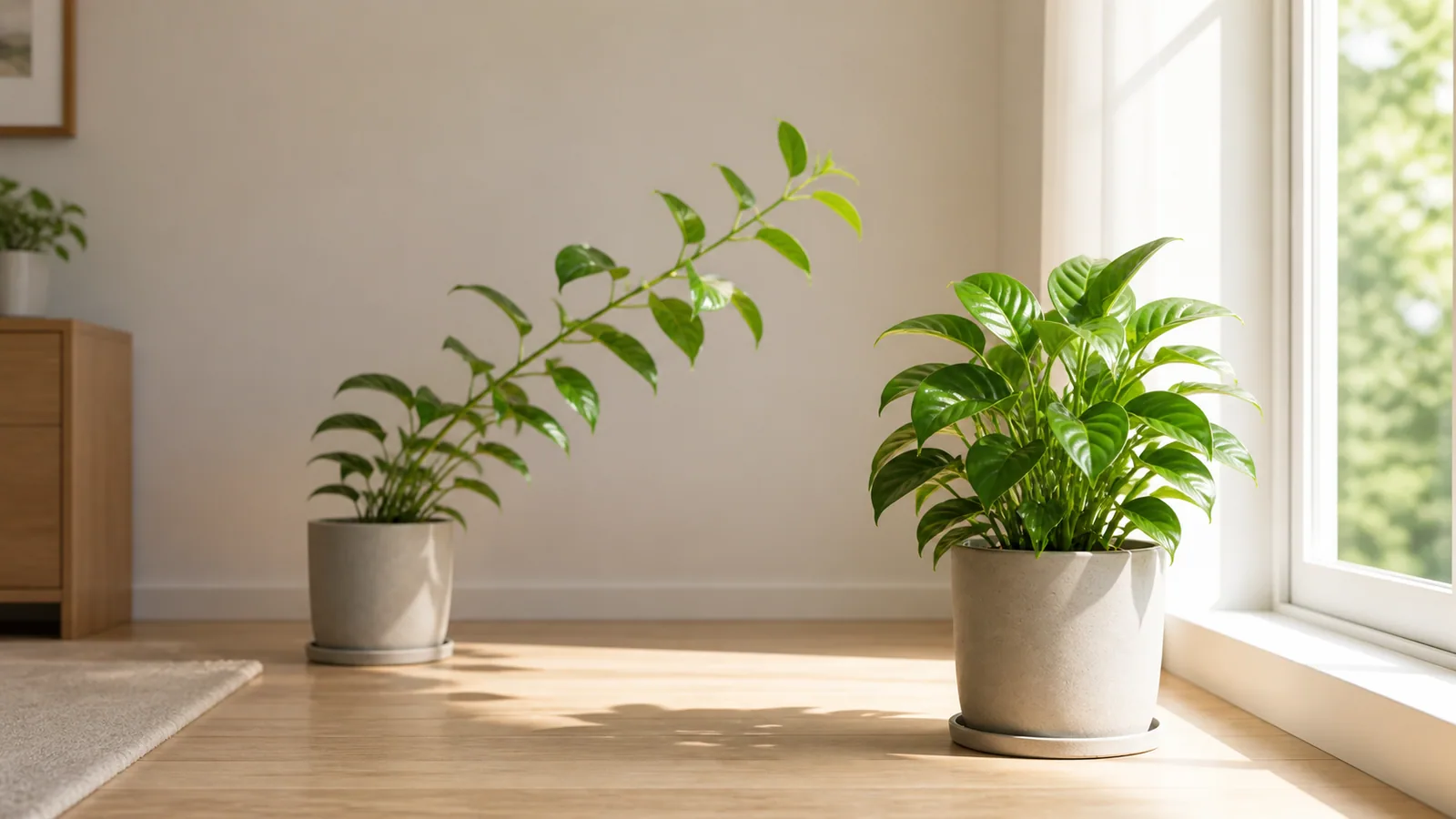
Too much direct sun can also stress some plants, especially if they were grown in shade or indoors before. Bleaching, scorch, or heat stress may appear when light and temperature exceed the plant’s tolerance.
Common confusions
- ✕ If a room looks bright, plants have enough light.
- ✓ Human eyes adapt. Plants respond to actual usable light at the leaf surface.
- ✕ Outdoor shade is the same as an indoor dark corner.
- ✓ Outdoor shade can still receive broad sky light.
- ✕ A window position always prevents leggy growth.
- ✓ Window direction, shade, distance, and season all matter.
- ✕ Ordinary room lights can simply replace sunlight.
- ✓ Many room lights are for human vision, not plant growth.
Frequently Asked Questions
Why can a bright room still be dim for plants?
Because human perception is adaptive. Plants depend on the amount, duration, quality, and direction of light reaching their leaves.
Does being near a window guarantee enough light?
No. Window direction, glass, screens, curtains, outside shade, season, and distance all affect usable light.
Is indoor bright indirect light a fixed standard?
No. It is a convenient gardening phrase, not a fixed number. The actual light changes with window, weather, season, and room layout.
Why do plants grow toward windows?
Indoor light often comes from one side. New growth may bend or stretch toward the brighter direction through phototropism.
Can ordinary indoor lamps replace sunlight?
Usually not by default. Many are designed for human comfort rather than plant growth. This article explains the principle and does not recommend equipment or schedules.
Related Terms
- Light intensity: how much light reaches a leaf.
- Light quality: the wavelength composition of light.
- Light duration: how long useful light is available.
- Diffuse light: scattered light rather than direct beam light.
- Phototropism: growth response to light direction.
- Photosynthesis: using light, water, and carbon dioxide to make sugars.
Read Next
Evidence
References
These sources were used to check the plant-science concepts and gardening context in this article.