
Follow auxin. See why a stem bends.
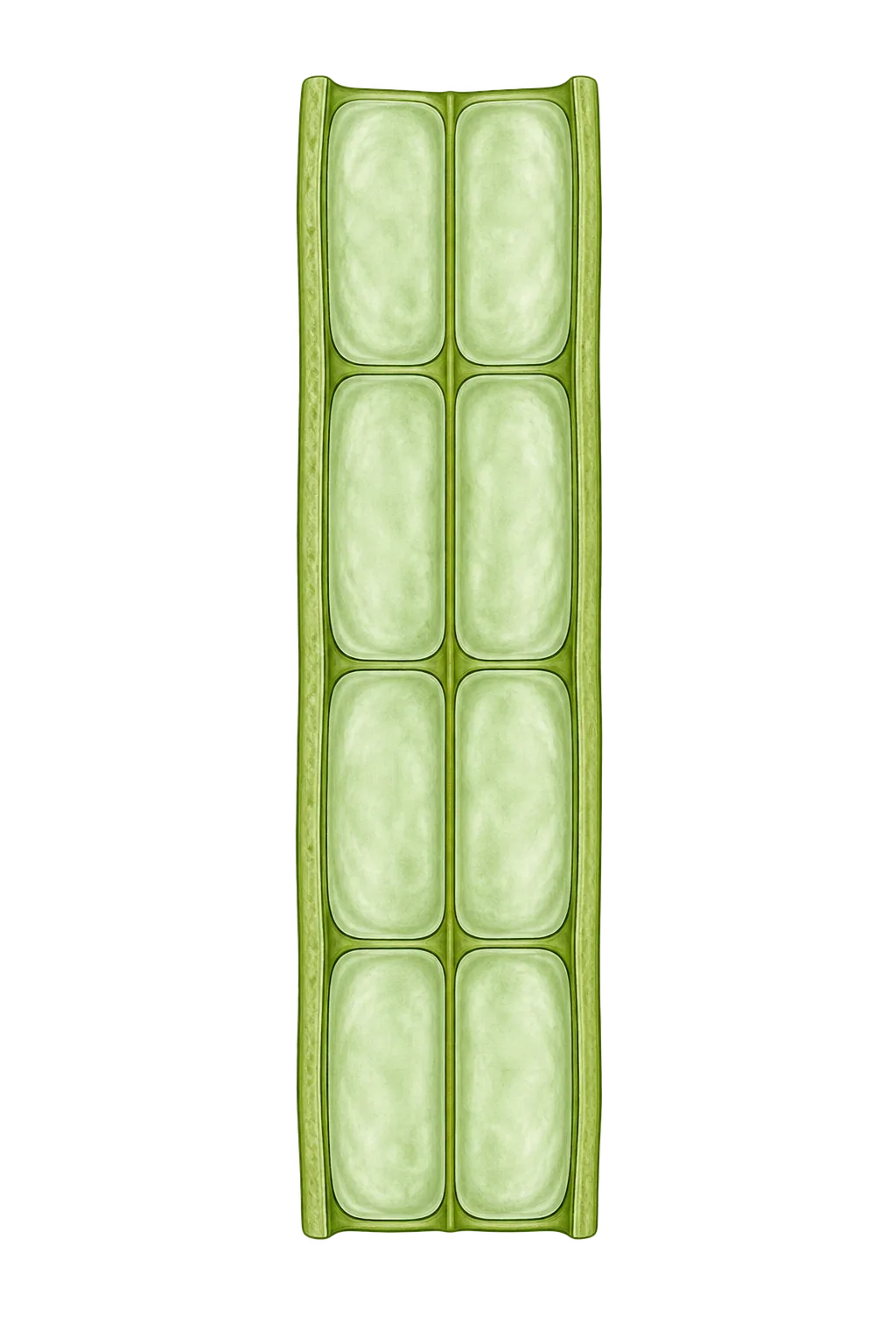
This model illustrates the Cholodny–Went hypothesis: uneven auxin distribution causes unequal elongation on the two sides of a young shoot, bending it toward light.
Schematic young-shoot cells; orange dots represent relative auxin distribution.
Shoots often bend because new growth responds to directional light
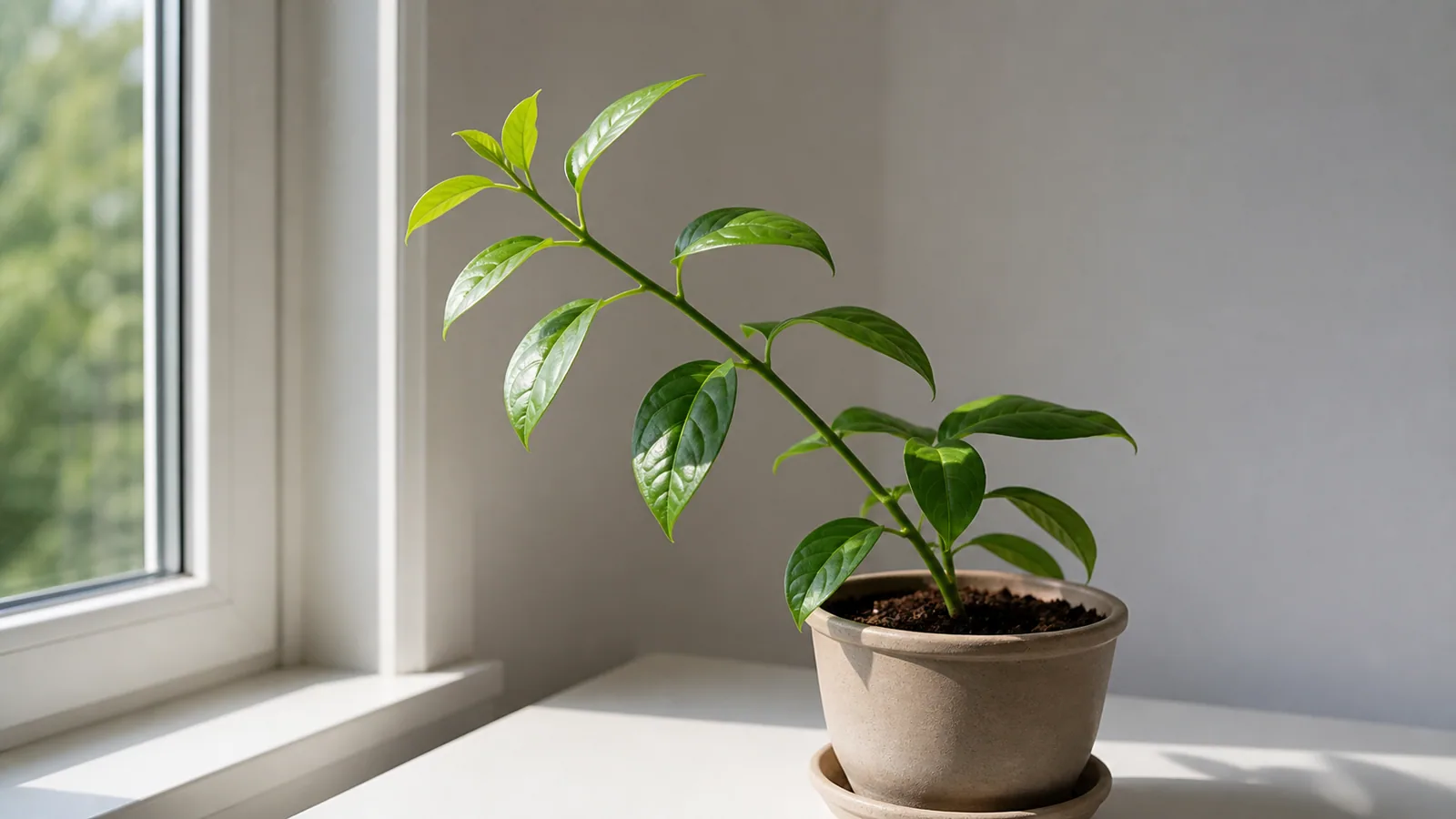
When a plant near a window bends toward the bright side, the plant is showing a response to directional light. This response is called phototropism.
Phototropism is especially visible in growing shoots. The plant is not “thinking” or “reaching” in a human sense. Cells in growing regions respond to light signals, and growth becomes uneven on different sides of the stem or shoot.
The result is a bend. One side elongates more than the other, so the shoot curves toward the light source.
Auxin helps explain the bending
Auxin is a plant hormone involved in growth regulation. In many shoot phototropism examples, directional light leads to an uneven auxin pattern. The shaded side of a young shoot may elongate more than the lit side.
When the shaded side grows longer, the shoot curves toward the light. The bend is therefore caused by unequal growth, not by the plant moving like an animal muscle.
This explanation is a simplified entry point. Real plant responses involve light receptors, hormone movement, tissue type, developmental stage, and environmental context.
Phototropism and photosynthesis are related but not the same
Photosynthesis is the process by which green tissues use light energy to make sugars. Phototropism is a growth response to the direction of light.
The two ideas are connected because bending can place leaves or growing shoots in a better light position. But they are not identical processes.
This distinction matters when explaining indoor plants. A plant leaning toward a window is not literally “doing photosynthesis harder” on that side. It is changing growth direction in response to uneven light.
Existing leaves and new growth may behave differently
Phototropism is most obvious in growing tissues. Existing leaves may also adjust their angle or orientation, but old hardened stems may not straighten completely after being turned.
This is why rotating a pot changes future growth more than it instantly repairs old growth. New leaves and shoots may develop in a more balanced direction after the light pattern changes.
If a plant has grown long and weak in low light, rotation alone may not solve the problem. The plant may need brighter conditions, pruning decisions, or time to produce stronger new growth.
Window plants lean because indoor light is directional
Outdoors, plants often receive light from a broad sky. Indoors, the brightest light often comes from one window. A plant may therefore receive much more light on one side than the other.
The plant may lean, stretch, or produce leaves that face the window. This is not automatically a disease. It is often a normal response to the indoor light pattern.
However, strong leaning can also tell you the light is uneven or insufficient for that plant’s growth habit. The observation is useful, but it should not be turned into a single diagnosis.
Phototropism is not the same as legginess
Legginess usually refers to long, weak, stretched growth, often associated with insufficient light. Phototropism refers to bending toward directional light.
A plant can show both. For example, a seedling in weak window light may stretch upward and lean toward the window. In that case, the long internodes and the bending have related but distinct explanations.
Common confusions
- ✕ Plants bend because they are consciously reaching for the sun.
- ✓ Bending is a growth response controlled by light signals and hormone patterns.
- ✕ Phototropism and photosynthesis are the same thing.
- ✓ Photosynthesis makes sugars using light; phototropism changes growth direction in response to light.
- ✕ Rotating a pot immediately fixes old leaning stems.
- ✓ Rotation mainly affects future growth. Older tissues may not straighten fully.
- ✕ Any plant leaning toward a window is sick.
- ✓ Leaning can be a normal response to directional light, though it may indicate uneven or insufficient light.
Frequently Asked Questions
What is phototropism?
Phototropism is a growth response to light direction. Shoots often show positive phototropism by growing or bending toward light.
Why does the shaded side grow more?
In many shoot examples, auxin distribution leads to more elongation on the shaded side. Unequal elongation bends the shoot toward the light.
Should I rotate my houseplants?
Rotation can help future growth stay more balanced when light comes from one side. It will not instantly straighten older hardened stems.
Is leaning always a sign of too little light?
No. Leaning can happen because the light is directional. But if the plant also has long weak growth, small leaves, or poor development, low light may be part of the issue.
Do roots also respond to light?
Roots have their own growth responses, including responses to gravity, moisture, and other cues. Phototropism is most commonly discussed with shoots bending toward light.
Related Terms
- Phototropism: a growth response to light direction.
- Auxin: a plant hormone involved in growth regulation.
- Elongation: cell or tissue lengthening during growth.
- Internode: the stem section between two nodes.
- Photosynthesis: the process by which green tissues use light energy to make sugars.
- Leggy growth: long, weak, stretched growth often associated with insufficient light.
Read Next
Evidence
References
These sources were used to check the plant-science concepts and gardening context in this article.
View sources and further reading (9)
- pubmed.ncbi.nlm.nih.gov — 16371470
- nature.com — s41467 024 54240 y
- nature.com — ncb2208
- elifesciences.org — 19048
- pubmed.ncbi.nlm.nih.gov — 24334375
- openstax.org — 30 6 plant sensory systems and responses
- bio.libretexts.org — 30.19: Plant Sensory Systems and Responses Blue Light Response
- organismalbio.biosci.gatech.edu — plant hormones and sensory systems
- extension.illinois.edu — lighting