Lots of leaves do not mean the plant is ready to flower
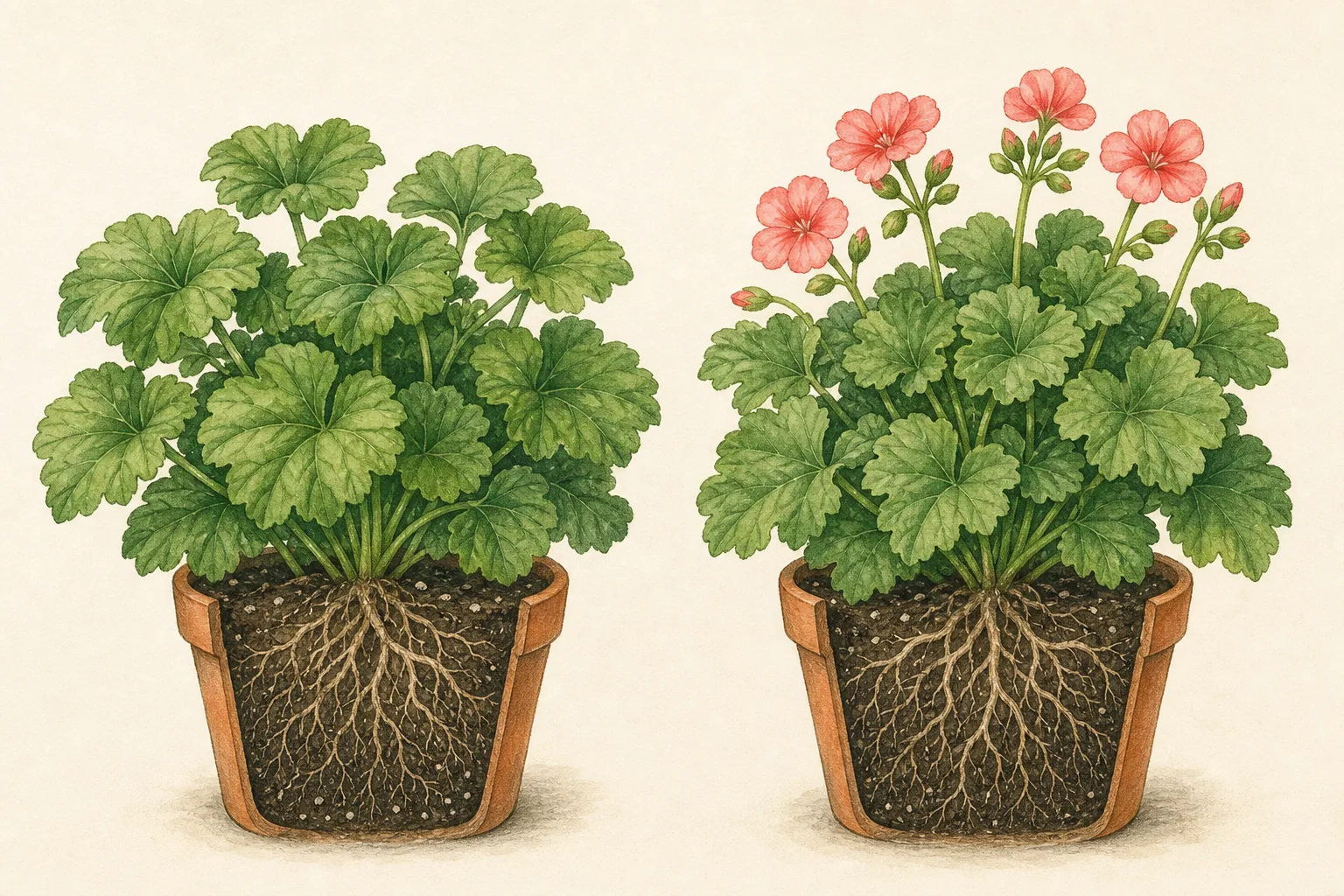
A plant can keep making leaves while it is too young to flower or lacks the light, seasonal cues, or stable water supply needed for blooming. First separate a plant that has never flowered, one that has stopped flowering, and one that forms buds but loses them.
A leafy plant may still be young, may be building its root and leaf system, or may not have received the right environmental signals for flowering. Light, day length, temperature, root condition, water balance, and mineral nutrition can all affect the transition.
| Flowering history | Where to begin |
|---|---|
| This plant has never flowered | Check the species, maturity, and usual flowering season |
| It flowered before but is only making leaves now | Compare the season, light, night lighting, and temperature before the last bloom |
| Buds formed but stalled or dropped | Unlike a plant that has not formed flower buds, check environmental changes and other possible disruptions when bud development stopped |
Plants often build the body first
When a plant mainly produces roots, stems, and leaves, it is in vegetative growth. Here, “vegetative” does not mean fertilizer. It means the plant is building the system that absorbs water, supports the body, and makes organic materials through photosynthesis.
Flowering belongs to reproductive growth. For many flowering plants, flowers can lead to pollination, fertilization, fruits, and seeds. But plants do not devote resources to flowers all the time. Many need enough size, maturity, and environmental cues first.
For young plants, cuttings, recently repotted plants, or plants recovering from root stress, leafy growth may simply be the current stage.
Not every new bud is a flower bud
People often see new shoots and expect flowers next. But buds can become leaves, branches, side shoots, or flowers depending on plant type and conditions.
Flower bud initiation or differentiation is the early shift toward flower formation. It can be affected by species, plant age, light level, day length, temperature, nutrition, and overall plant condition.
Holiday cactus is a common example where longer nights or cooler night temperatures can influence flowering. Some plants require different signals; others are less tied to day length. Do not apply one plant’s flowering condition to every potted plant.

Light is often the first condition to revisit
Leaves use light in photosynthesis to make sugars and other organic materials. These materials support new leaves, roots, and flowers. If a plant is in a position that is too dim, it may survive and grow leaves but not have enough support for reliable flowering.
Indoor light is easy to overestimate. A bright room for human eyes may still be low light for plant leaves. Window direction, curtains, glass, balcony shade, buildings, distance from the window, and season all change actual light.
But brighter is not always better. Different plants tolerate different light levels, and sudden strong direct sun can damage leaves. First ask what light the plant normally needs, then compare that with the actual position.
If the plant is also producing stretched stems with wider gaps between leaves, compare the growth pattern in leggy plants.
Some plants respond to day length and night length
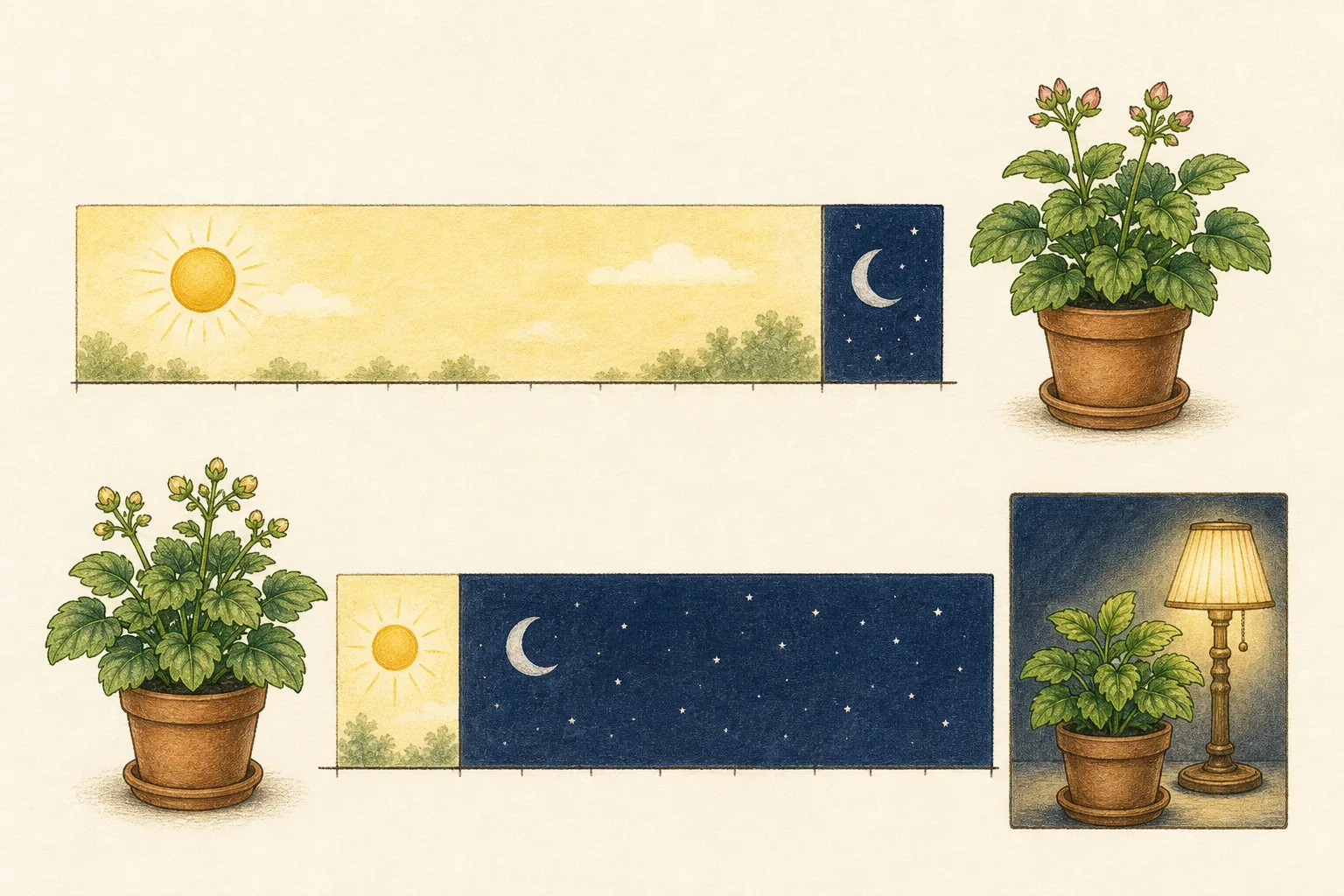
Many plants sense not only brightness but also day and night length. This timing response is called photoperiodism. If you want the sensing mechanism first, see How do plants sense day and night?. Some plants flower more readily under long days. Others require short days or long uninterrupted nights.
For plants that need long nights, indoor lights at night may interrupt the dark period and affect bud formation. Other plants depend more on age, temperature, light intensity, or overall condition.
Temperature, roots, water, and nutrients also matter
Some plants use temperature signals. A cool period or cooler nights may help certain plants enter flowering later. Vernalization is a more specific term for plants that need a period of low temperature before flowering.
Roots and water supply also affect flowering. A plant with stressed roots, waterlogged media, extreme dryness, recent repotting, or unstable water uptake may maintain leaves rather than invest in flowers.
For a separate explanation of how potting media can hold usable water while draining excess water, see water retention and drainage.
Mineral nutrition matters, but fertilizer is not a flower button. If light is poor, roots are stressed, the plant is immature, or the season is wrong, fertilizer does not replace those conditions. Excess fertilizer can also create leafy growth, salt buildup, or root stress.
An observation order for narrowing clues
Start with species. Does this plant normally flower indoors, and at what season or age?
Then look at stage. Is it a young plant, a recent cutting, a recently repotted plant, or a plant recovering roots?
Next check light. Is the position too dim, too far from a window, or receiving only brief light?
Then consider day length and temperature. Does the plant need longer nights, cooler nights, or a seasonal temperature cue?
After that, check roots, water, and media. Is the pot too wet, too dry, or poorly aerated?
Only then move to mineral nutrition. Avoid treating fertilizer as the first and only answer.
Common confusions
- ✕ Many leaves mean flowers will come soon.
- ✓ Leaf growth is vegetative growth; flowering also depends on stage and environmental signals.
- ✕ A plant that does not flower must lack fertilizer.
- ✓ Light, day length, temperature, roots, water, age, and season can all matter.
- ✕ More fertilizer will make the plant flower.
- ✓ Excess fertilizer can produce vigorous leafy growth, salt buildup, or root stress; it cannot replace the plant’s required light, temperature, maturity, or other cues.
- ✕ Every flowering plant should flower every year indoors.
- ✓ Indoor conditions may not match the plant’s flowering signals.
- ✕ Not flowering and bud drop are the same.
- ✓ Not flowering means buds or flower stalks may not form. Bud drop means formed buds were interrupted.
Frequently Asked Questions
Does leafy growth mean the plant is healthy?
Not necessarily. It means the plant is growing leaves, but flowering also depends on maturity, light, roots, water, and environmental signals.
Should I use flowering fertilizer immediately?
Do not treat fertilizer as the first answer. Check plant type, light, roots, season, water, and growth stage first. These observations help separate a growth-stage or environmental cue from unstable root-zone supply.
Why are the leaves green but there are no flowers?
Green leaves suggest leaf function may be present, but flowering can still require stronger light, a seasonal cue, maturity, stable roots, or correct day length.
Are light quantity and photoperiod the same thing?
No. Light quantity is how much light reaches the leaves and supports photosynthesis; photoperiod is the timing of light and darkness within a daily cycle. Some plants respond to both, while others depend more on one. More light does not automatically replace a photoperiod cue.
Is a cool night the same as vernalization?
No. A cool night is a temperature cue; vernalization usually refers to certain plants needing an extended low-temperature period at a suitable developmental stage before flowering becomes more likely or possible. The two terms are not interchangeable.
Is not flowering the same as bud drop?
No. Not flowering means flower buds or stalks may not have formed. Bud drop means buds formed but development stopped.
Can repotting delay flowering?
Yes, in some cases. After repotting, a plant may focus on root recovery and new vegetative growth before flowering.
What should I check first when a flowering houseplant keeps making leaves but no flowers?
Start with the plant species, its age or growth stage, and the actual light at leaf level. Then check whether that species responds to day length or temperature and whether its roots and water supply are stable. These factors help narrow the observation; they are not a universal flowering recipe.
Will leaving a light on all night make a plant flower?
Not necessarily. Light for photosynthesis and the timing of light and darkness play different roles. For plants that need a long, uninterrupted night, night lighting can interfere with flower-bud formation. Check the species before changing its light schedule.
Related Terms
- Vegetative growth: growth of roots, stems, and leaves.
- Reproductive growth: growth related to flowers, fruits, and seeds.
- Flower bud: a bud that may develop into a flower.
- Flower bud differentiation: the early shift of a bud toward flower formation.
- Photoperiod: the duration of light and darkness in a daily cycle. Photoperiodism is the plant’s response to that timing.
- Vernalization: flowering response after exposure to a low-temperature period in some plants.
- Mineral nutrition: inorganic elements absorbed by plants, often through roots.
Read Next
Evidence
References
These sources were used to check the plant-science concepts and gardening context in this article.