
Plants do not have lungs, but plant cells respire
Living plant cells respire in light, dim light, and darkness, transferring energy from sugars into forms they can use. Respiration does not directly require light. Aerobic respiration uses oxygen and produces carbon dioxide and water. Gas exchange moves gases into and out of tissues; cellular respiration is the chemical process that makes energy available inside cells.
Photosynthesis and respiration are related but different. Photosynthesis uses light energy to make sugars from carbon dioxide and water. Respiration breaks down sugars to release energy that cells can use.
This is why plants need both light-related sugar production and ongoing respiration. A plant is not only a green object making food; it is also a living organism whose cells use energy all the time.
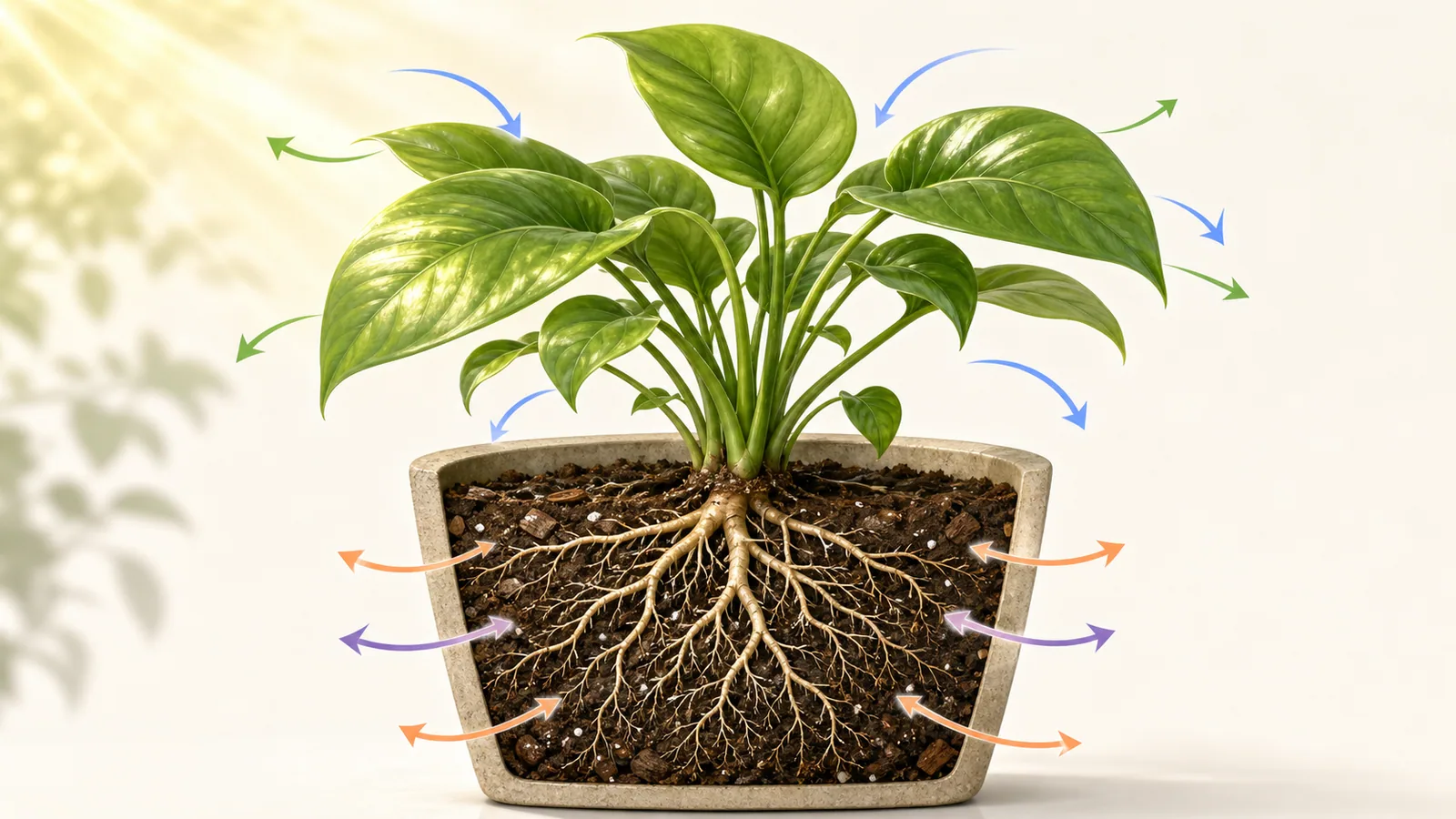
Respiration happens throughout the plant
Leaves, stems, roots, flowers, fruits, and seeds all contain living cells. Living cells need energy. Respiration is one major way cells release usable energy from sugars.
This is especially important for tissues that are not photosynthesizing. Roots are underground or inside potting media, so they do not usually receive enough light for photosynthesis. They still need oxygen for respiration.
Growing tissues, root tips, germinating seeds, and developing flowers or fruits may have strong energy needs. Plant life is not limited to leaves.
Gas exchange is not the same as animal breathing
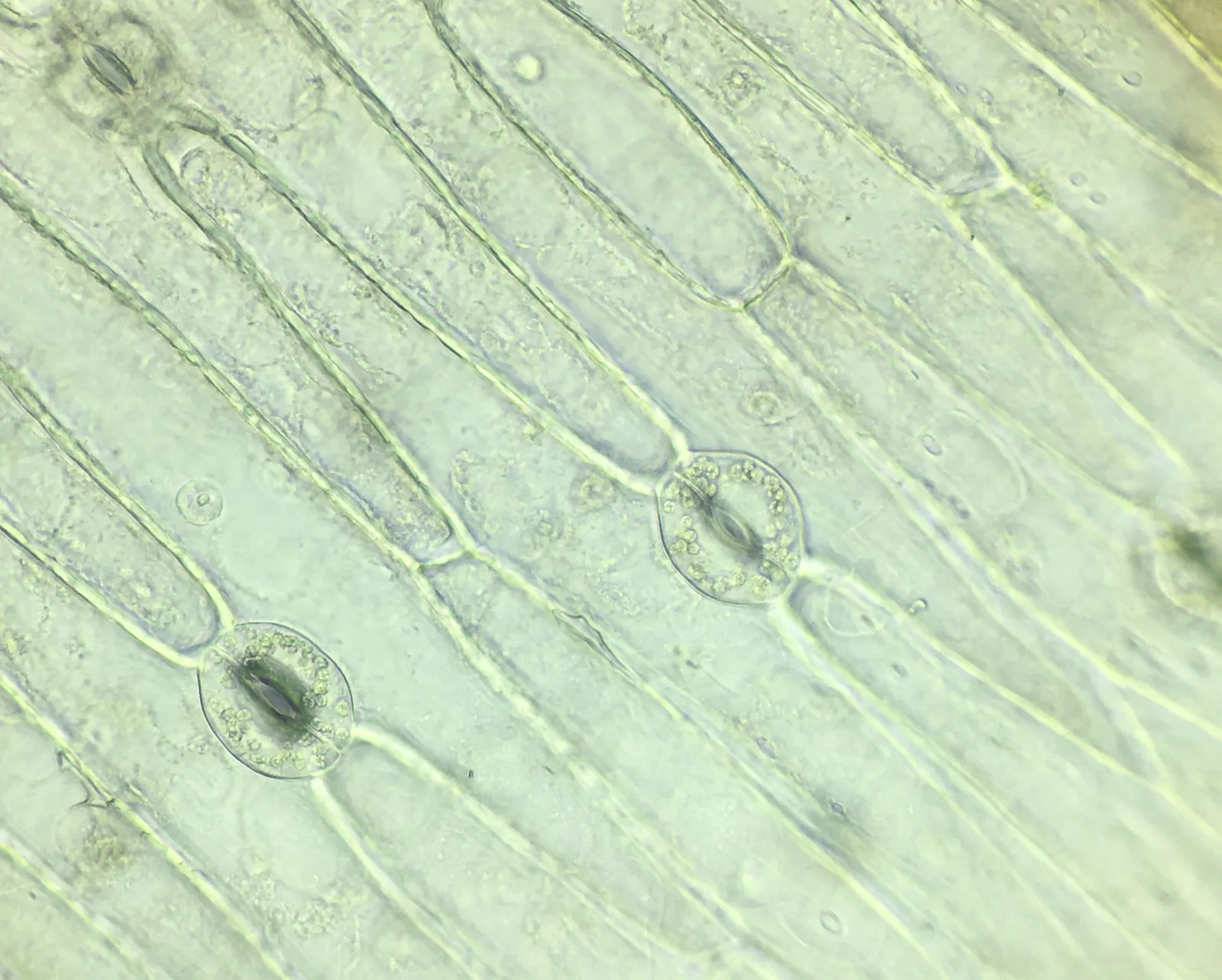
Animals often use lungs, gills, or other organs to move gases. Plants exchange gases through surfaces and openings, including stomata on leaves and air spaces around roots.
Stomata allow carbon dioxide to enter leaves for photosynthesis, and they also allow oxygen and water vapor to move. But stomata are not lungs. They are small adjustable pores controlled by guard cells.
Roots exchange gases through the spaces in soil or potting media. If those spaces are filled with water for too long, oxygen can become limited.
What changes in light, dim light, and darkness?
With suitable light and other conditions, a leaf can photosynthesize and respire at the same time. Photosynthesis uses carbon dioxide and releases oxygen; aerobic respiration uses oxygen and releases carbon dioxide. Net carbon dioxide uptake means that uptake exceeds release at that moment, not that respiration has stopped.
In dim light, photosynthesis may still occur, yet carbon uptake may not cover the carbon being used. The light compensation point is the light level at which a leaf’s carbon dioxide uptake and release balance, giving approximately zero net exchange. It describes that leaf under those conditions; it does not establish that the whole plant gains enough carbon over an entire day.
In complete darkness, the light reactions cannot keep supplying energy and reducing power for photosynthesis. Respiration can still use organic compounds already stored in the tissue or supplied from elsewhere in the plant.
| Conditions | Photosynthesis | Cellular respiration |
|---|---|---|
| Suitable light and other conditions | Can occur, allowing possible net carbon gain | Continues alongside photosynthesis, using organic compounds |
| Dim light | May still occur, without necessarily covering carbon use | Does not stop simply because light is weak |
| Complete darkness | Cannot keep supplying new organic compounds through photosynthesis | Can still obtain energy from existing organic compounds |
The useful distinction is between carbon gained through photosynthesis, carbon used during respiration, and their combined effect on net gas exchange.
Roots need oxygen as well as water
Roots need oxygen for aerobic respiration. In soil or potting mix, oxygen diffuses from the atmosphere through connected air-filled pores to replace what roots consume. Prolonged saturation can restrict that supply.
Roots can also use oxygen dissolved in water. Hydroponic roots still need access to air or sufficiently oxygenated water; oxygen supply, rather than the presence of water alone, is the key distinction.
Common confusions
- ✕ Plants only photosynthesize and do not respire.
- ✓ Plants photosynthesize and respire. These are different processes.
- ✕ Respiration only happens at night.
- ✓ Respiration happens day and night in living plant cells.
- ✕ Roots do not need oxygen because leaves make oxygen.
- ✓ Roots need an oxygen supply, from air-filled pores or oxygenated water. Oxygen made in leaves does not guarantee enough oxygen around roots.
- ✕ Stomata are plant lungs.
- ✓ Stomata are pores for gas exchange, not breathing organs like lungs.
Frequently Asked Questions
Do plants take in oxygen?
Yes. Plant cells use oxygen during aerobic respiration. The whole plant can also release oxygen during photosynthesis when light is available.
Do plants still respire when there is not enough light?
Yes. Respiration does not directly need light. In dim light, photosynthesis may still occur without providing enough carbon to cover use; in complete darkness, existing sugars can still support respiration. This does not mean a plant can live indefinitely without light, because its organic reserves continue to be used.
Is plant respiration the opposite of photosynthesis?
They are connected, but it is too simple to call them exact opposites. Photosynthesis stores energy in sugars. Respiration releases usable energy from sugars for cell work.
Why do roots need air?
Root cells need oxygen for respiration. If soil or potting media lacks air spaces, root function can decline.
Do plants breathe through leaves?
Leaves exchange gases through stomata and other surfaces, but plants do not breathe with lungs. It is more accurate to say they exchange gases and carry out cellular respiration.
Do seeds respire?
Yes. Germinating seeds use stored resources and oxygen to support early growth before leaves can photosynthesize strongly.
Does plant respiration happen in the stomata?
No. Stomata provide openings for gas exchange; respiration occurs inside living cells. Glycolysis, the first stage of sugar breakdown, begins in the cytoplasm. The later main stages of aerobic respiration involve mitochondria. See diffusion and osmosis in plants for how gases and water move through tissues and membranes.
Related Terms
- Respiration: the cellular process that releases usable energy from sugars.
- Photosynthesis: the process that uses light energy to make sugars from carbon dioxide and water.
- Stoma: a tiny pore involved in gas exchange.
- Oxygen: a gas used in aerobic respiration.
- Carbon dioxide: a gas used in photosynthesis and released during respiration.
- Aeration: the presence of air spaces in soil or potting media.
Read Next
Evidence and attribution
Sources and image rights
These sources were used to check the plant-science concepts and gardening context in this article.
View sources and further reading (8)
- extension.missouri.edu — snowbird season for houseplants
- extension.umn.edu — small scale hydroponics
- openstax.org — 7 2 glycolysis
- openstax.org — 7 1 energy in living systems
- openstax.org — 8 3 using light energy to make organic molecules
- openstax.org — 8 1 overview of photosynthesis
- rhs.org.uk — how plants breathe
- extension.colostate.edu — understanding tree roots
Image sources and rights
- Emilio Ermini / Wikimedia Commons · CC BY 4.0 — The source JPEG was prepared as WebP for delivery.
