Pollination means pollen reaches the stigma
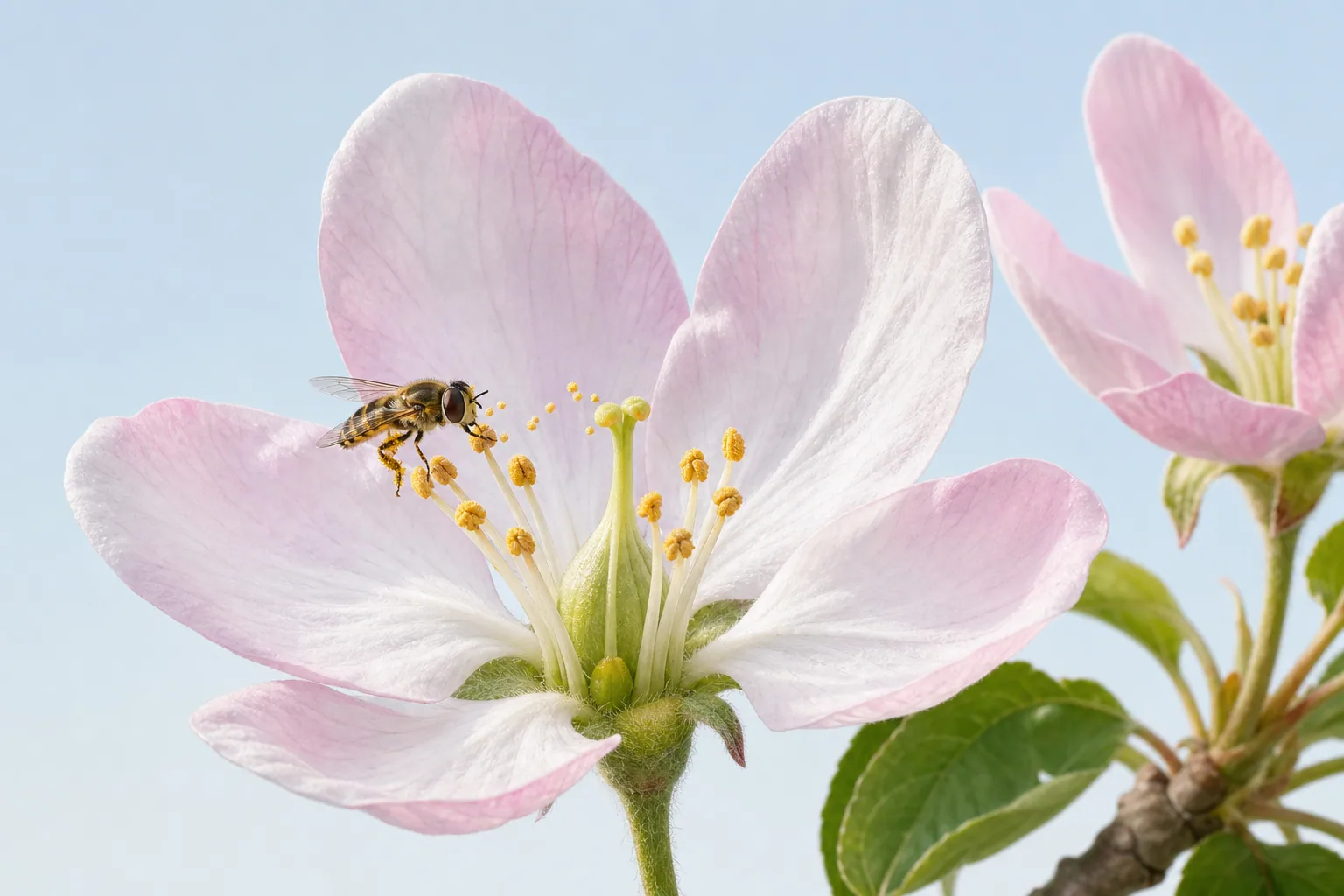
Pollination can start with a simple idea: pollen is moved to the stigma. Pollen is commonly produced by anthers, and the stigma is the receptive surface at the top of a pistil or carpel.
This step matters because in many flowering plants, seeds and fruits can form only after pollen reaches the right floral structure. Pollen on a petal, leaf, or insect body is not yet the same as pollination. It must reach a receptive stigma before the next steps can begin.
Pollination is not the same as fertilization
Pollination and fertilization are often confused. A clear distinction is: pollination is pollen reaching the stigma; fertilization is the union of sperm cells with egg cells inside the ovule.
After compatible pollen lands on a receptive stigma, it may germinate and grow a pollen tube. The pollen tube grows through the style toward the ovary and ovules, carrying sperm cells toward the site where fertilization can occur.
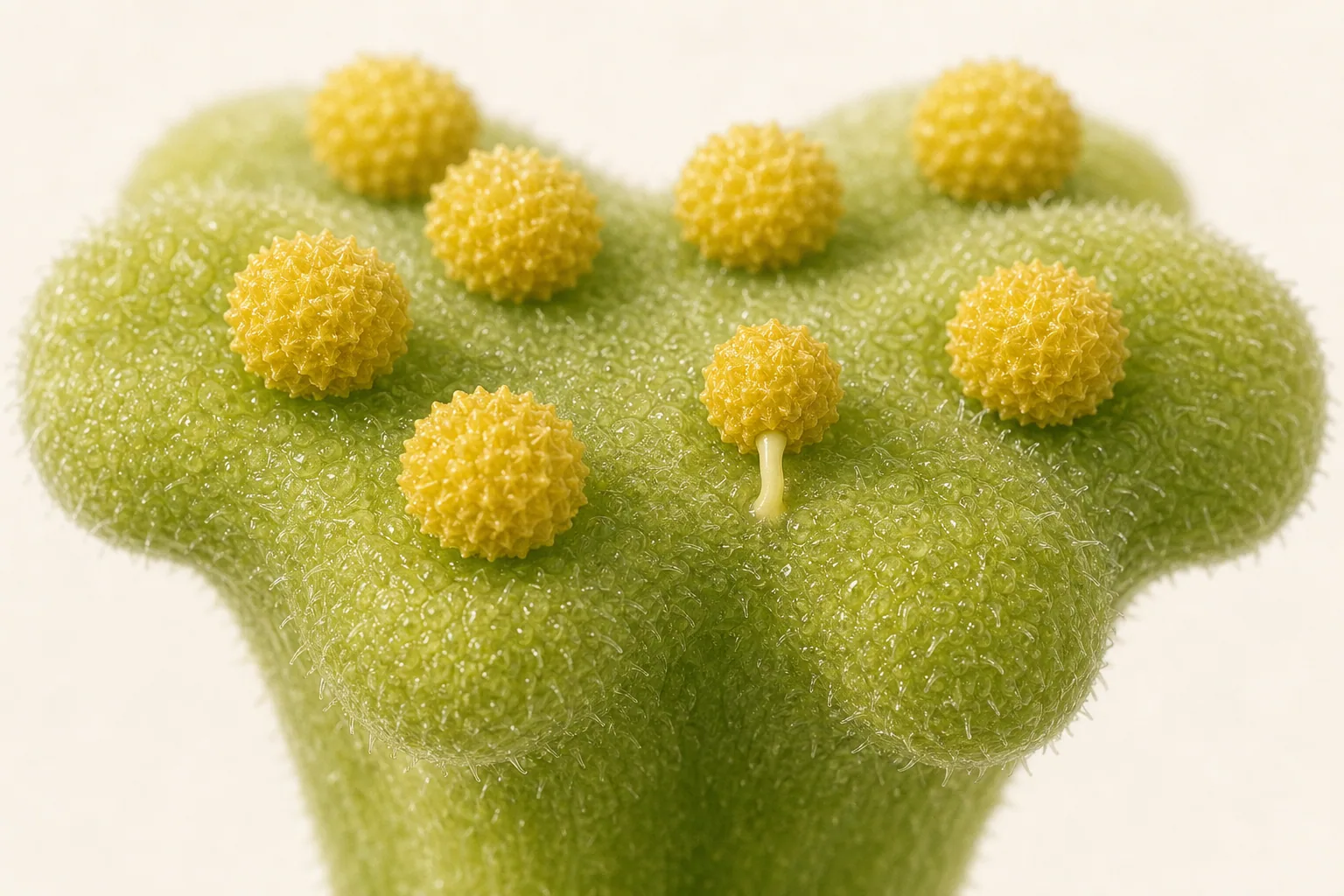
Pollination is therefore an entry step, not the end of reproduction. Pollen can reach a stigma without successful fertilization, and successful pollination does not guarantee mature fruit.
From pollen to seed, there are several steps
It helps to separate the process into stages.
First, pollen moves from an anther to a stigma. Second, compatible pollen may germinate and grow a pollen tube toward an ovule. Third, fertilization may occur. After that, ovules can develop into seeds, and the ovary may contribute to fruit formation.
This sequence prevents a common mistake: seeing a flower, seeing an insect, and assuming fruit must follow. Flowering gives the plant an opportunity. The later steps still need to work.
Bees are not the only pollinators
Bees are familiar pollinators, but pollination is not the same as “bees collecting nectar.” Butterflies, moths, beetles, birds, bats, and other animals can move pollen in different plant systems. They are usually seeking nectar, pollen, or another resource; pollen movement is part of the interaction.
Some plants rely mainly on wind. Wind-pollinated flowers may not need showy petals or strong scent, and their pollen and stigmas may be shaped in ways that help pollen move through air.
Some plants can self-pollinate. In that case, pollen reaches a stigma on the same flower or the same plant. The shared core is still the same: pollen must move from where it is produced to where it can be received.
Flowering does not guarantee the next generation
In gardening, people often expect flowers to become fruit. Plant biology is more cautious. A flower may open, but pollen may not reach the stigma. Pollen may reach the stigma but fail to germinate. A pollen tube may not reach the ovule. Fertilization may fail, or early seed and fruit development may stop.
The safer observation path is to identify anthers, pollen, stigma, and ovary, then treat pollination, fertilization, seed formation, and fruit development as connected but separate steps.
This article explains basic principles. It does not provide hand-pollination instructions, fruit-set guarantees, or yield-management advice.
Common confusions
- ✕ Pollination means bees are collecting nectar.
- ✓ Bees are only one group of pollinators; wind, self-pollination, and other animals can also move pollen.
- ✕ Pollination and fertilization are the same.
- ✓ Pollination is pollen reaching the stigma. Fertilization happens later when sperm and egg cells unite.
- ✕ Pollen on a petal counts as pollination.
- ✓ Pollen must reach a receptive stigma to enter the pollination process.
- ✕ Successful pollination always means fruit will form.
- ✓ Pollen germination, pollen tube growth, fertilization, and early development still matter.
Frequently Asked Questions
What is the difference between pollination and fertilization?
Pollination is the transfer of pollen to the stigma. Fertilization is the later union of sperm and egg cells, usually inside the ovule.
Does pollen always need bees?
No. Pollen can be moved by bees, other insects, birds, bats, wind, self-pollination, and other routes depending on the plant.
What is the difference between self-pollination and cross-pollination?
Self-pollination involves pollen reaching a stigma on the same flower or the same plant. Cross-pollination involves pollen reaching another plant of the same species.
If a flower does not form fruit, does that mean pollination failed?
Possibly, but not always. Failure to form fruit can involve pollination, pollen tube growth, fertilization, early fruit development, environment, or plant species.
How do seeds and fruits form after pollination?
If compatible pollen germinates, the pollen tube reaches the ovule, and fertilization succeeds, ovules can develop into seeds. The ovary often contributes to fruit formation.
Related Terms
- Pollination: transfer of pollen from an anther or pollen source to a stigma.
- Pollen: tiny grains containing male gametophytes.
- Anther: the pollen-producing part of a stamen.
- Stigma: the pollen-receiving surface of a pistil or carpel.
- Pollen tube: a tube that may grow from pollen toward the ovule.
- Fertilization: union of sperm and egg cells.
- Ovule: the structure that can become a seed.
- Self-pollination: pollination within the same flower or plant.
- Cross-pollination: pollination between different plants of the same species.
- Pollinator: an animal that helps move pollen.
Read Next
Evidence
References
These sources were used to check the plant-science concepts and gardening context in this article.