A seedling is a plant in its early establishment stage
A seedling is a young plant shortly after germination. It is not simply a miniature mature plant. It is an early stage in which the plant is building its root, stem, and leaf system.
In many seeds, the radicle emerges first and begins the future root system. Then the shoot and young leaves become visible. When green tissues can receive light, the seedling gradually shifts from relying heavily on stored seed resources toward making organic materials through photosynthesis.
So a seedling is the bridge between “a seed has started growing” and “a young plant can increasingly support itself.”
Cotyledons support early growth before true leaves take over
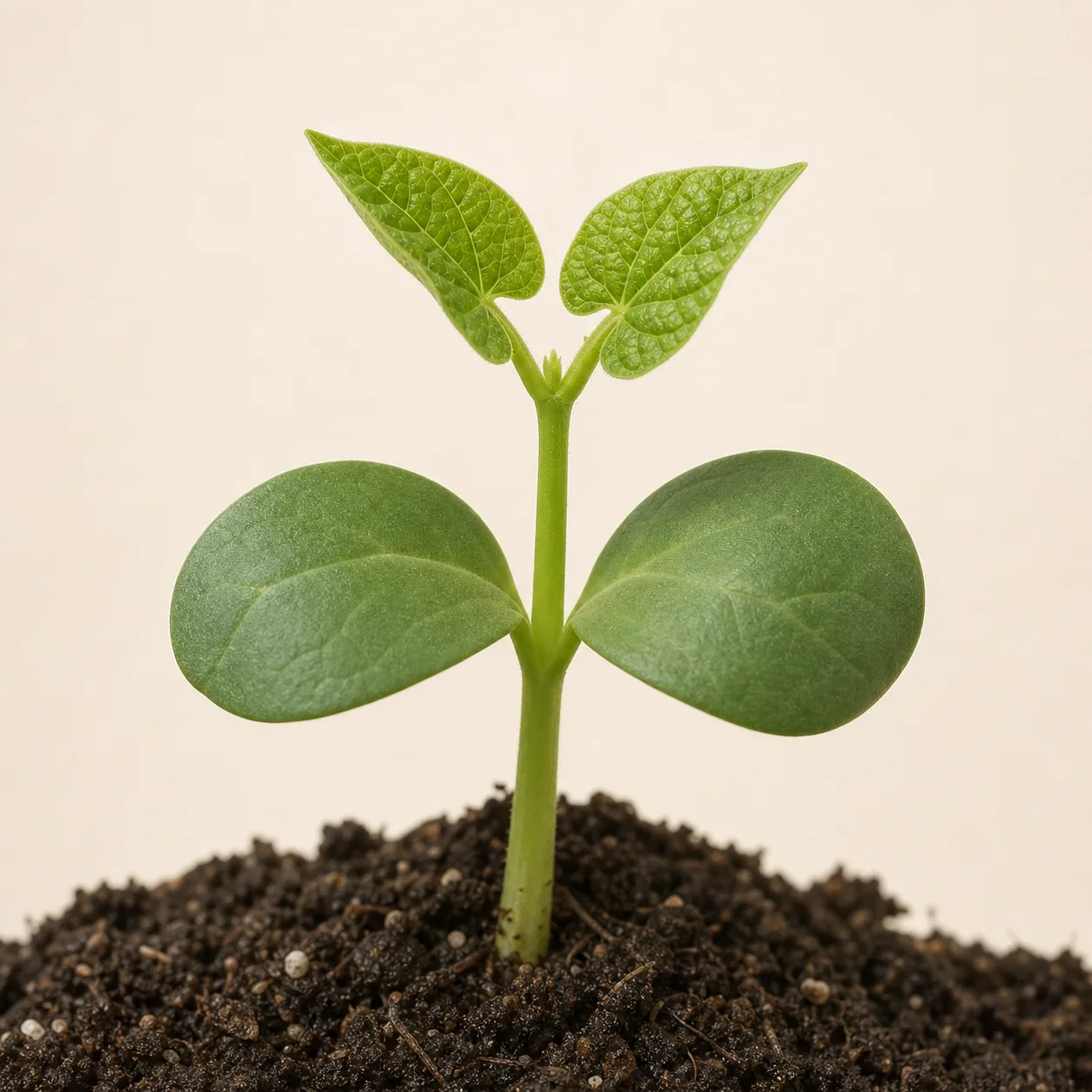
Many beginners assume the first small green parts are mature leaves. In many flowering plants, the first visible leaf-like structures are cotyledons.
Cotyledons are already part of the seed embryo. They can store resources, support early growth, and in some plants briefly receive light after they emerge. Because their job is early support, they may not look like the plant’s later leaves.
True leaves form later. They usually look more like the mature plant’s leaves and gradually become important surfaces for receiving light and carrying out photosynthesis. Gardeners often use the appearance of true leaves as a stage clue, but not as a universal timetable for every plant.
A seedling is small, but it already has division of labor
Even a small seedling is beginning to divide work among plant organs.
The radicle develops toward the root system, helping the seedling contact water and anchor itself. The young stem lifts the upper parts and begins connecting root and leaf tissues. Leaves gradually take over light capture and sugar production.
These functions do not all become strong at once. Early seedlings are vulnerable because the root system is small and the leaf area is limited. But the plant is not empty or unfinished; it is actively building the organ system it will need later.
Different seedlings can look very different
This article uses a common dicot seedling as an entry model because the contrast between cotyledons and true leaves is easy to see. But plant seedlings do not all follow the same appearance.
Beans, tomatoes, and sunflowers often show two obvious cotyledons. Grasses such as rice, corn, and wheat are monocots, and their early seedlings may look more like narrow shoots or leaf blades rather than two round seed leaves.
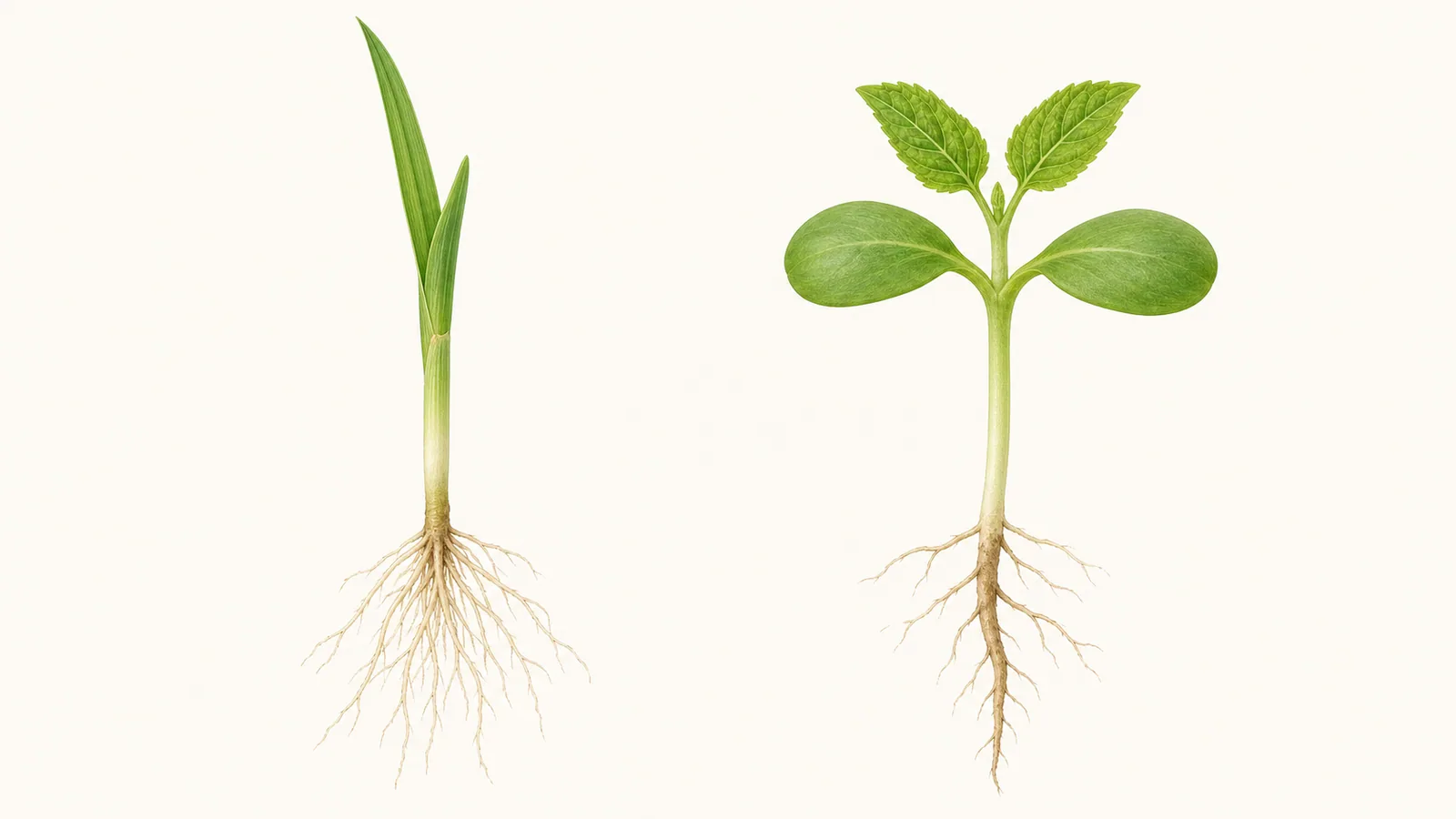
Some plants require different life-cycle models. Orchid seeds are tiny and have specialized early development. Ferns do not grow from seeds at all. When those groups appear, return to their own life cycles instead of forcing them into one seedling diagram.
What to observe in seed trays and pots
When observing seedlings, do not rush to diagnose. First ask whether the plant has moved from radicle emergence into visible cotyledons or young leaves. This connects germination to the seedling stage.
Second, compare cotyledons and true leaves. In many seedlings, the first true leaves are closer to the mature leaf shape than the cotyledons are.
Third, look for the beginning of root, stem, and leaf roles. Roots contact water and anchor the plant. Leaves receive light. Stems connect the upper and lower parts.
Seedling speed depends on species, seed condition, water, temperature, light, oxygen, and growing medium. This article explains the stage; it does not provide a guaranteed growing formula.
Common confusions
- ✕ A seedling is just a miniature mature plant.
- ✓ A seedling is an early stage, and many structures are still being established.
- ✕ The first two small leaves are always true leaves.
- ✓ In many dicot seedlings, the first visible leaf-like structures are cotyledons.
- ✕ Cotyledons are useless temporary leaves.
- ✓ Cotyledons often support early growth, and some also receive light for a short period.
- ✕ Every seedling has two round cotyledons and then true leaves.
- ✓ That is only a common dicot teaching model. Monocots, orchids, ferns, and other groups differ.
Frequently Asked Questions
What is the difference between germination and the seedling stage?
Germination is the seed restarting growth, often marked by radicle emergence. The seedling stage comes after that, when the young plant is establishing roots, stems, and leaves.
Are cotyledons real leaves?
Cotyledons are seed leaves that are part of the embryo. They differ from true leaves in origin and role, so beginners usually learn them as a separate early structure.
What are true leaves?
True leaves are leaves produced after the earliest seedling structures. They usually resemble the mature plant’s leaf form more closely than cotyledons do.
Why do cotyledons turn yellow or fall off?
In some plants, cotyledons age after supporting early growth. Yellowing or dropping cotyledons is not always a problem by itself; compare new leaves, roots, light, and water conditions too.
When does a seedling start relying on photosynthesis?
Once a seedling has green tissues that receive light, it gradually begins producing sugars through photosynthesis. Early growth may still depend partly on stored seed resources.
Related Terms
- Seedling: a young plant shortly after germination.
- Radicle: the embryonic root that often emerges first.
- Cotyledon: a seed leaf or storage structure that supports early growth.
- True leaf: a later seedling leaf that more closely resembles mature foliage.
- Hypocotyl: a seedling stem region below the cotyledons.
- Photosynthesis: the process by which plants use light, water, and carbon dioxide to make sugars and other organic materials.
Read Next
Evidence and attribution
Sources and image rights
These sources were used to check the plant-science concepts and gardening context in this article.
View sources and further reading (6)
Image sources and rights
- Plant Note project-made image · Created by Plant Note; no third-party image license applies — The project-made PNG was adapted as WebP for delivery.