
Phalaenopsis Topic
Taiwan White Phalaenopsis
This interactive species overview keeps the whole plant in view. Move from the whole plant to flower, roots and leaves, and capsule views to understand how Taiwan white Phalaenopsis connects plant organs, epiphytic life, horticultural memory, and conservation context.
Phalaenopsis aphrodite subsp. formosana
Taxonomic note: some recent treatments use Phalaenopsis formosana. This page uses the subspecies name as the main framing because it is common in Taiwan plant lists and local databases.
Switch observation view
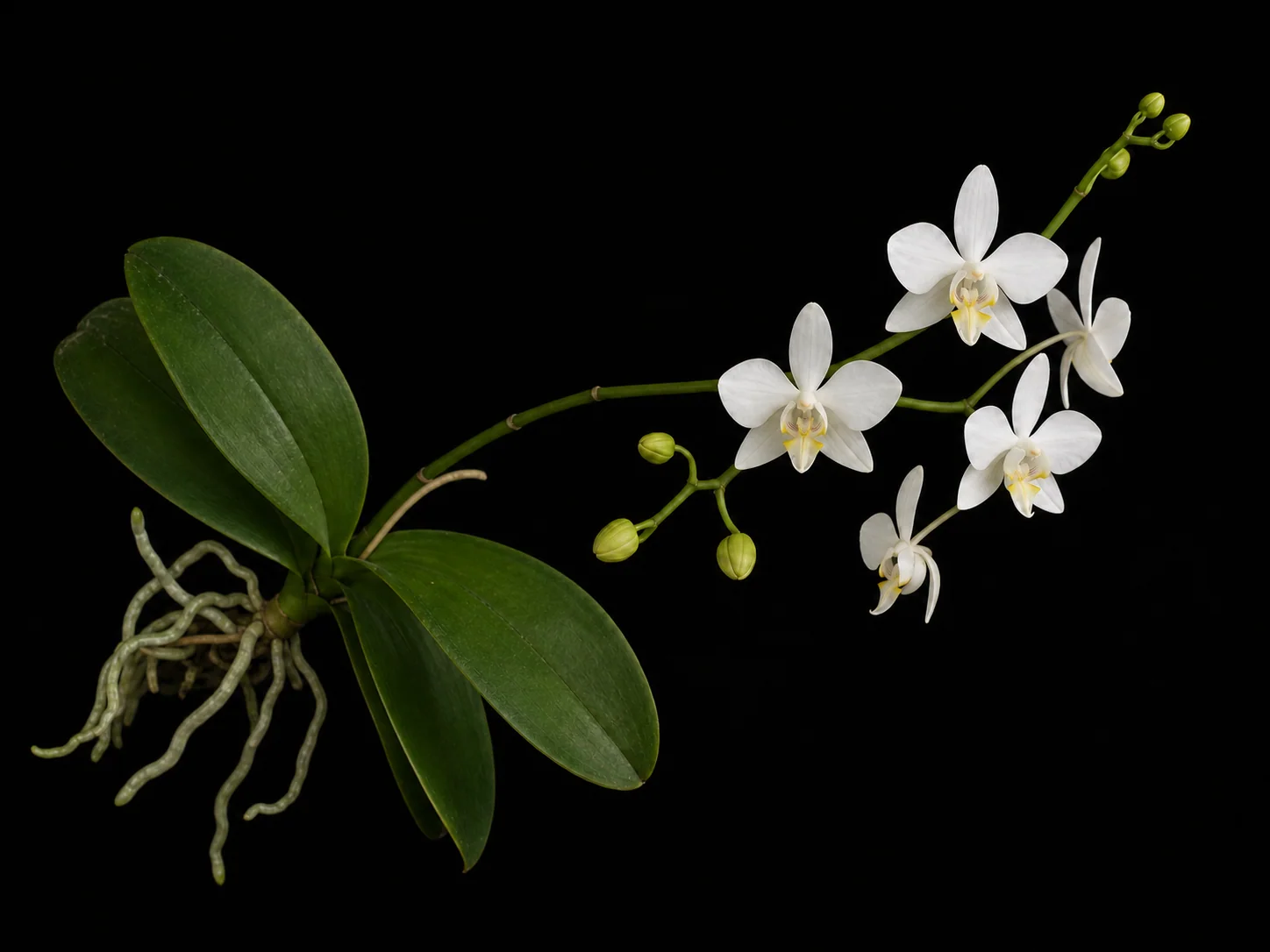
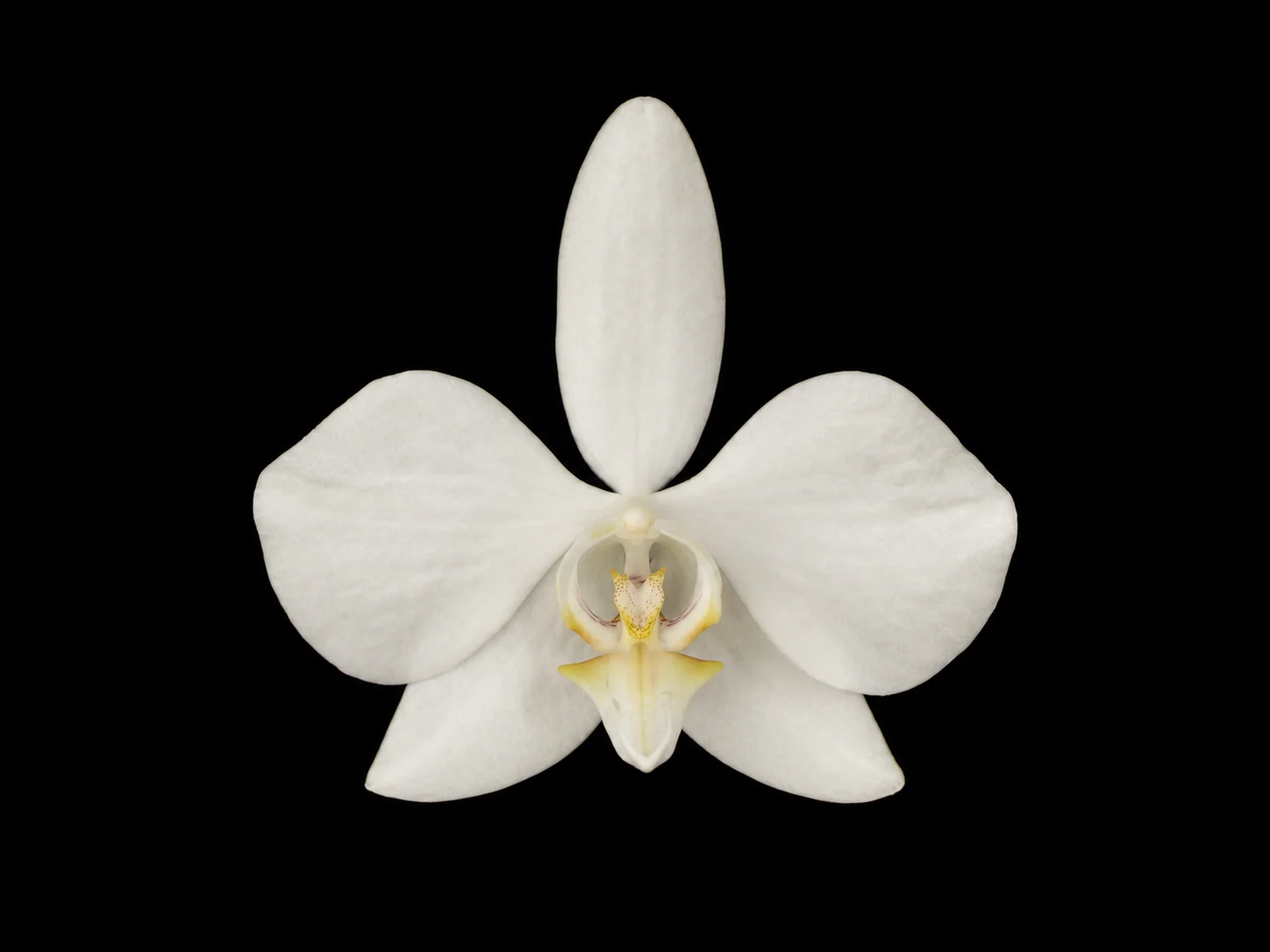
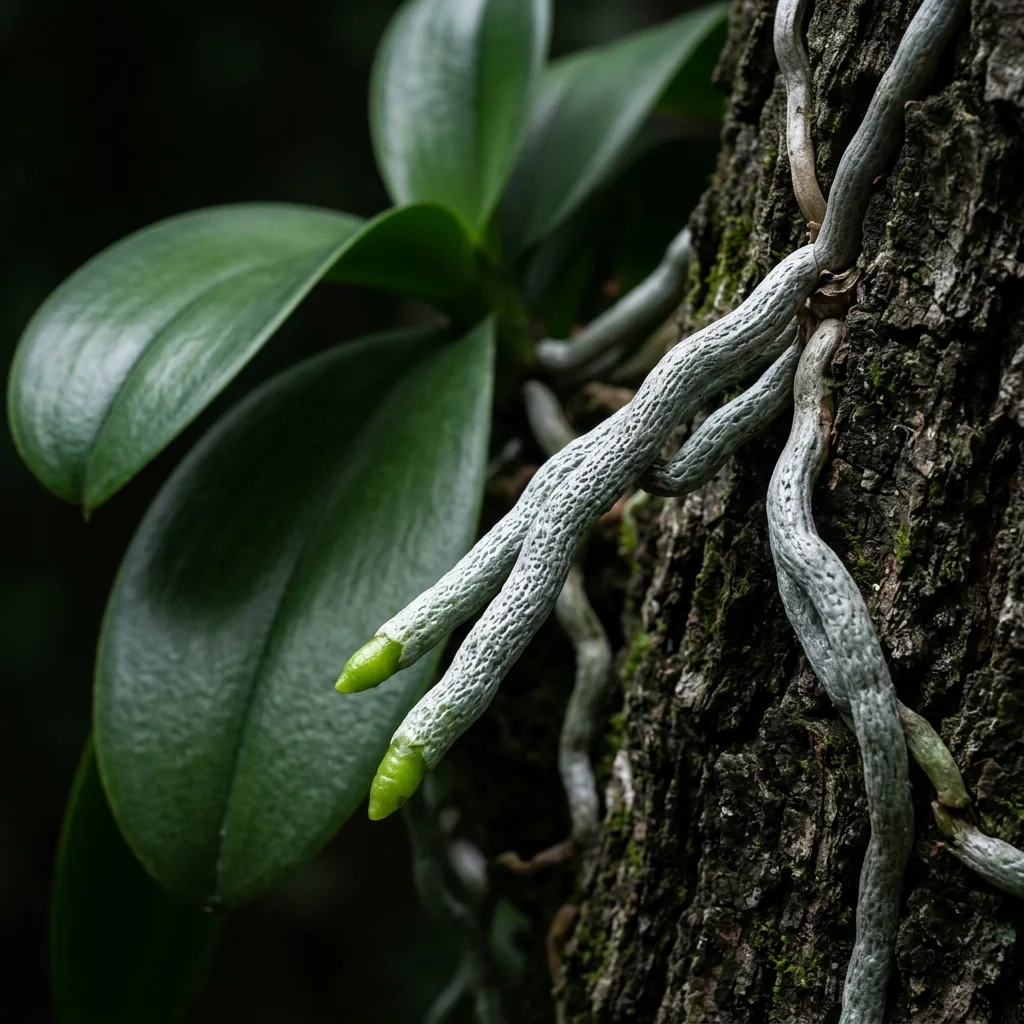
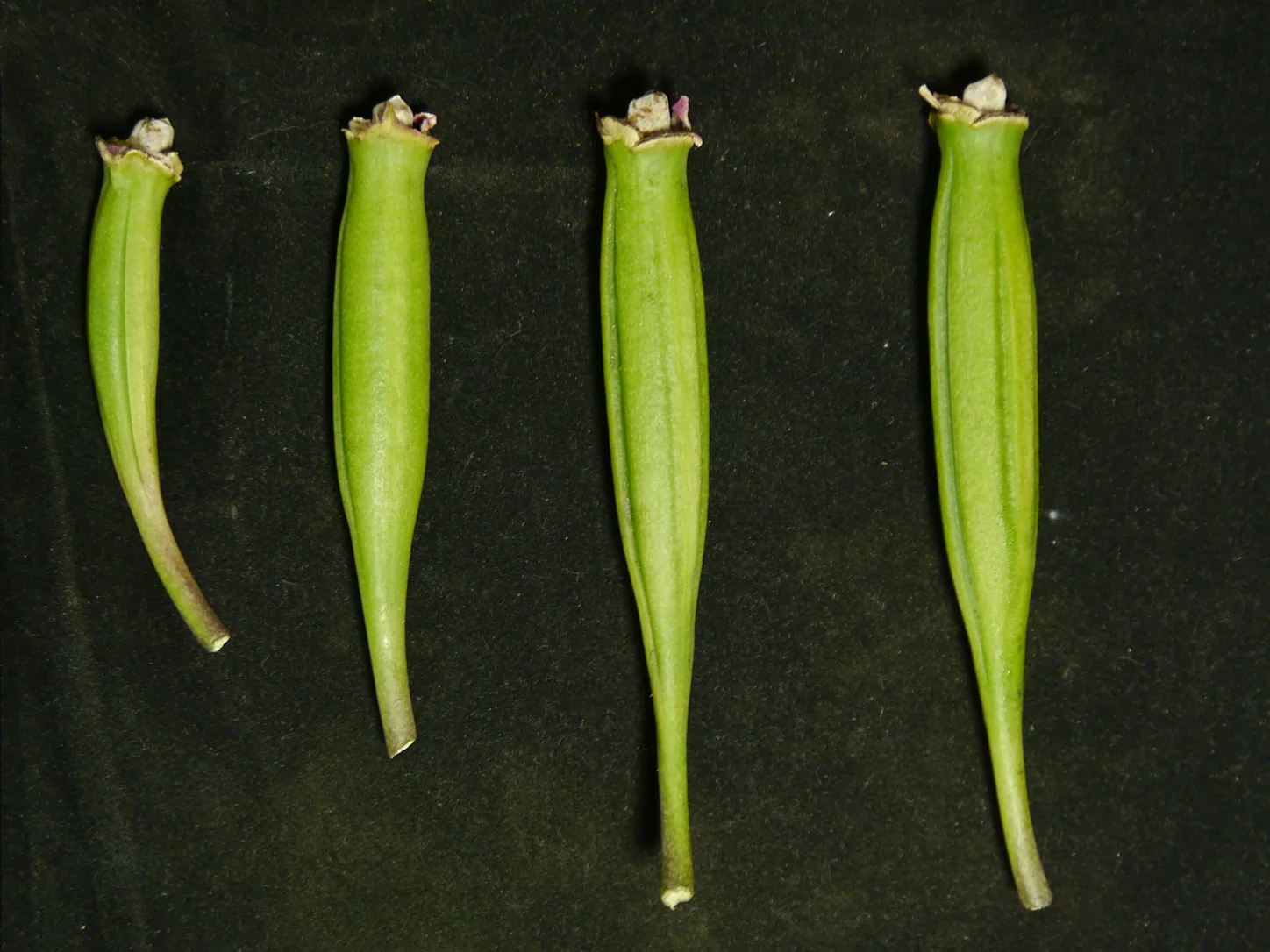
Select a gold marker to read the structure and function note for that position.
Taxonomic Placement
The main name used here
Phalaenopsis aphrodite subsp. formosana is a common treatment in Taiwan plant lists and local biodiversity databases, placing the Taiwan population under P. aphrodite as a subspecies. The Chinese common name used here follows that context.
Different recent treatments
Some recent treatments use Phalaenopsis formosana at species rank. The two names reflect different judgments about taxonomic rank. This page uses the subspecies name as the main framing and notes the species-rank treatment as a taxonomic note.
How descriptions usually frame the group
This group is often placed in section Phalaenopsis, with distribution discussions connected to northern Philippines, Taiwan, and Lanyu populations. Morphologically it is an epiphytic orchid with elliptic to oblong leaves, arching inflorescences, and mostly white perianth and column structures.
Epiphytic Life And Morphological Adaptation
Epiphytic, not parasitic
In nature, Taiwan white Phalaenopsis grows attached to trunks or rock surfaces. Its aerial roots anchor the plant and use rain, mist, and organic debris. It does not draw sap from the host tree, so it is not a parasitic plant.
Velamen and fleshy leaves
The velamen on aerial roots can take up temporary water and reduce water stress during drying. Thick leathery leaves also help buffer short dry periods in the canopy environment.
CAM photosynthesis
Many Phalaenopsis orchids can use crassulacean acid metabolism, or CAM. Stomata open at night to take in carbon dioxide and close during the day to reduce water loss, while light energy is used during daytime carbon fixation. This is one water-saving strategy in bright but intermittently wet epiphytic habitats.
Lanyu, Grandma Orchid, And Breeding Memory
The white butterfly in the wild
The story begins in warm low-elevation forests of southeastern Taiwan and nearby islands. Plant lists and local databases often connect the group with Hengchun, southeastern Taitung, Green Island, and Lanyu. Historical accounts describe it as once more noticeable in some lowland and island forests, while wild populations are now much scarcer.
From Botel Tobago to Lanyu
Lanyu was historically called Botel Tobago in some records. Cultural and agricultural sources often connect the island's name with native Phalaenopsis orchids. From the Tao people's perspective, the island's own name, Pongso no Tao, means island of the people. The orchid is one layer of memory, not the whole story of the island.
The Grandma Orchid nickname
In horticultural circles, white native-type Phalaenopsis has been associated with the nickname Taiwan grandma orchid, linked to the sound of amabilis in Taiwanese. It is not a formal scientific name, but it shows how the plant is remembered in horticulture beyond technical breeding material.
Show flowers and breeding parents
After the 1950s, Taiwan white Phalaenopsis became part of international orchid show and breeding memory. Its white flower traits and native background helped make it an important parent in the story of Taiwan's Phalaenopsis industry.
Indigenous names as source records
Outside formal plant lists, Indigenous-language records preserve additional names and cultural contexts. These records should be read with their sources and limits, not flattened into decorative background material.
Conservation And Cultivated Plants
Pressure on wild populations
Taiwan white Phalaenopsis has faced pressure because of ornamental value and historical commercial collecting. The many Phalaenopsis orchids seen in markets today are usually bred and cultivated lines, not the same thing as wild native populations.
Restoration depends on source identity
For restoration discussions, the issue is not only whether plants can be grown. Parentage, provenance, avoidance of horticultural hybrid introgression, and habitat suitability all matter. This site explains the concept only; it does not provide collecting, reintroduction, or restoration instructions.
References
References
The interactive images on this page are mainly photos taken by Zhu, with a small number generated using an image-generation model. The references below support taxonomy, distribution, ecology, and cultural context checks.