The short answer
Petals are not only the colorful parts people notice first. In many animal-pollinated flowers, petals help the flower be found, recognized, or approached by pollinators. They may do this through color, shape, scent, markings, size, position, or a surface that helps a visitor land or move toward the flower center.
A simple way to think about petals is this: petals often work as part of a flower’s signal system. They can help guide a pollinator toward the area where pollen and the stigma are located.
But this is not a rule for every flower. Not every flower has large, bright petals. Not every flower depends on insects. And having attractive petals does not guarantee pollination, fertilization, seeds, or fruit. Petals are one part of a larger flower structure.
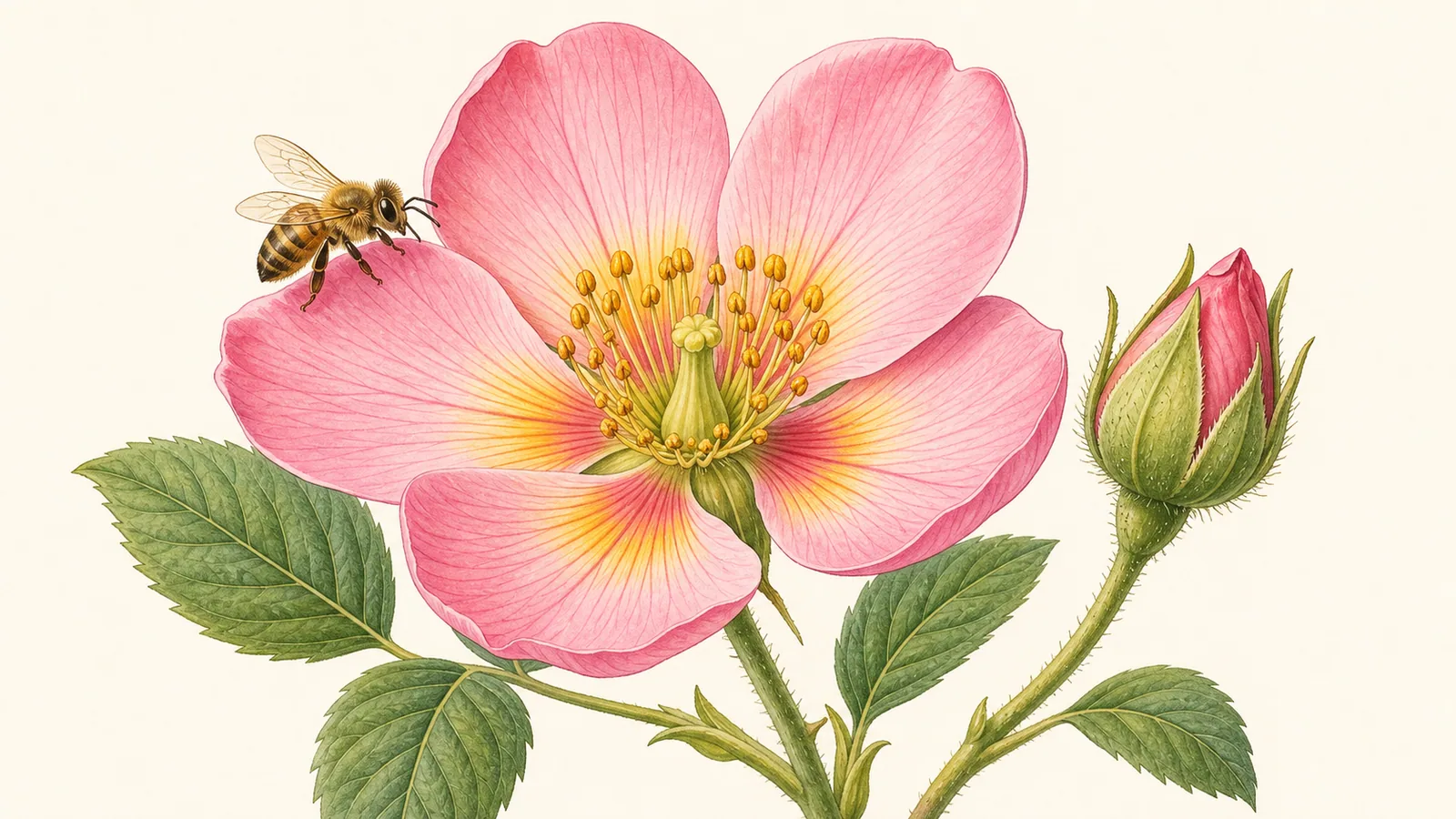
Petals often help a flower be seen and approached
Petals usually make up the corolla, the collective name for all petals of one flower. In many flowers pollinated by animals, the corolla is one of the most visible parts of the flower.
Petals may help in several ways. Their color and size can make the flower easier to notice. Their shape can affect how a pollinator approaches or enters the flower. Their markings, spots, lines, or color contrasts may guide a visitor toward nectar, pollen, or the flower center. These guiding patterns are often called nectar guides.
Scent may also be involved, though scent is not only a petal feature. A flower’s odor, nectar, shape, sepals, bracts, stamens, and other floral structures can all contribute to how a pollinator finds or uses the flower.
So the careful wording is: petals are often important signals in flowers that interact with animal pollinators, but they are not the only signal and not the whole pollination process.
Petals, sepals, and the perianth
A simple flower map often starts from the outside and moves inward: sepals, petals, stamens, and pistils or carpels.
Sepals are usually the outer floral parts. In many flowers, they are green and leaf-like, and they protect the developing flower while it is still a bud. All the sepals together are called the calyx.
Petals are usually inside the sepals and are often more showy after the flower opens. All the petals together are called the corolla.
Sepals and petals together are called the perianth. The perianth is the outer floral envelope around the reproductive structures. In a simple diagram, sepals and petals look easy to separate. In real plants, the boundary is not always so neat.
When sepals and petals look alike: tepals
Some flowers do not clearly show “green sepals outside, colorful petals inside.” In lilies, tulips, magnolias, and some other flowers, the outer and inner perianth parts can look very similar.
When sepals and petals are not easily distinguished, the similar-looking parts may be called tepals. This term is useful because it prevents forcing every flower into a textbook pattern that may not fit.
When observing a flower, do not rely only on color. Ask: where is this part located? Did it enclose the bud? Is it part of the main visual display after opening? Is it clearly different from the other perianth parts, or are all the petal-like parts similar?
Flowers without showy petals are still flowers
Some flowers have small petals, reduced petals, plain petals, or no obvious petals at all. That does not mean the flower is defective.
Many wind-pollinated flowers do not need large colorful petals to attract animal visitors. Their reproductive success depends more on pollen release, pollen movement through air, and structures that can receive pollen. Other flowers may use visible stamens, scent, bracts, or different floral forms instead of showy petals.
This is why “petal function” cannot be reduced to one universal answer. For some flowers, petals are central to pollinator attraction and guidance. For others, petals are less visible, reduced, or not the main feature.
The orchid lip is a specialized petal
Orchids are a useful example, but they should not become the model for every flower.
Many orchid flowers have three sepals and three petals. One of those petals is modified into a lip, also called a labellum. The lip is often the most striking part of the flower and may help with pollinator landing, orientation, or contact with the flower’s reproductive column.
This shows that a petal does not always look like a flat round piece in a classroom diagram. Petals can be modified and specialized. Still, orchids have their own floral structure, so it is better to learn general flower parts first, then use orchids as one example of variation.
How to observe petals without overreading them
When looking at a flower, first identify the most obvious petal-like parts. Then look outside them for sepals or a bud-protecting layer. If the outer and inner parts look almost the same, tepals may be a better word.
Next, look at the petal surface. Are there lines, spots, color gradients, or shape changes that point toward the flower center? Does the flower offer a landing surface or a narrow entry path? These clues can suggest how the flower interacts with visitors.
But avoid turning observation into a guarantee. A flower with bright petals is not guaranteed to be pollinated. A pollinator visit is not guaranteed to produce seeds or fruit. Pollination, pollen compatibility, fertilization, ovule development, and fruit development are connected but separate steps.
This article explains plant structure and observation. It does not provide hand-pollination steps, fruit-set promises, yield advice, or cultivation prescriptions.
Common mix-ups
- ✕ Petals exist mainly to look pretty to people.
- ✓ From the plant’s perspective, petals often help a flower interact with pollinators. Human beauty is our interpretation of those visible traits.
- ✕ Every flower uses petals to attract insects.
- ✓ Some flowers interact with birds, bats, wind, self-pollination, or other routes. Some flowers do not have showy petals.
- ✕ No petals means it is not a flower.
- ✓ Some flowers have tiny, reduced, or absent petals and are still normal flowers.
- ✕ Every colorful petal-like part must be a petal.
- ✓ Some colorful parts may be sepals, tepals, bracts, or other floral structures.
- ✕ Attractive petals guarantee pollination and fruit.
- ✓ Petals can increase the chance of interaction, but reproduction has later steps and can still fail.
FAQ
What is the main function of petals?
In many animal-pollinated flowers, petals help attract, guide, or position pollinators. They may use color, shape, scent, markings, or placement to make the flower easier to find and approach. Petals are best understood as one part of a flower’s signal system.
Are petals only for attracting insects?
No. Insects are common pollinators, but they are not the only ones. Some flowers interact with birds, bats, or other animals. Some plants are mainly wind-pollinated and may not need showy petals. A flower’s signals can also involve scent, nectar, shape, sepals, bracts, stamens, and other parts.
What is the difference between petals and sepals?
Sepals are usually the outer floral parts and often protect the flower while it is still a bud. Petals are usually inside the sepals and are often more visible after the flower opens. However, this distinction is not always obvious in real flowers.
What are tepals?
Tepals are perianth parts that are not clearly separable into sepals and petals. The word is useful when the outer and inner petal-like parts look similar, as in many lilies, tulips, and magnolias.
Can a flower have no petals?
Yes. Some flowers have no obvious petals, or their petals are very small or reduced. This can be normal for that plant. Wind-pollinated flowers, for example, often do not rely on large colorful petals.
Is an orchid lip a petal?
Yes. In many orchids, the lip or labellum is a modified petal. It often looks different from the other petals and may help with pollinator landing or orientation. Orchids are a useful example of petal specialization, but not all flowers should be explained as if they were orchids.
If petals fall off, does that mean pollination failed?
Not necessarily. Petal drop alone does not tell you whether pollination succeeded. Pollen may or may not have reached a receptive stigma before the petals fell. Even after pollination, fertilization and later development still need to happen.
Related Terms
- Petal: A floral part, usually part of the corolla, often involved in attracting or guiding pollinators.
- Corolla: All the petals of one flower.
- Sepal: An outer floral part that often protects the developing flower bud.
- Calyx: All the sepals of one flower.
- Perianth: The sepals and petals together, forming the outer floral envelope.
- Tepal: A perianth part used when sepals and petals are not clearly distinguishable.
- Nectar guide: A line, spot, color pattern, or visual cue that may guide pollinators toward nectar, pollen, or the flower center.
- Pollinator: An animal that helps move pollen from one flower structure to another.
- Stigma: The pollen-receiving surface of a pistil or carpel.
- Orchid lip: A specialized petal in many orchids, also called the labellum.
Related Reading
Evidence
References
These sources were used to check the plant-science concepts and gardening context in this article.