A seed is the starting point of a new plant, not something that instantly grows when wet
A seed may look quiet, but it usually contains a tiny embryo: the beginning of a future plant. When conditions are suitable, the seed can leave its resting state and begin to grow roots, stems, and leaves.
Germination is not simply “add water and a small plant appears.” Water is an important trigger, but the seed also needs oxygen and a temperature range suitable for that plant. Some seeds are also affected by light, dormancy, or seed coat conditions. Different plants can germinate at different speeds and in different ways.
Germination often starts with water uptake; radicle emergence is the clearer sign
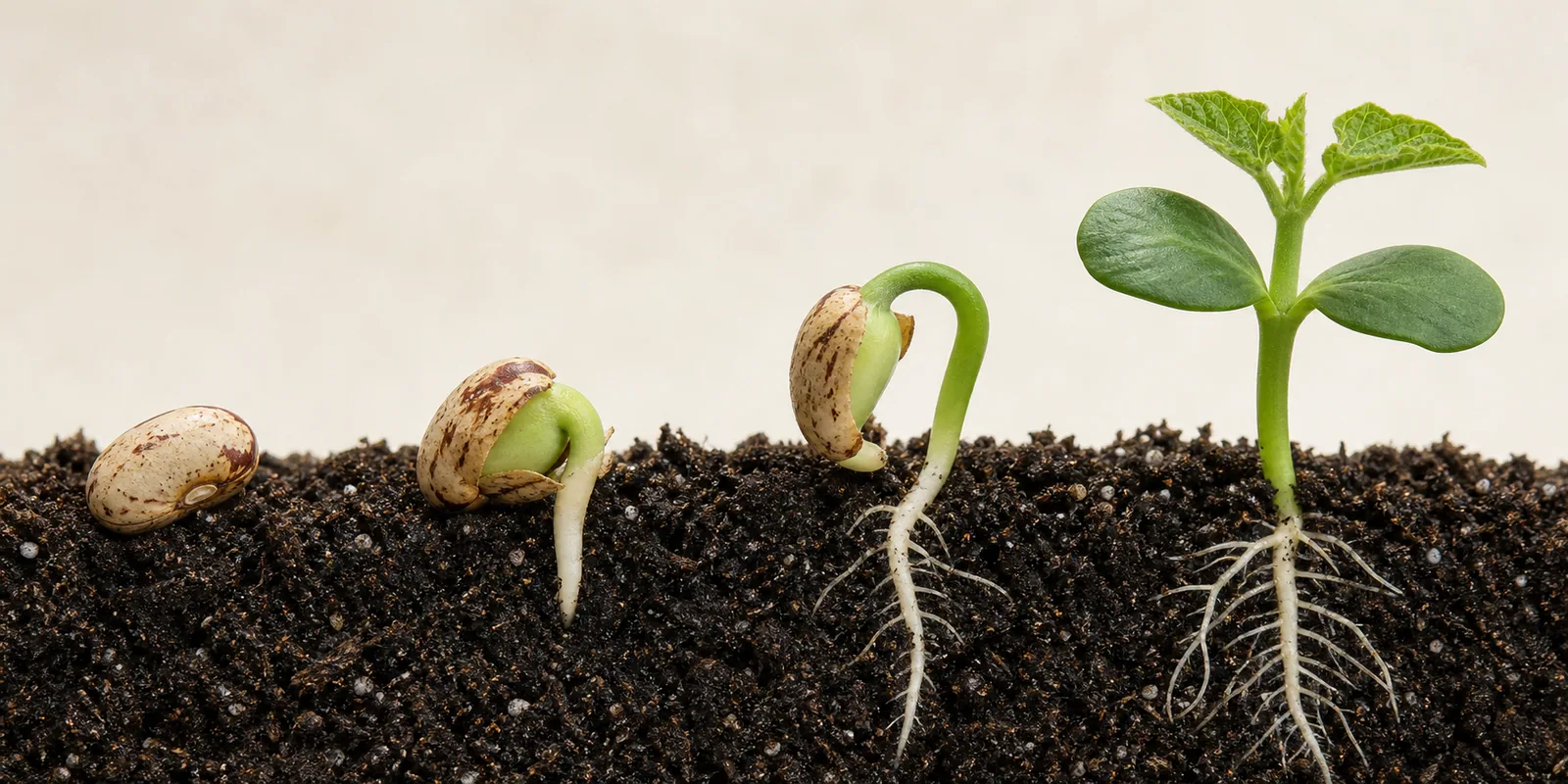
Early germination often begins with water uptake. A dry seed absorbs water, swells, the seed coat softens, and internal cell activity resumes. This water-uptake stage can be understood as the seed preparing to restart.
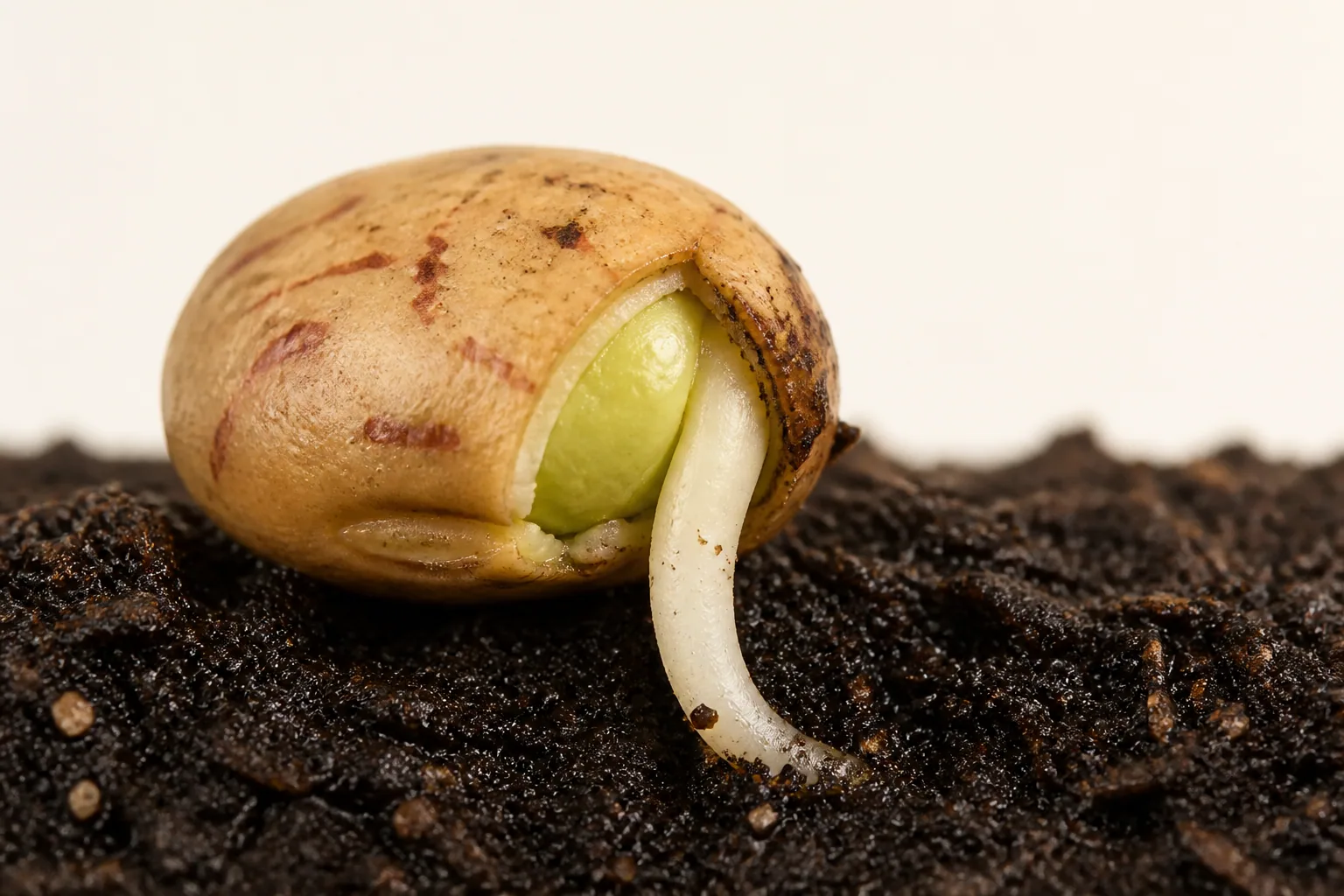
However, a swollen seed is not always a successfully germinated seed. A clearer sign is when the radicle, the embryonic root, breaks through the seed coat and grows outward.
Radicle emergence matters because the young plant must begin anchoring itself and contacting water. After that, the seedling continues to elongate, cotyledons or young leaves open, and the small plant becomes easier to see.
Cotyledons, true leaves, and early stored resources have different roles
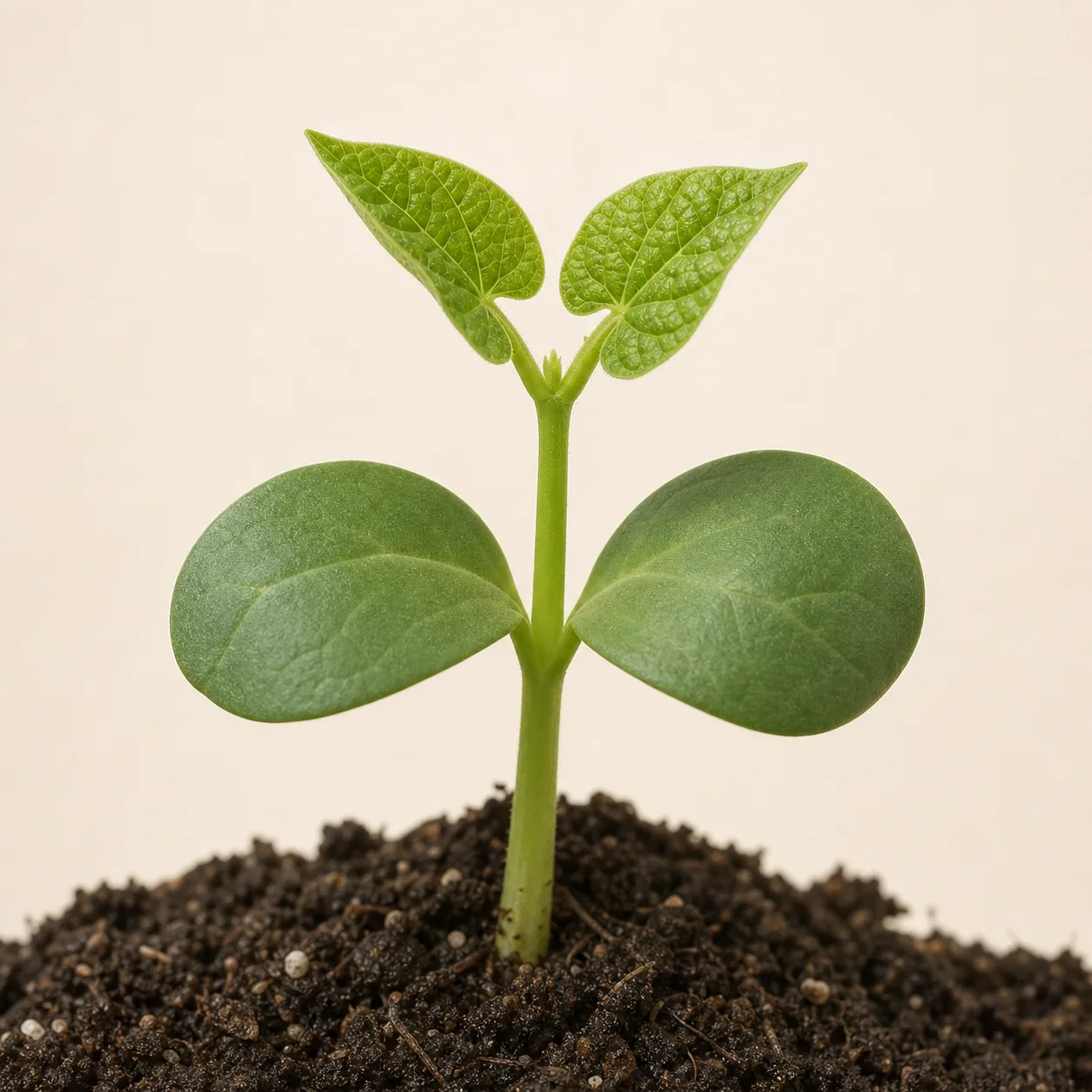
Many seedlings first show cotyledons. Cotyledons are structures that were already part of the seed embryo. In some plants they store resources for early growth; in some they emerge and briefly receive light. They do not always look like the mature leaves of the plant.
True leaves are leaves produced later by the seedling. They usually look more like the mature plant’s leaves. In gardening observation, people often use the appearance of true leaves as a sign that the seedling is moving into another stage. It suggests the plant is gradually shifting from relying mainly on stored seed resources to using its own green leaves to make organic materials.
Once the seedling has working green parts, it can increasingly use photosynthesis to make sugars and other organic materials. At that point, germination connects directly to roots, leaves, and light.
In seed trays and pots, watch the conditions before diagnosing failure
When observing germination, first separate two situations: a seed that has only absorbed water and swollen, and a seed that has actually produced a radicle. Many people see a swollen seed and assume it has germinated, but radicle emergence is the clearer plant-science sign.
In a pot or seed tray, media that is too dry can make water uptake difficult. Media that stays wet for too long can reduce air around the seed. Temperatures that are too low or too high can slow germination or make it uneven. These are observation directions, not one-size-fits-all diagnoses.
Seeds vary widely. Some germinate quickly; some take longer. Some are affected by light; others are not. Some may remain dormant even when water is present. This article explains the process and does not offer a guaranteed germination formula.
Common confusions
- ✕ Any seed soaked in water will definitely germinate.
- ✓ Water is important, but oxygen, suitable temperature, seed condition, and dormancy also matter.
- ✕ Leaves appear first during germination.
- ✓ In many plants, the radicle emerges before the visible shoot and leaves become obvious.
- ✕ All seeds germinate in exactly the same way.
- ✓ Seed size, dormancy, cotyledon position, and germination speed vary by plant.
- ✕ If a seed fails to germinate, the grower must have done something wrong.
- ✓ Seed viability, dormancy, environment, and plant type can all affect the result.
Frequently Asked Questions
Do seeds need sunlight to germinate?
Not always. Some seeds are affected by light, while others germinate without obvious light exposure. Germination requirements depend on the plant, so one rule should not be applied to all seeds.
Why do some seeds swell in water but still fail to germinate?
Water uptake is only one early part of germination. The seed may also need oxygen, suitable temperature, or dormancy-breaking conditions. It may also have low viability.
During germination, does the root or leaf come out first?
In many plants, the radicle emerges first. The radicle is the beginning of the root system and helps the seedling contact water and anchor itself. The shoot, cotyledons, or young leaves become more visible later.
What is the difference between cotyledons and true leaves?
Cotyledons are part of the seed embryo and appear early in seedling life. True leaves form later and usually resemble the mature plant’s leaf shape more closely.
When does a seedling start relying on photosynthesis?
Once the seedling has green parts that can receive light, it gradually begins making sugars and other organic materials through photosynthesis. Early seedlings still use stored seed resources, so the shift is gradual.
Do all plants germinate in the same pattern?
No. This article uses common seeds as an entry model: water uptake, radicle emergence, and seedling establishment. Monocots and dicots can differ in seed structure, cotyledon number, and seedling appearance. Orchids are even more specialized: orchid seeds are tiny and often involve more advanced germination conditions and symbiotic relationships.
Related Terms
- Germination: the process in which a seed restarts growth under suitable conditions, often marked by radicle emergence.
- Seed coat: the outer protective layer of a seed.
- Embryo: the young plant inside a seed.
- Radicle: the embryonic root that becomes the beginning of the root system.
- Cotyledon: a seed leaf or storage structure involved in early seedling growth.
- True leaf: a later seedling leaf that more closely resembles the mature plant’s leaves.
- Dormancy: a state in which a seed does not germinate even under some otherwise favorable conditions.
Read Next
Evidence and attribution
Sources and image rights
These sources were used to check the plant-science concepts and gardening context in this article.
View sources and further reading (3)
Image sources and rights
- Plant Note project-made image · Created by Plant Note; no third-party image license applies — The project-made PNG was adapted as WebP for delivery.
- Plant Note project-made image · Created by Plant Note; no third-party image license applies — The project-made PNG was adapted as WebP for delivery.
- Plant Note project-made image · Created by Plant Note; no third-party image license applies — The project-made PNG was adapted as WebP for delivery.