
Staghorn ferns are epiphytic ornamental ferns
A staghorn fern usually refers to a fern in the genus Platycerium. Its common name comes from the outward-growing fronds that branch, hang, or spread like antlers. The commonly grown Platycerium bifurcatum is one familiar example, but “staghorn fern” is not the name of a single cultivar.
The plant is distinctive because of more than its antler shape. Many staghorn ferns grow as epiphytes, and the plant has two strongly different frond forms: sterile shield fronds near the base and fertile fronds that extend outward. Those two features are the best starting point for understanding the plant.
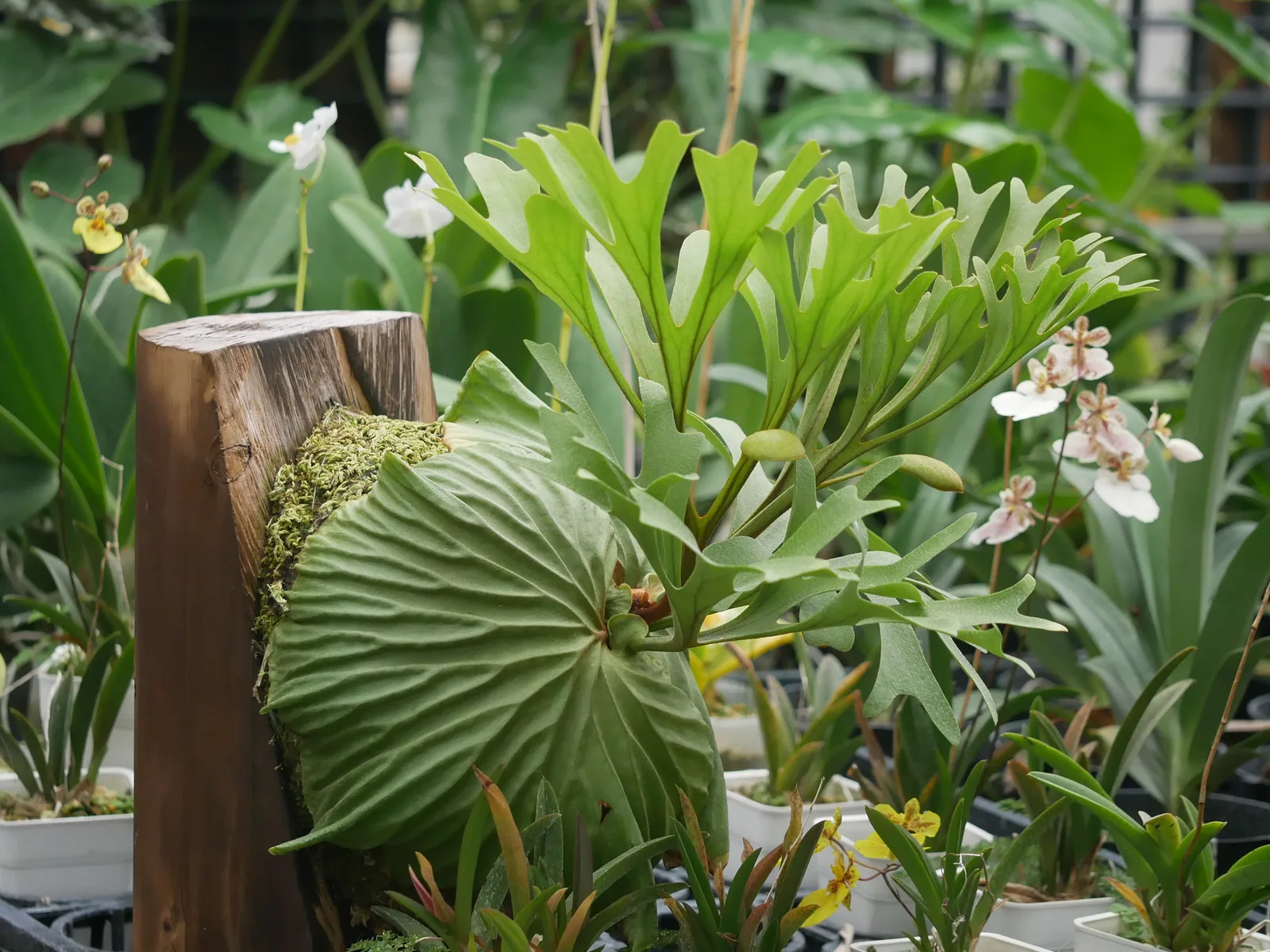
Staghorn ferns do not all look the same
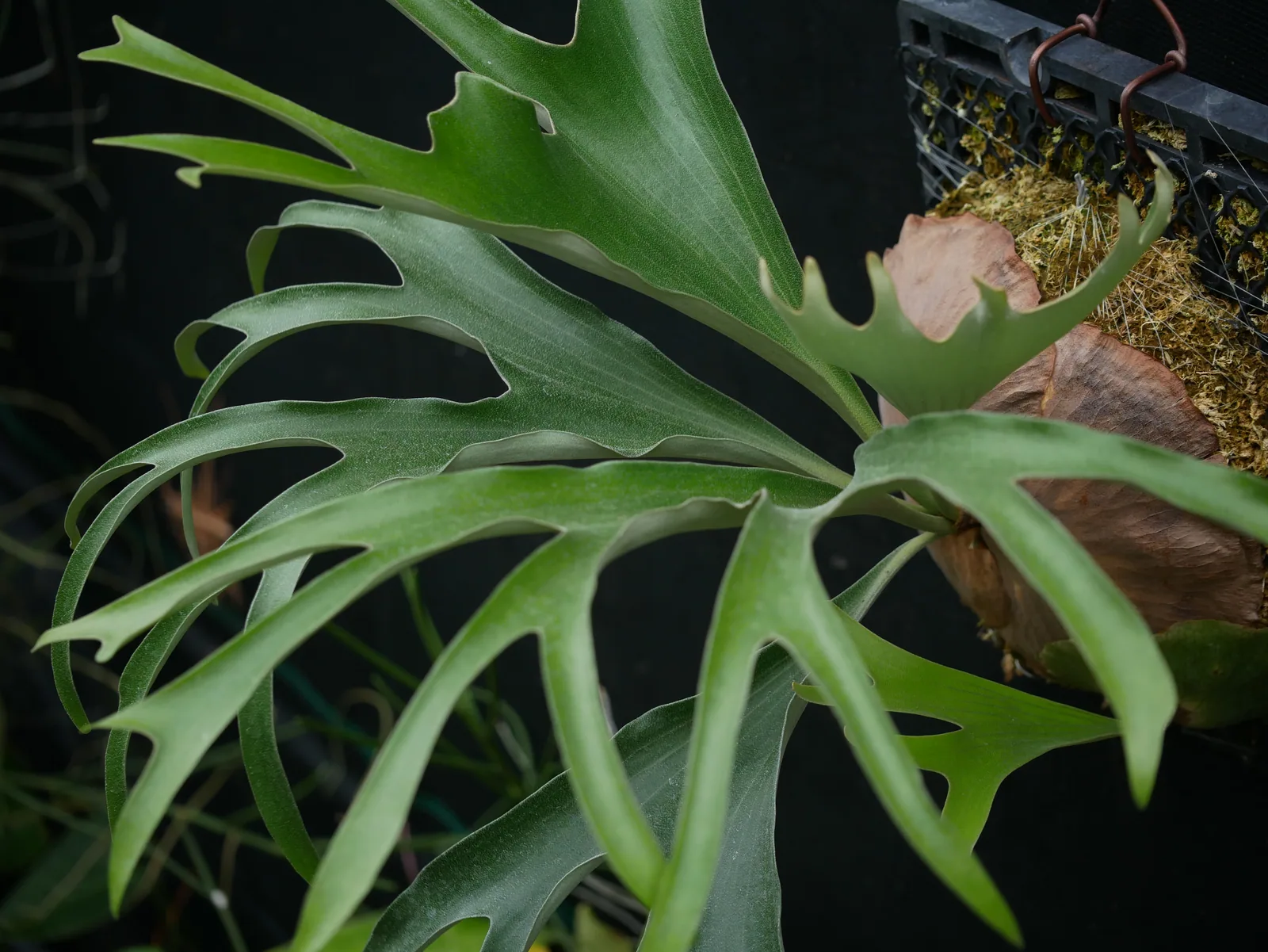
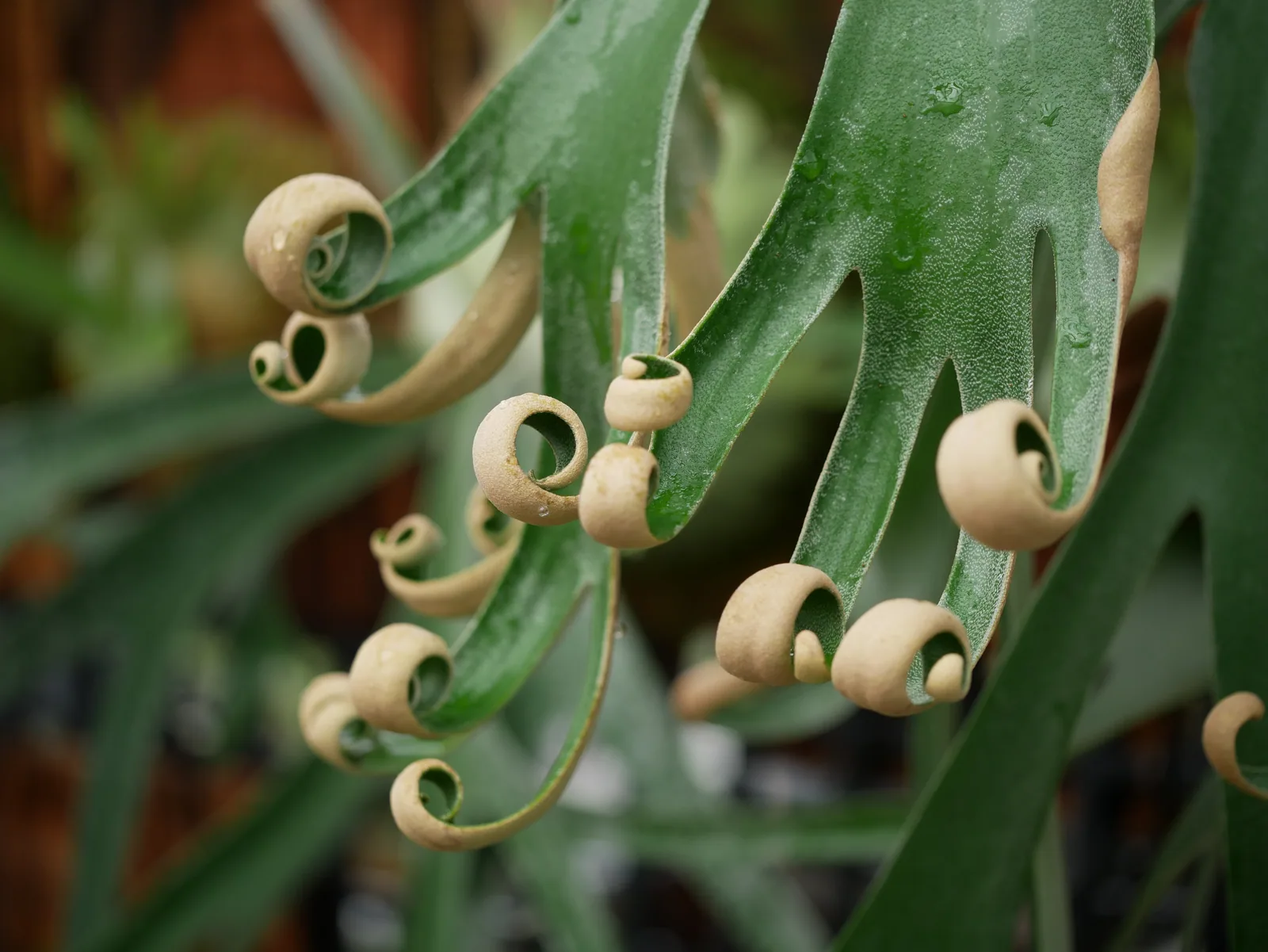
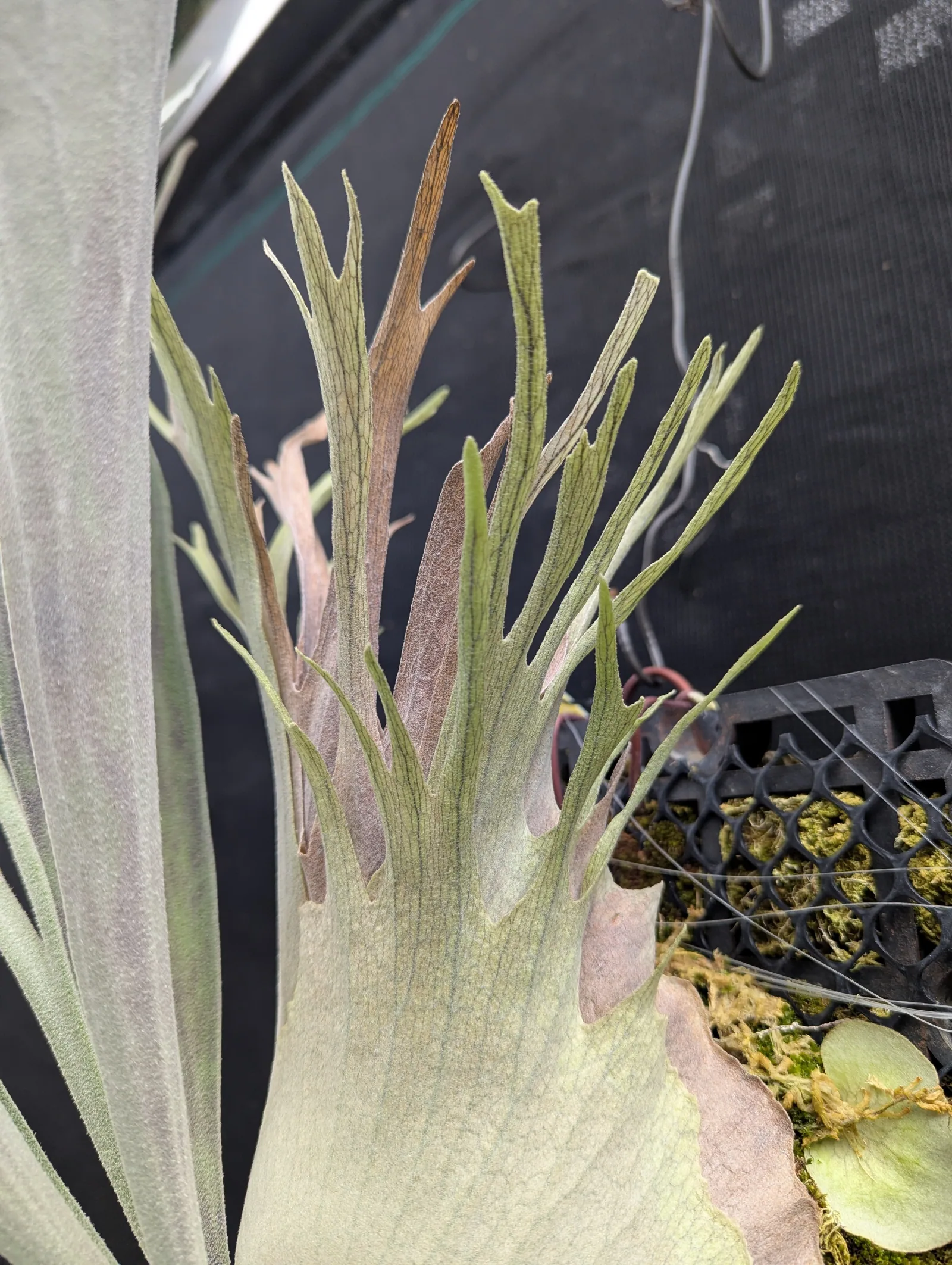
In horticultural introductions, staghorn ferns are often described as having about eighteen original species, with many hybrids, selections, and collection names in cultivation. The differences are not only in the names. They can appear in the width of fertile fronds, the way the fronds fork, whether the frond tips curl, and whether the sterile fronds form low shields or upright wrapping structures.
The photos below are used as morphology examples. The figure captions identify the photographed plants by scientific name where that information is available. The point is to show visible variation in staghorn ferns, not to turn this article into a formal taxonomic key.
Epiphytic growth is part of its plant identity
Many staghorn ferns naturally attach to tree trunks or branches. This growth habit is called epiphytic. An epiphyte uses another surface as a place to grow, giving itself access to light, moving air, and brief pockets of moisture. That is different from parasitism, where a plant draws resources directly from a host.
This is why staghorn ferns are often grown mounted on boards, bark slabs, tree fern panels, or similar supports. The board provides an attachment surface. Sphagnum, bark, or other materials influence moisture and aeration near the base. Mounting is not just a display trick; it reflects the way an epiphytic fern interacts with support, air, and water.
Viewed botanically, a mounted staghorn fern makes the relationship between roots, fronds, media, and air visible. Unlike many potted plants, it does not hide all of its root environment inside a soil-filled container.
Sterile shield fronds: the basal fronds that wrap and hold the plant
One frond type grows close to the base. These fronds are commonly called sterile fronds, shield fronds, or basal fronds. In horticultural Chinese, they are often discussed as 營養葉 or 盾葉.
Sterile shield fronds are usually rounder or fan-shaped. They spread from the base and may layer over the rhizome and root mass. They are not useless background leaves. On a staghorn fern, they help with attachment, base protection, debris capture, and the small moisture-holding zone around the crown.
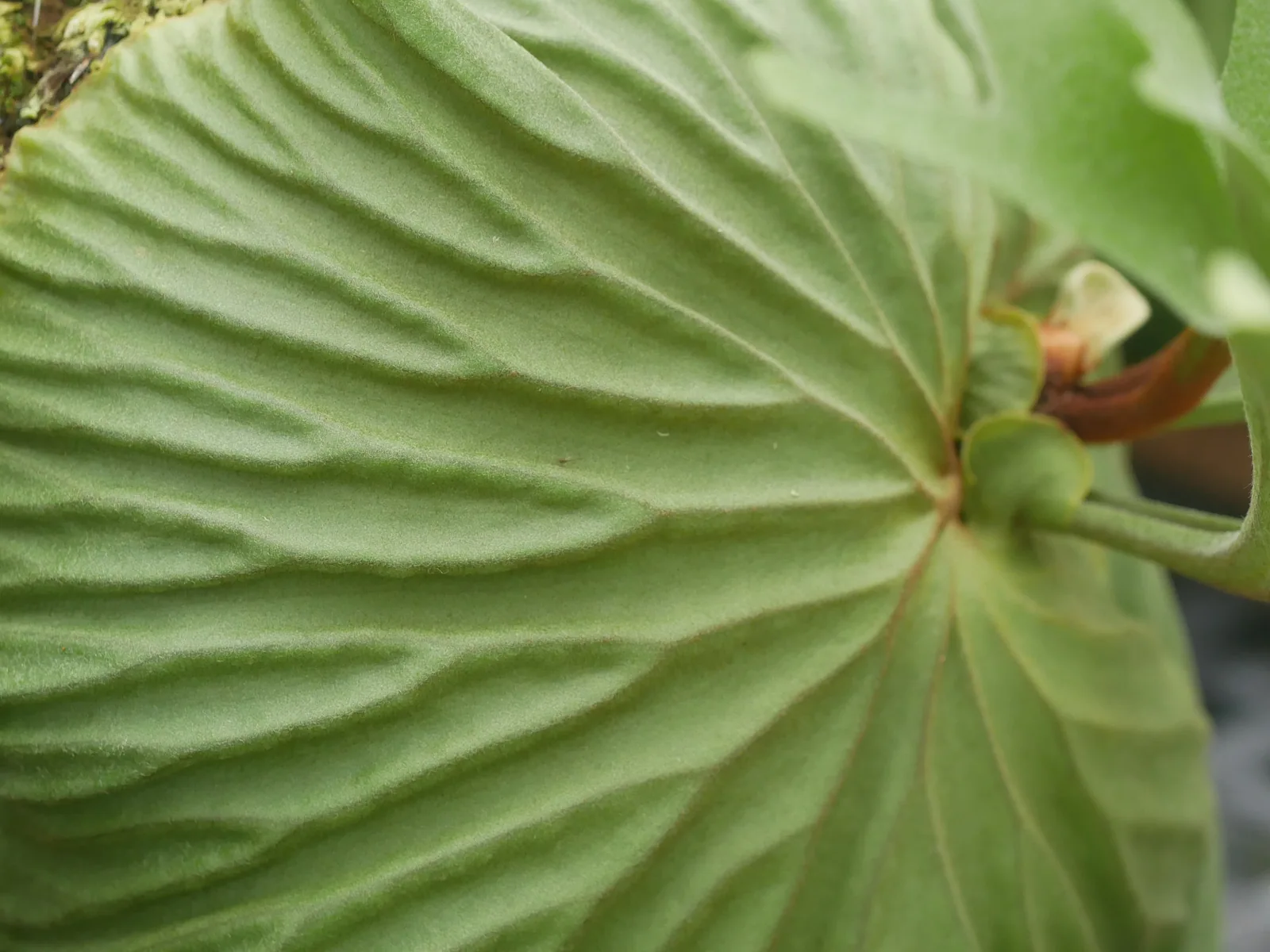
As sterile shield fronds mature, they often turn brown and remain around the base. This browning is a common structural change in staghorn ferns and is not the same thing as disease. Disease or decline is a separate judgment that would involve the whole plant: weak new growth, a soft base, rotting smell, collapsed tissue, or rapid deterioration.
In other words, a brown sterile frond is an observation, not a diagnosis. It may be part of a mature basal shield, or it may appear alongside stress, root problems, or disease. The plant should be judged by the condition of new growth, basal firmness, root mass, and overall vigor, not by color alone.
Fertile fronds: fronds that can form sori when mature
Fronds that can form sori when mature are fertile fronds. They are still leaves and still contribute to photosynthesis. They are not always outward-growing and antler-like. Some grow upright, some hang downward, and some curl at the tips. Java-type staghorn ferns, for example, often show a more hanging fertile-frond posture.
Sori are clusters of sporangia. Sporangia produce spores, and spores are part of the fern life cycle. This is one of the central differences between a staghorn fern and a flowering plant: it does not reproduce through flowers, fruit, and seeds in the way flowering plants do.
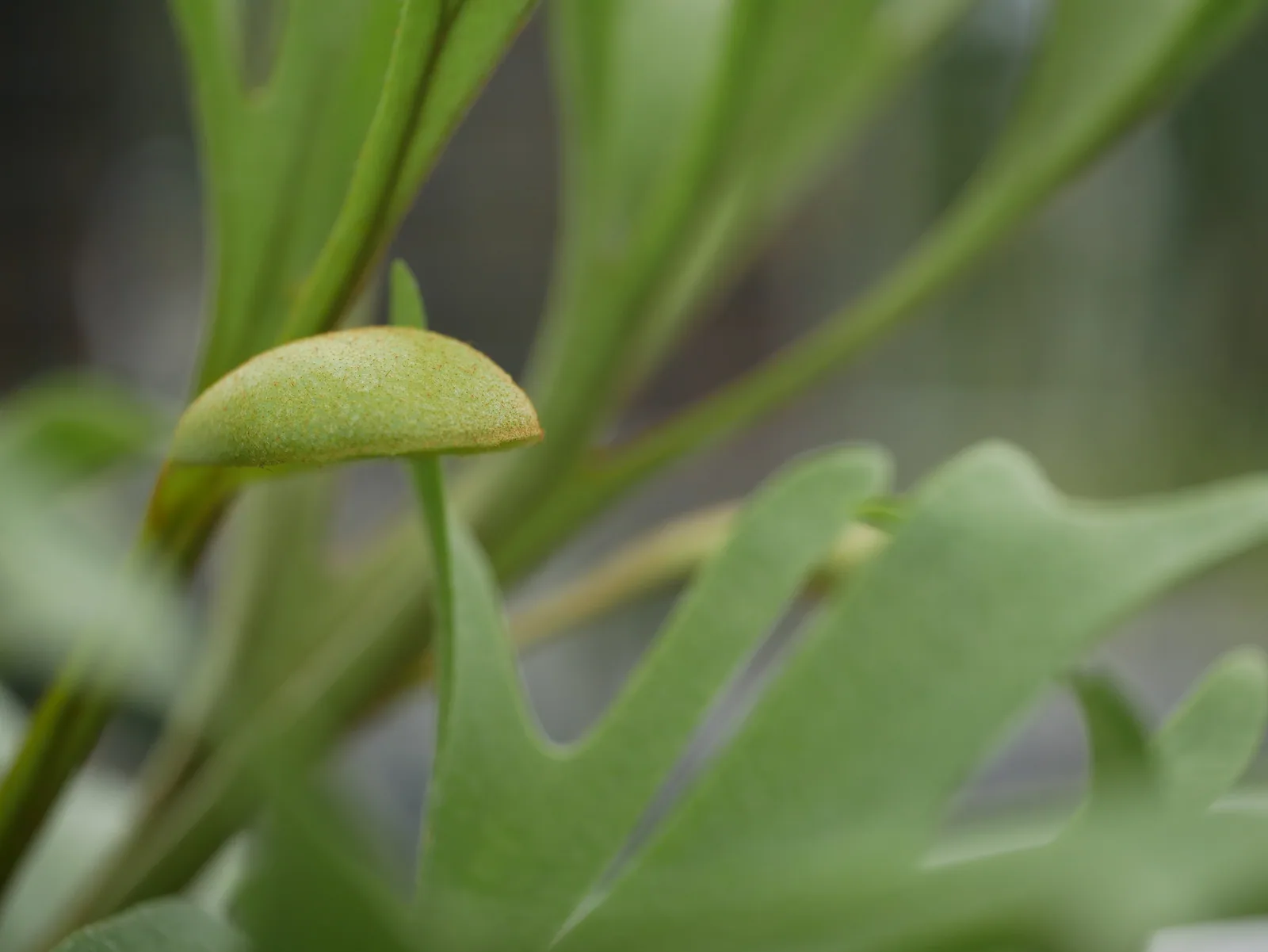
In horticulture, staghorn ferns may also be propagated from pups, offsets, or division. Those are practical propagation methods.
Its ornamental value comes from a clear plant structure
The appeal of a staghorn fern is not only that it looks unusual. It brings several plant ideas into one visible organism. Its epiphytic habit shows how a plant can grow away from ground soil. Its sterile and fertile fronds show that leaves on the same plant can have different roles. Its sori connect the plant to fern reproduction rather than flowering-plant reproduction.
This is why it fits the Horticulture and Crop Topics pillar as a representative ornamental plant profile. It can connect back to root aeration, drainage, indoor and outdoor light, leaf function, transpiration, and epiphytic plant habits. The article is not meant to be a care checklist; it uses one plant as the main subject to explain the botanical features behind its form.
Common Mix-ups
- ✕ Staghorn ferns grow on trees, so they must be feeding from the tree.
- ✓ Staghorn ferns are epiphytes. They mainly use trees or supports as attachment surfaces, which is not the same as parasitism.
- ✕ Sterile shield fronds are just old leaves or background foliage.
- ✓ Sterile shield fronds are part of the basal structure and are tied to attachment, protection, and debris capture.
- ✕ Fertile fronds are always antler-like ornamental leaves.
- ✓ Fertile fronds can grow upright, hang downward, branch, or curl, and mature fertile fronds can form sori.
- ✕ The brown fuzzy area on a frond is a flower or fruit.
- ✓ It is usually a sori area, where sporangia produce spores.
- ✕ A brown sterile frond automatically means disease.
- ✓ Browning may be a normal mature form, or it may appear alongside stress or disease. New growth, basal texture, the root mass, and overall vigor matter.
Frequently Asked Questions
Is a staghorn fern a fern or a foliage plant?
Botanically, a staghorn fern is a fern. In horticulture, it is often grown as an ornamental foliage plant or mounted display plant. These descriptions do not conflict; they come from different contexts.
What is the difference between sterile fronds and fertile fronds?
Sterile shield fronds grow near the base. They are usually shield-like or fan-shaped and are tied to wrapping, attachment, protection, and debris capture. Fertile fronds may form sori when mature; they can grow upright, hang downward, branch, or curl, and are not always shaped like typical antlers.
Does a brown sterile frond mean the plant is diseased?
Not necessarily. Mature sterile shield fronds commonly brown on staghorn ferns, but browning can also appear with stress or disease. Judge the plant by new growth, basal firmness, the condition of the root mass, and whether the whole plant is declining quickly.
Do staghorn ferns flower?
No. Staghorn ferns are ferns, not flowering plants. They do not make flowers, fruit, or seeds. Mature fertile fronds can form sori, and the sporangia in those sori produce spores.
Why are staghorn ferns often mounted?
Many staghorn ferns are epiphytes. A board or bark slab provides an attachment surface, while sphagnum or other materials influence moisture and air around the base. Mounting matches the plant’s epiphytic growth habit.
Related Terms
- Staghorn fern: A common name for ornamental ferns in the genus
Platycerium. Platycerium bifurcatum: One commonly grown staghorn fern, but not the only one.- Epiphyte: A plant that grows attached to another plant or surface without being a parasite.
- Sterile shield frond: A basal frond that wraps around the plant base; often discussed as 營養葉 or 盾葉 in Chinese horticulture.
- Fertile frond: A frond that may form sori when mature; it may grow upright, hang downward, branch, or curl, and is not always shaped like typical antlers.
- Sori: Clusters of sporangia on fern fronds.
- Sporangia: Structures that produce spores.
- Spores: Tiny reproductive units in fern life cycles; they are not seeds.
- Mounted growing: A horticultural setup where a plant is attached to a board, bark, or another support.
Read Next
Evidence and attribution
Sources and image rights
These sources were used to check the plant-science concepts and gardening context in this article.
View sources and further reading (9)
- powo.science.kew.org — urn:lsid:ipni.org:names:17177370 1
- powo.science.kew.org — urn:lsid:ipni.org:names:17177390 1
- powo.science.kew.org — urn:lsid:ipni.org:names:17177460 1
- powo.science.kew.org — urn:lsid:ipni.org:names:17256060 1
- plants.ces.ncsu.edu — platycerium bifurcatum
- hort.extension.wisc.edu — staghorn fern platycerium bifurcatum
- gardeningsolutions.ifas.ufl.edu — staghorn fern
- fs.usda.gov — reproduction.shtml
- openstax.org — 25 4 seedless vascular plants
Image sources and rights
- Zhu Lee-owned image · Zhu-owned — The source JPEG was prepared as WebP for delivery.
- Zhu Lee-owned image · Zhu-owned — The source JPEG was prepared as WebP for delivery.
- Zhu Lee-owned image · Zhu-owned — The source JPEG was prepared as WebP for delivery.
- Zhu Lee-owned image · Zhu-owned — The source JPEG was prepared as WebP for delivery.
- Zhu Lee-owned image · Zhu-owned — The source JPEG was prepared as WebP for delivery.
- Zhu Lee-owned image · Zhu-owned — The source JPEG was prepared as WebP for delivery.