Winter growth slows when the growing conditions slow down
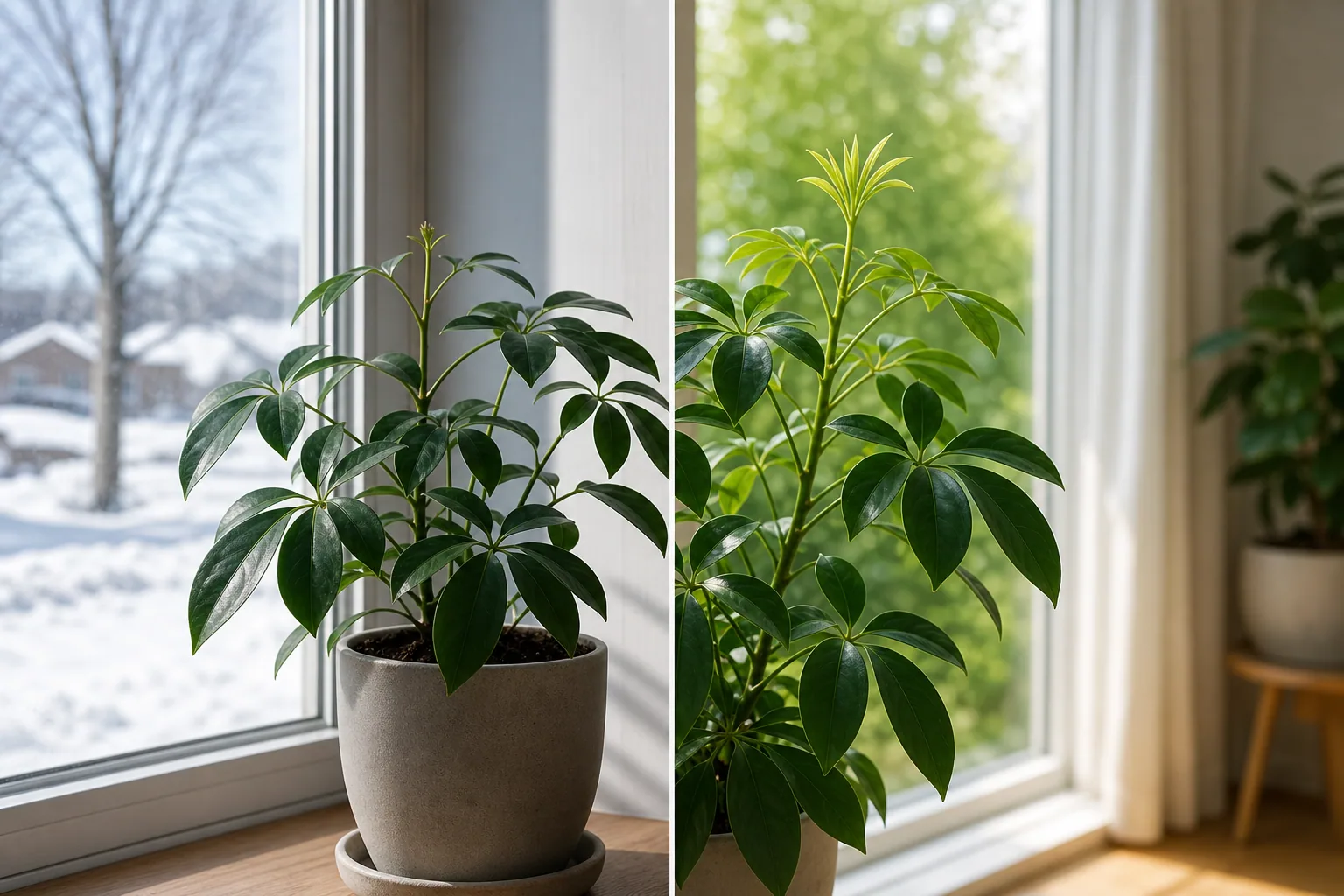
When a plant grows more slowly in winter, it is not automatically sick, and it does not always mean you did something wrong. In many cases, winter brings lower light, shorter days, cooler or less stable temperatures, and a more conservative growth rhythm.
A plain-language way to think about it is this: the plant is not being lazy. It is responding to a season when the signals and resources for fast growth are weaker. Some plants enter a clear dormant period. Many houseplants simply make fewer new leaves or unfold them more slowly. Those two situations should not be treated as the same thing.
Less light means less energy available for new growth
New leaves, stems, and roots require material the plant has built through photosynthesis. Photosynthesis is the process that lets plants use light energy to build organic molecules. When light is limited, a plant may still be alive, but it has less surplus available for growth.
Winter can reduce light in several ways: the sun is lower in the sky, days are shorter, and indoor window light often becomes weaker. Even if a pot stays beside the same window, the plant may receive much less usable light than it did in summer. Glass, curtains, roof overhangs, nearby buildings, and tree shade can reduce it further.
That is why slower leaf unfolding, small new buds, slightly stretched stems, or paler growth may show up in winter. These clues do not point to one single cause by themselves, but they often tell you that the plant’s usable light has changed.
Temperature also changes the plant’s pace
Temperature affects many plant processes, including photosynthesis, respiration, transpiration, germination, and flowering. In simple terms, temperature helps set the background speed of plant activity. When conditions are too cool for a particular plant, many processes slow down.
Growth depends on balance, not only on whether photosynthesis happens. The plant must build more than it spends. In weak winter light and cooler conditions, the amount built through photosynthesis may be lower, and the plant may not invest heavily in new leaves or shoots.
Different plants respond differently. Temperate deciduous trees, bulbs, perennial herbs, tropical foliage houseplants, succulents, and ferns do not all handle winter in the same way. This article gives an observation framework, not one universal winter care table.
Dormant, semi-dormant, and just slow are not the same
Some plants enter a clear dormant period in winter. Dormancy is not death. It is a temporary reduction in growth activity in buds, growing points, underground organs, bulbs, or visible above-ground growth until conditions become suitable again. Many temperate plants use day length and temperature cues to track the season.
But many houseplants are better described as having reduced growth or a semi-dormant phase. They may keep their leaves, continue to respire, and still use water slowly. They simply produce fewer new leaves or grow more slowly. Saying that all houseplants “go dormant” in winter is too broad.
Gardeners may also describe some plants as summer-growing or winter-growing. Summer-growing types tend to be more active in warm, brighter seasons and may slow down in winter. Winter-growing types often grow more readily in cooler seasons and may rest during hot weather instead. These labels are not universal rules for every plant, but they are useful reminders: when you judge slow winter growth, consider the plant’s preferred growing season, not only the calendar month.
A safer way to separate the cases is:
- Outdoor deciduous plants and bulbs may have obvious seasonal dormancy or visible dieback.
- Evergreen tropical houseplants often slow down because of lower light, shorter days, and indoor temperature or humidity changes.
- Plants that are actively flowering or making new shoots may still be in active growth, even if their pace is not the same as in summer.
Indoor plants still experience seasonal shifts
Walls and windows protect indoor plants, but they do not remove winter entirely. A windowsill may become cooler, the area near a heater may become drier, and the back of a room may become much darker. From late autumn into winter, the same potted plant may be living in a different light, water, and temperature pattern.
Observation is more useful than a fixed formula. Look for these clues:
- Are there new buds or new leaves? Are they opening slowly or staying very small?
- Is leaf color stable, or is the whole plant becoming paler?
- Are internodes stretching, or are stems leaning toward the window?
- Does the potting mix dry more slowly than in summer, or faster because of dry heated air?
- Is the plant a type that normally has a strong winter dormancy?
These clues help you separate normal seasonal slowdown from possible environmental stress. You do not need to force the plant into one simple diagnosis.
Water, fertilizer, and light should be adjusted to the plant’s growth state
One common winter mistake is trying to push a slow plant with more water, fertilizer, or light without first checking the situation. Slow growth does not always mean one missing input. Sometimes the current light and temperature simply do not support fast growth.
Watering should follow the potting mix and root environment. Under lower light, many plants use water more slowly, and the mix may stay moist longer. But dry heated indoor air, small pots, and porous media can change that pattern. This article does not give a fixed number of days.
Fertilizer should also be connected to active growth. If light is low, temperatures are cool, and the plant is making almost no new growth, extra fertilizer may not turn into more leaves. It can instead increase salt buildup in the potting mix. Supplemental lighting is similar: it may improve the light environment, but the result depends on intensity, distance, duration, spectrum, and plant type.
Common Confusions
- ✕ A plant growing slowly in winter means it is dying.
- ✓ Many plants naturally slow down in winter. Check leaf color, roots, potting mix moisture, new growth, and recent environmental changes before assuming decline.
- ✕ All plants go dormant in winter.
- ✓ Some plants have clear dormancy. Many evergreen houseplants simply grow more slowly under lower light, shorter days, and changed indoor conditions.
- ✕ If a plant is not growing in winter, it must need fertilizer.
- ✓ Fertilizer should match active growth and root condition. Under low light, more nutrients do not automatically become more new leaves.
- ✕ Watering less on a fixed winter schedule is always safe.
- ✓ Low light often reduces water use, but heating, pot size, potting mix, and plant type can change drying speed.
- ✕ When spring arrives, plants immediately restart growth.
- ✓ Longer days and stronger light can support renewed growth, but response speed depends on temperature, roots, plant type, and prior stress.
Frequently Asked Questions
Is slow winter growth a sign my plant is dying?
Not necessarily. If the leaves are mostly stable, the stems are not collapsing or rotting, and the plant is not rapidly dropping leaves, slow new growth is often connected to winter light, day length, and temperature changes. If slow growth comes with many yellow leaves, soft collapse, root odor, or rapid leaf drop, then water, roots, and environmental stress need closer attention.
Do indoor plants go dormant in winter?
Some do, but many simply slow down. True dormancy depends on plant type, origin, day length, temperature, and internal plant rhythms. Many tropical foliage houseplants remain alive and metabolically active in winter; they just produce fewer new leaves under lower light and changed indoor conditions.
Should I fertilize if my plant is not making new leaves?
Do not use the absence of new leaves as the only reason to fertilize. Fertilizer is not the plant’s energy source. The plant still needs enough light to build the carbohydrates that support growth. If light is low, temperature is cool, or roots are stressed, fertilizer may not solve the slowdown.
Why does potting mix dry more slowly in winter?
Under lower light and slower growth, many plants take up and transpire less water, so potting mix can stay moist longer. Heated indoor air can also dry some pots faster, especially small pots or airy mixes. The useful habit is to observe how that specific pot dries, rather than carrying over a summer watering rhythm.
Are smaller winter leaves normal?
They can be part of seasonal low-light growth, but they can also point to long-term low light, root stress, or limited nutrient uptake. If one or two winter leaves are smaller, observation may be enough. If each new leaf keeps getting smaller, stems stretch, and color becomes pale, check light and root conditions together.
Will plants start growing again as soon as spring arrives?
Not always. Longer days and stronger light are important signals, but recovery also depends on temperature, root condition, species, and stress from the previous season. Some plants restart quickly; others resume growth gradually.
Related Terms
- Photosynthesis: the process by which plants use light energy to build organic molecules.
- Cellular respiration: the process by which plants break down organic molecules to release usable energy.
- Photoperiod: the length of day and night that plants can use as seasonal information.
- Dormancy: a temporary state of reduced growth activity until conditions become suitable again.
- Semi-dormancy: a horticultural shorthand for noticeably reduced growth without a complete stop in plant activity.
- Transpiration: water movement from inside the plant to the air, mainly through leaves.
Read Next
Evidence
References
These sources were used to check the plant-science concepts and gardening context in this article.
View sources and further reading (8)
- extension.oregonstate.edu — environmental factors affecting plant growth
- extension.umn.edu — lighting indoor plants
- extension.umn.edu — spring houseplant care
- richmond.ces.ncsu.edu — winter considerations for house plants
- extension.illinois.edu — 2018 05 31 houseplants and indoor lighting
- openstax.org — 8 1 overview of photosynthesis
- openstax.org — 30 6 plant sensory systems and responses
- openstax.org — 30 chapter summary