Sort the clues first, then look for likely directions
When plant leaves turn yellow, do not start with only “Is it underwatered?” or “Does it need fertilizer?” The same yellow color can come from normal older leaf turnover, low light, too much or too little water, oxygen-poor roots, repotting, moving the plant, fertilizer concentration, season, or other changes.
A practical flow is: first ask where the yellowing appears, then how the leaf is yellowing, then check water, light, roots, potting media, and recent changes. This cannot guarantee one perfect answer, but it helps prioritize what to observe.
Why leaves change from green to yellow
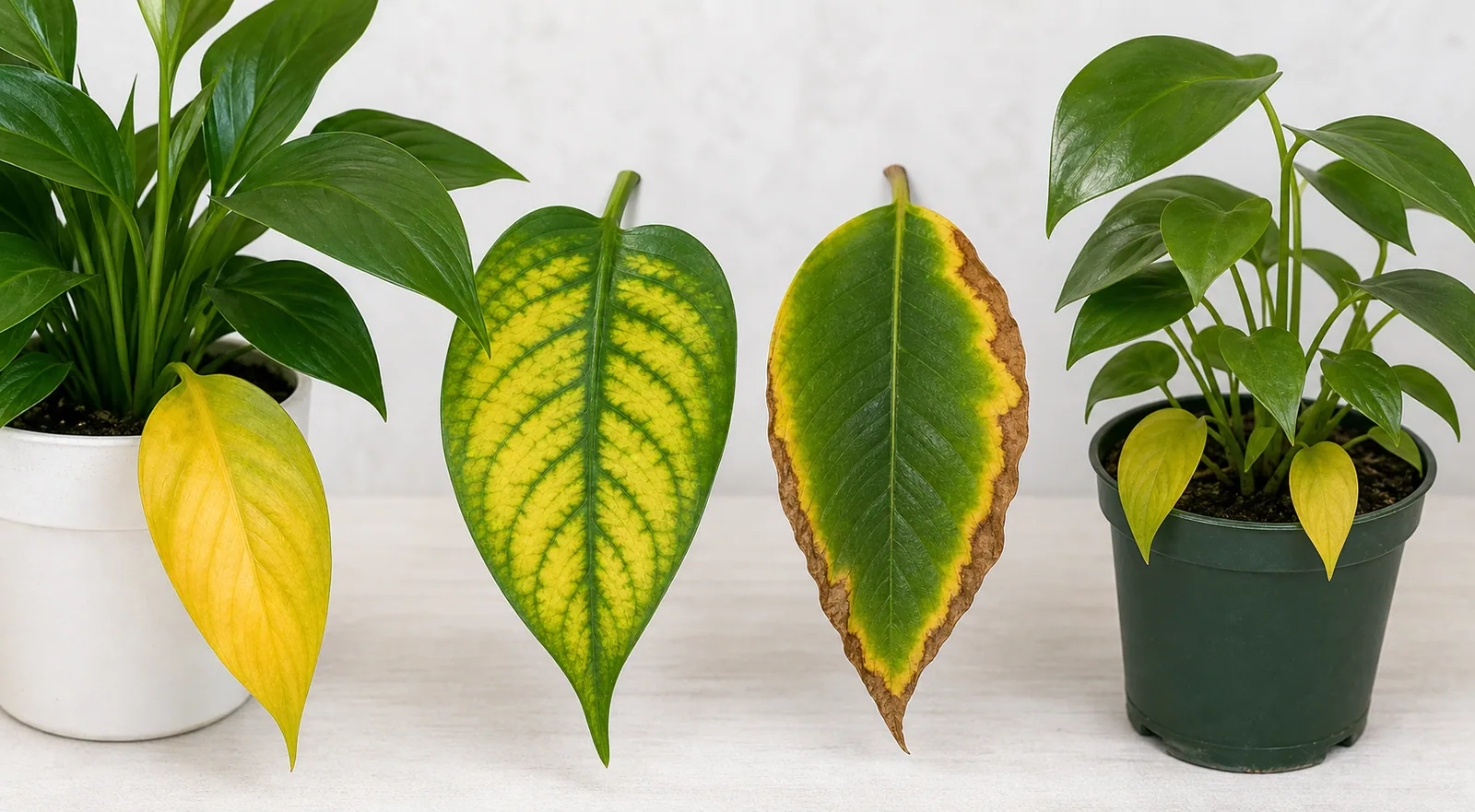
The green color of many leaves is mainly related to chlorophyll. Chlorophyll is an important pigment involved in photosynthesis. When chlorophyll decreases, breaks down, or is visually overtaken by other pigments, a leaf can look yellow.
If the main change is red or purple rather than yellow, the observation path is different; see why some plant leaves turn red.
But “less chlorophyll” is the visible result, not the whole cause. Natural aging of old leaves, long-term low light, root problems, dense or wet media, temperature swings, nutrient imbalance, and other stresses can all lead to yellowing. The next sections sort the clues by position, pattern, and environment.
Step 1: Check whether old leaves or new leaves are yellowing
The position of yellow leaves matters. Before judging the shade of yellow, ask where on the plant it appears.
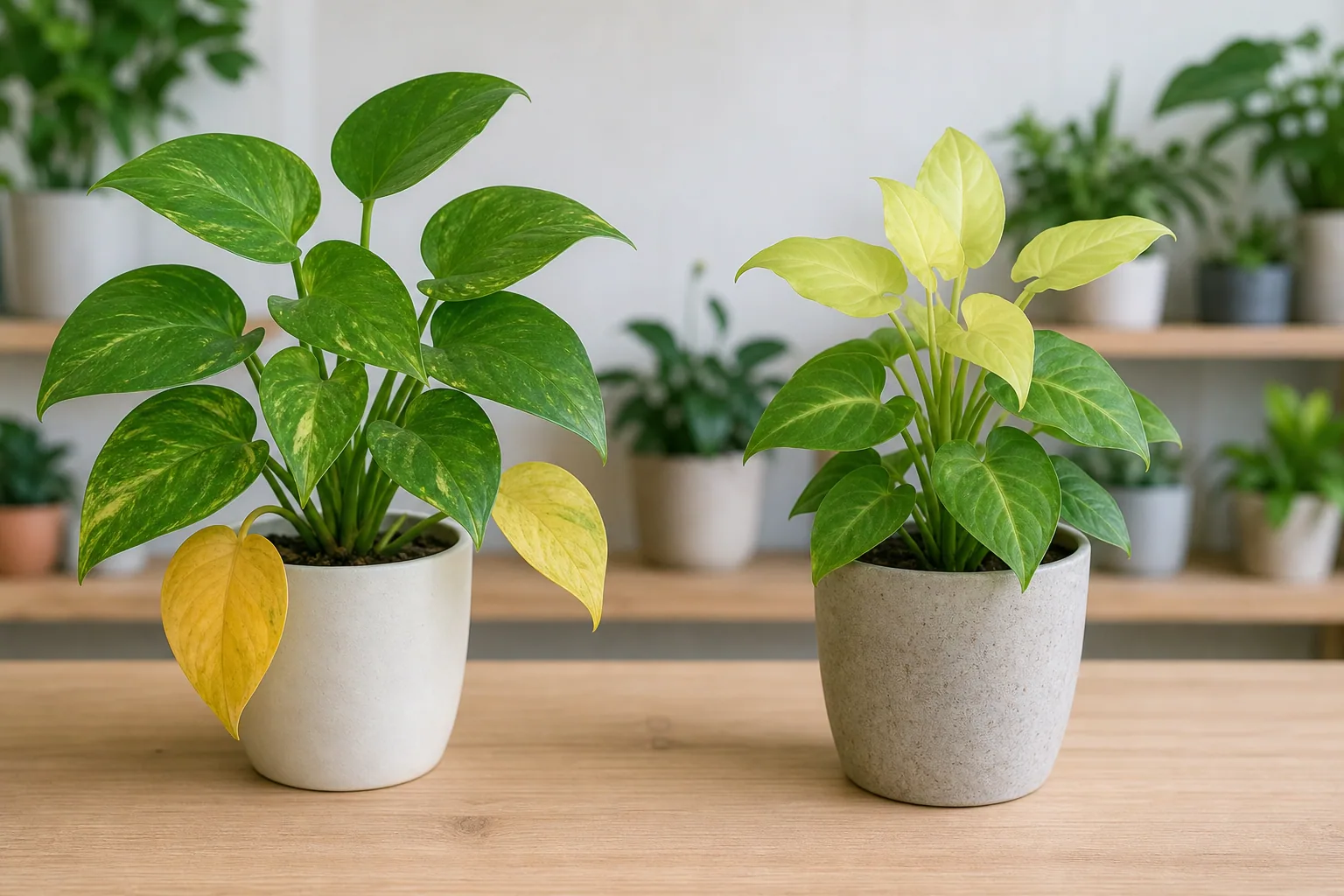
- Only one or two older lower or inner leaves slowly turn yellow, while new growth stays normal: this may be natural leaf turnover. Mature plants do not keep every old leaf working forever.
- Older leaves keep yellowing while the whole plant becomes paler or slower: in addition to leaf aging, observe low light, root stress, dense media, or long-term nutrient supply.
- New leaves emerge pale, yellowish, small, or distorted while old leaves look more normal: nutrient supply or nutrient uptake problems become more likely. This does not mean “fertilize immediately.” Also inspect roots, media, watering, and recent repotting.
- Old and new leaves yellow quickly together: this usually suggests whole-plant stress. Check watering, drainage, light, temperature change, and root condition before guessing fertilizer.
This first step separates normal turnover, new-growth problems, and whole-plant stress. Do not judge from one leaf alone. Look at whether new leaves continue to grow, whether yellowing spreads, and whether the plant was recently moved, repotted, or watered differently.
Step 2: Look at how the leaf is yellowing
After you know where the yellowing appears, look at the pattern. Different patterns point to different observation priorities.
- Whole leaf yellowing: if only a few old leaves are involved, start with natural aging. If many leaves become pale together, check low light, water stress, root damage, or long-term nutrient supply.
- Interveinal yellowing: veins remain green while the tissue between veins turns yellow. This often points toward nutrient supply or nutrient uptake, especially on new leaves, but it should not be used alone to identify a specific element.
- Leaf tips or edges yellow, then turn brown or crisp: first consider dryness, strong light, heat, fertilizer salts, fertilizer stress, or media problems. This deserves a separate article and is not a place for quick prescriptions.
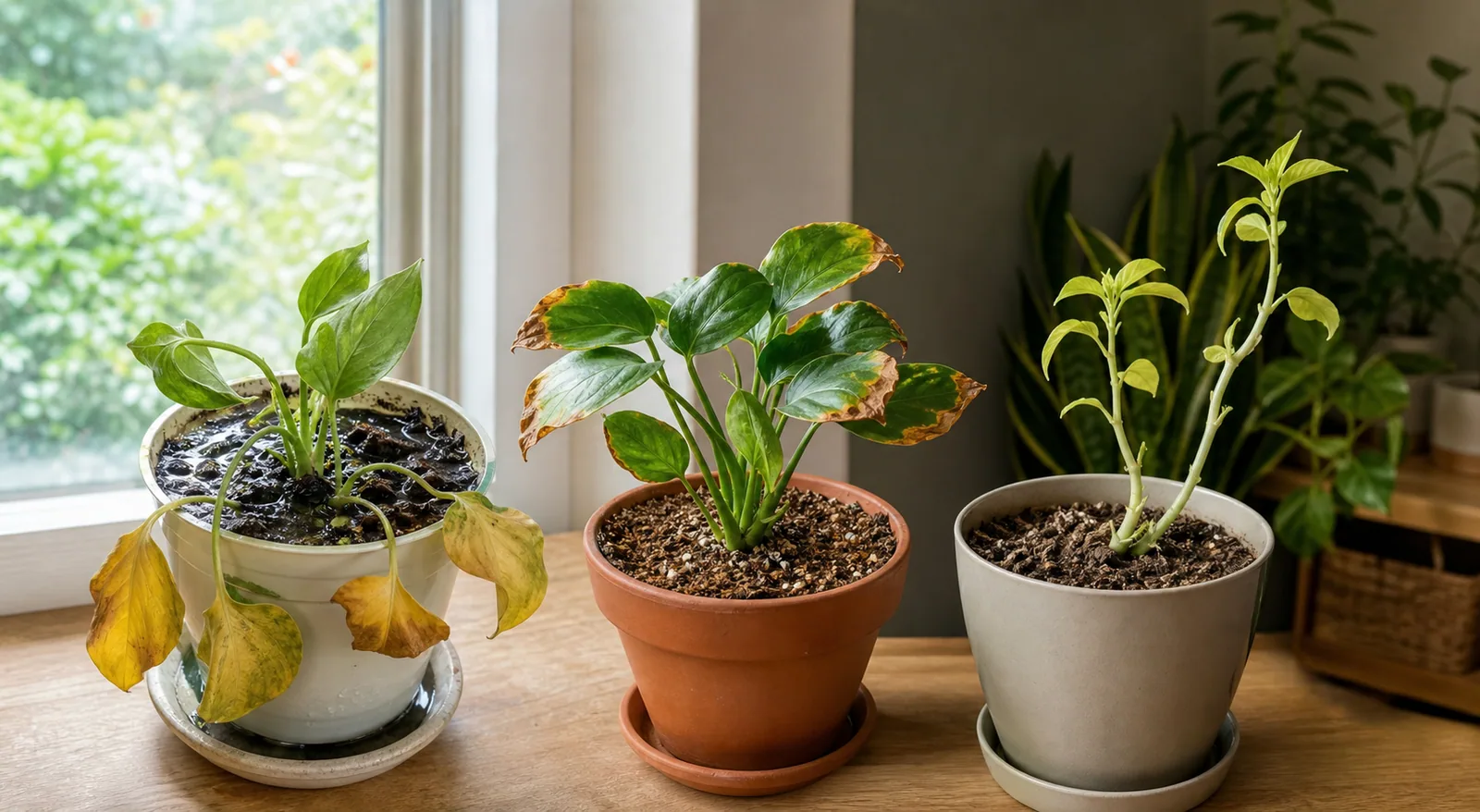
- Yellowing plus wilting while the potting mix remains wet: prioritize drainage, dense media, low root-zone oxygen, or root damage. This does not prove root rot, but the root environment should be checked.
- Irregular yellow patches, sudden bleaching, mold, rot, or visible insects: consider sun scorch, physical damage, cold or heat shifts, infection, or pest traces. This site does not provide pesticide or disease prescriptions in this article.
This step narrows the field. Whole-leaf yellowing, interveinal yellowing, edge burn, wilting, and irregular patches do not point to the same first checks.
Light, water, and roots often interact
Many yellow-leaf cases are not caused by one factor. Low light can reduce photosynthesis and often appears together with paler leaves, leggy growth, or lower leaf drop.
Water is not safer simply because there is more of it. Media that is too dry for too long stresses the plant. Media that stays wet for too long fills air spaces with water, reducing oxygen around roots. Leaves may then yellow or wilt even though the pot feels wet.
Nutrients also affect leaf color. When new leaves repeatedly emerge pale, small, or weak, nutrient supply or nutrient uptake becomes more likely. But if roots are already stressed, extra fertilizer can make the situation more complicated.
Step 3: Put the clues back into recent environment changes
After checking position and pattern, ask what changed recently. This is often more useful than guessing one deficiency.
- Media and water: Is the potting mix long-term wet, long-term dry, or swinging sharply between dry and wet? Does the pot drain well?
- Light: Was the plant moved to a darker place? Are stems also stretching or becoming loose?
- Roots and media: Was the plant recently repotted? Is the media becoming dense? Is the pot oversized? Does the pot stay heavy for a long time after watering?
- Fertilizer: Was fertilizer recently applied at a strong concentration? Is there white salt crust on the surface? Fertilizer stress or salt buildup may need to be considered, but this article does not give dosage advice.
- Speed: One old leaf slowly yellowing is different from many leaves yellowing within a few days.
In short: check old leaves versus new leaves, then the yellowing pattern, then water, light, roots, media, and recent changes.
Common confusions
- ✕ Yellow leaves always mean underwatering.
- ✓ Dryness can cause stress, but long-term wet media, low root oxygen, low light, or natural aging can also turn leaves yellow.
- ✕ Yellow leaves always need fertilizer immediately.
- ✓ Pale small new leaves may raise nutrient questions, but poor root function or media problems can also block uptake.
- ✕ One yellow leaf means the whole plant is dying.
- ✓ A mature plant occasionally losing a lower old leaf may be normal. Look at the whole plant and the speed of change.
Frequently Asked Questions
Does one yellow leaf mean the whole plant is dying?
Not necessarily. If one or a few lower old leaves slowly yellow while new growth and overall growth remain normal, it may be natural leaf turnover. Rapid widespread yellowing, wilting, edge burn, or leaf drop needs closer observation.
How should I compare old-leaf yellowing and new-leaf yellowing?
Slow yellowing of a few old leaves can be normal, though repeated older leaf loss may also point to light, roots, or long-term nutrient supply. New leaves that emerge pale, small, or distorted raise the possibility of nutrient shortage or poor uptake, but roots, media, and recent care changes should be checked too.
Why are leaves still yellow after I watered the plant?
Because yellowing is not only about whether water was added. Long-term wet media can reduce air around roots and make roots work poorly. Long-term dryness can also stress the plant. Look at media moisture, drainage, aeration, light, and roots together.
Should I fertilize immediately when leaves turn yellow?
No. Do not assume fertilizer is the answer from yellowing alone. If new leaves repeatedly become pale and small, nutrient issues become more likely. But if roots are stressed, adding fertilizer may increase stress. This article does not provide fertilizer dosages.
If veins stay green but the area between veins turns yellow, is it definitely fertilizer deficiency?
Not definitely. Interveinal yellowing often points people toward nutrient supply or uptake, especially on new leaves. But root condition, media pH, salts, watering, plant type, and leaf age all affect interpretation. Do not diagnose a specific nutrient from one leaf alone.
Can yellow leaves turn green again?
Slightly pale leaves may stabilize if conditions improve. Leaves that are fully yellow, wilted, or browned usually do not return to their original green state. More important is whether new growth and the whole plant stabilize afterward.
Related Terms
- Chlorophyll: a green pigment involved in photosynthesis.
- Chlorosis: yellowing or loss of normal green color in leaves.
- Old leaf: an earlier-formed leaf, often lower or inside the plant.
- Root-zone oxygen shortage: low air around roots, which can affect root respiration and water uptake.
- Leggy growth: stretched growth with longer spaces between leaves, often associated with low or one-sided light.
- Potting media: the material in a pot that supports roots, water, and air.
Read Next
Evidence
References
These sources were used to check the plant-science concepts and gardening context in this article.