
Six basic parts on a typical flowering plant
For a common flowering plant, a useful first map has six basic organs: roots, stems, leaves, flowers, fruits, and seeds.
Roots are usually below the plant. They help hold the plant in place, and they absorb water and mineral nutrients. Stems work like both support beams and transport routes: they hold leaves, flowers, and fruits in position, and they move water and plant-made materials through the plant. Leaves are the main light-receiving organs. They use light, water, and carbon dioxide from the air to make sugars and other organic materials the plant can use.
Flowers, fruits, and seeds are mostly connected to reproduction. Flowers are often involved in pollination and seed formation. Fruits often protect seeds and may help seeds move away from the parent plant. Seeds contain the beginning of a new plant, but they only germinate when conditions are suitable.
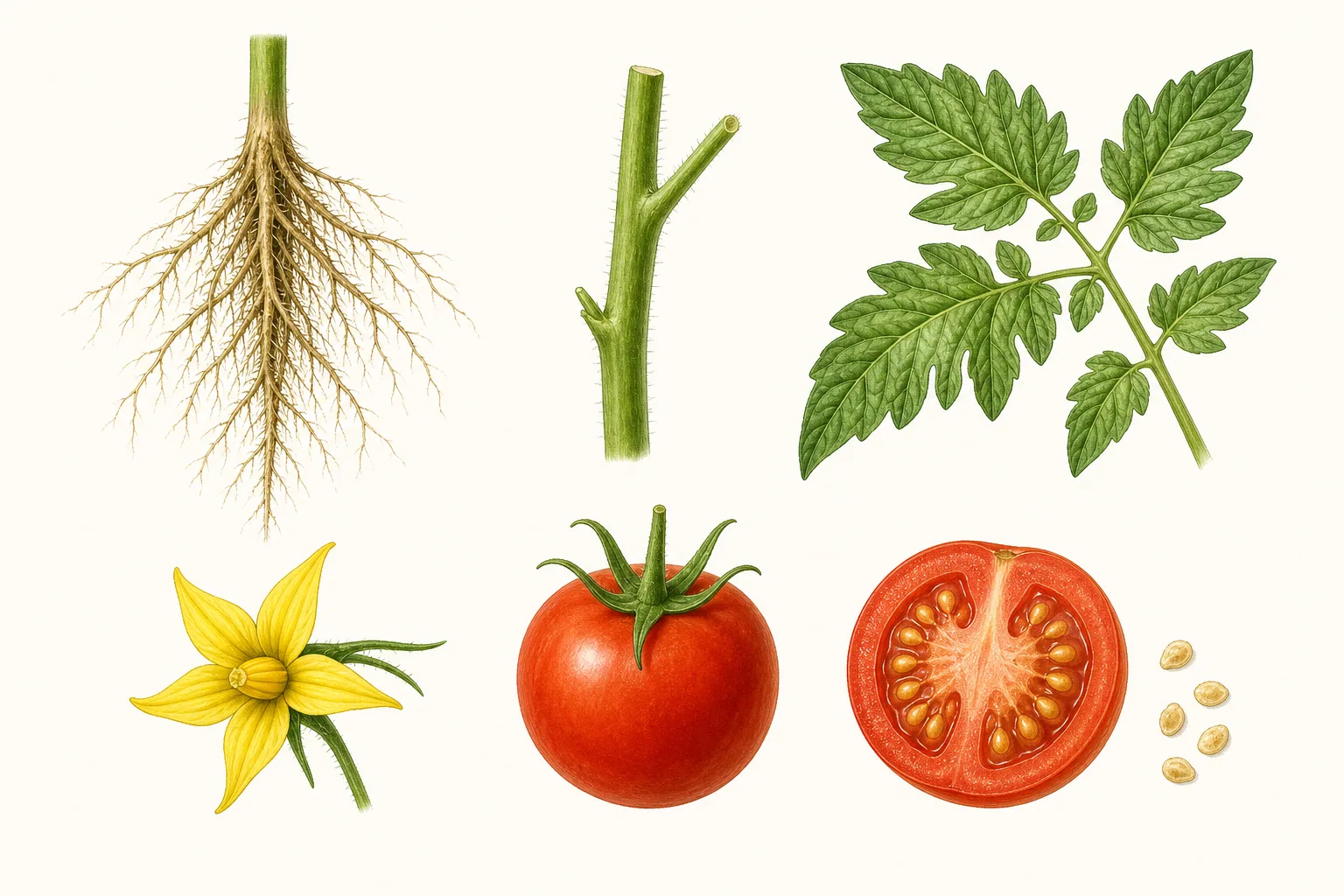
How these organs divide the work
Roots, stems, and leaves can first be understood as the parts that help a plant live and grow. A more formal term is vegetative organs. That means they are mainly involved in anchoring, water uptake, transport, light capture, making organic materials, and growth.
Flowers, fruits, and seeds can first be understood as the parts connected to the next generation. A more formal term is reproductive organs. They are mainly involved in pollination, seed formation, seed protection, or seed dispersal.
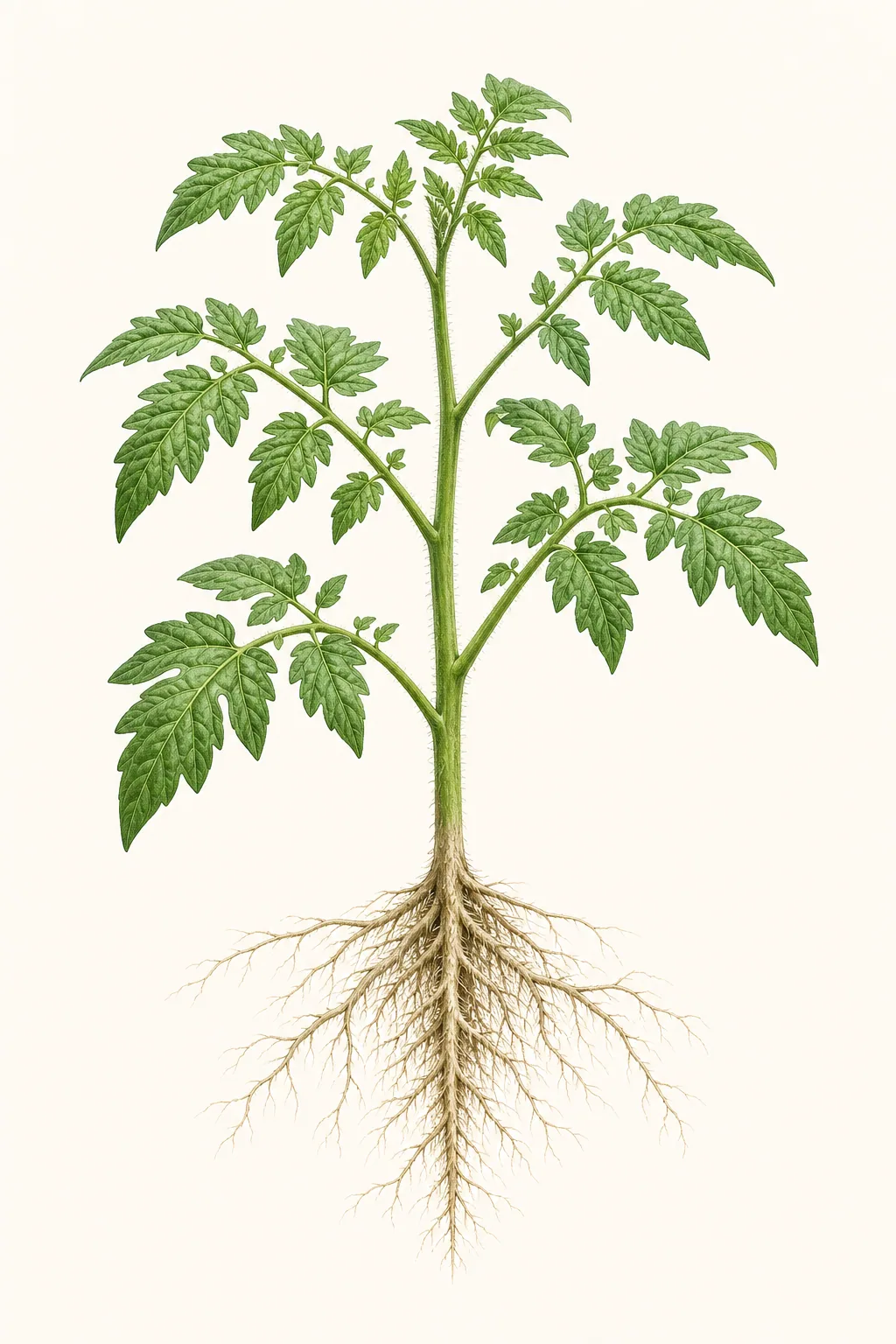
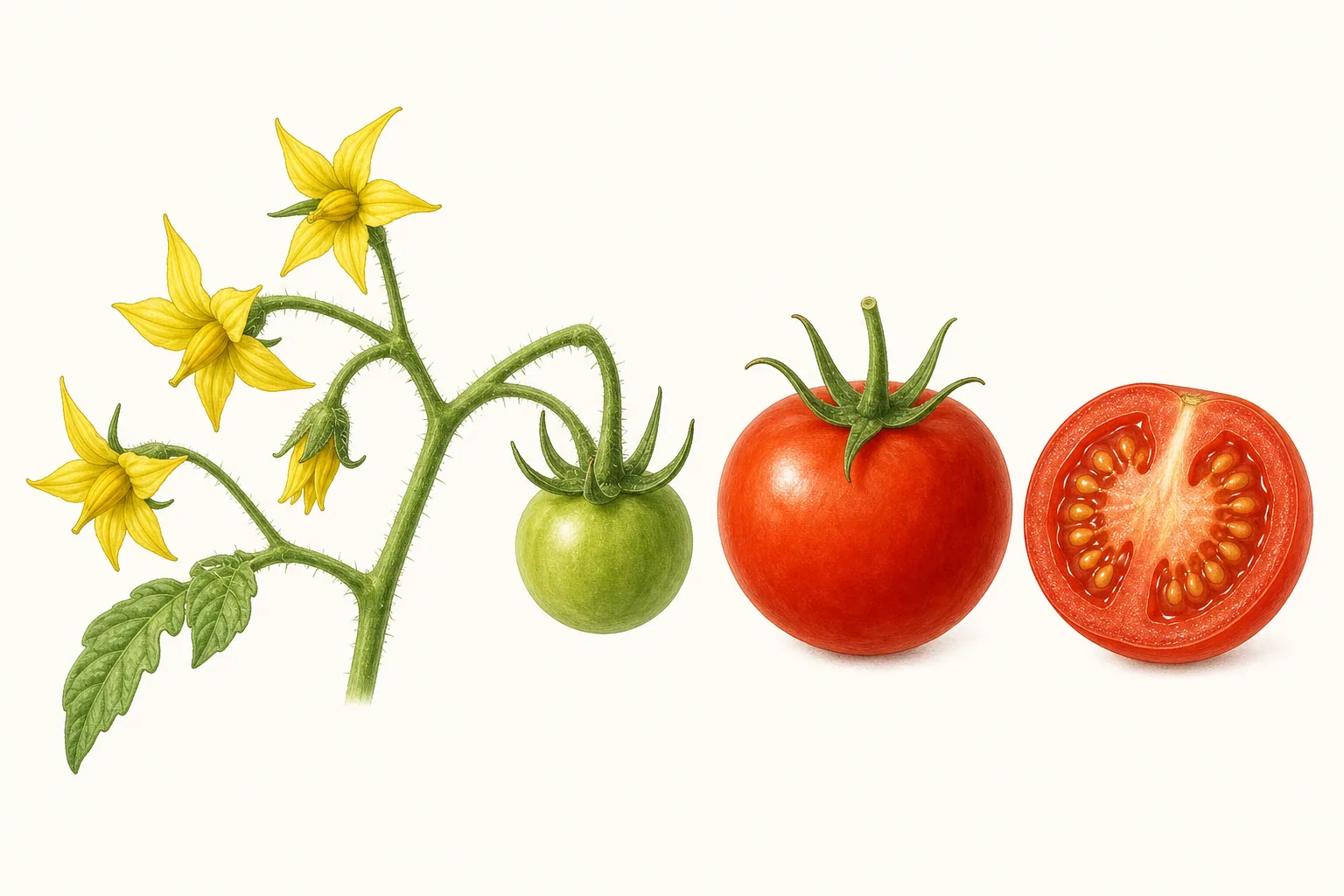
These categories are a map for understanding, not a rule that forces every plant into the same pattern. Not every plant group, and not every growth stage, shows all six parts at the same time.
If you cannot see one part, start with this
When you look at a plant, you will not always see roots, stems, leaves, flowers, fruits, and seeds all at once. That does not automatically mean the plant is missing a part. The part may be hidden, very small, or not present at that growth stage.
If you cannot see flowers or fruits, the plant may not have reached its flowering or fruiting stage. If you cannot see seeds, they may be inside a fruit. If you cannot see roots, they may be under soil, potting media, or water.
This article uses common flowering plants as an entry point. Once the basic organs are familiar, it becomes easier to understand plant groups with different life cycles or unusual structures.
Common confusions
- ✕ Every plant always has roots, stems, leaves, flowers, fruits, and seeds.
- ✓ These six organs work well as a first map for common flowering plants, but other plant groups can be different.
- ✕ Flowers exist only to look pretty.
- ✓ Flowers are often reproductive structures. A showy appearance is only one possible feature.
- ✕ A fruit in botany is the same thing as a fruit in everyday food language.
- ✓ Botanical fruits and everyday food categories do not match perfectly.
- ✕ Any seed you see will definitely germinate.
- ✓ A seed needs suitable conditions, and not every seed will germinate.
Frequently Asked Questions
Do all plants have roots, stems, leaves, flowers, fruits, and seeds?
No. This article focuses on common flowering plants, so it starts with roots, stems, leaves, flowers, fruits, and seeds. Ferns, mosses, and other plant groups have different reproductive systems and may not have typical flowers or fruits.
What is the difference between roots, stems, leaves and flowers, fruits, seeds?
Roots, stems, and leaves mostly support living and growth, such as water uptake, anchoring, transport, and light capture. Flowers, fruits, and seeds are more closely connected to reproduction and the next generation.
Why do some plants have no visible flowers or fruits?
The plant may not be in a flowering or fruiting stage yet. The flowers may also be small or hard to notice. Some plants do not reproduce through typical flowers and fruits at all.
Is a botanical fruit the same as a fruit people eat?
Not exactly. In botany, a fruit is a structure related to seed formation, seed protection, or seed dispersal. In everyday life, “fruit” is a food category, so the two systems do not always match.
Does every seed germinate?
No. A seed contains the beginning of a new plant, but germination depends on the seed’s condition and the surrounding environment.
Why does the main diagram not label seeds directly?
Because the typical plant image does not expose the seeds directly. In many flowering plants, seeds are inside fruits. If a seed is not visible, it is clearer to understand it as “seeds inside the fruit” rather than labeling a hidden structure.
Why start with common flowering plants?
Common flowering plants often show roots, stems, leaves, flowers, and fruits in a way that is easy to recognize. They are a good first map before moving into ferns, mosses, orchids, or special plant structures.
Do I need to find all six organs every time I look at a plant?
No. Some parts may be under the soil, inside fruits, hidden by leaves, or not present yet. Start with the visible parts, then slowly connect the hidden parts.
Read Next
Evidence and attribution
Sources and image rights
These sources were used to check the plant-science concepts and gardening context in this article.
View sources and further reading (5)
Image sources and rights
- Plant Note project-made image · Created by Plant Note; no third-party image license applies — The project-made PNG was adapted as WebP for delivery.
- Plant Note project-made image · Created by Plant Note; no third-party image license applies — The project-made PNG was adapted as WebP for delivery.
- Plant Note project-made image · Created by Plant Note; no third-party image license applies — The project-made PNG was adapted as WebP for delivery.
- Plant Note project-made image · Created by Plant Note; no third-party image license applies — The project-made PNG was adapted as WebP for delivery.