
Ferns mainly continue their life cycle through spores, but a spore does not grow straight into the familiar fern plant. It first develops into a very small gametophyte. After sperm and egg meet, a new sporophyte grows. In gardening, some ferns can also be multiplied through rhizomes or division. That is a separate vegetative propagation route.
Start with the small brown marks on the underside of a fern frond
Turn over a mature fern frond and you may see brown dots, lines, or small patches. These are usually not individual spores. They are sori—the plural of sorus—which are clusters of many sporangia. A sporangium is the structure where spores form. Each spore is much smaller and normally cannot be distinguished one by one with the naked eye.
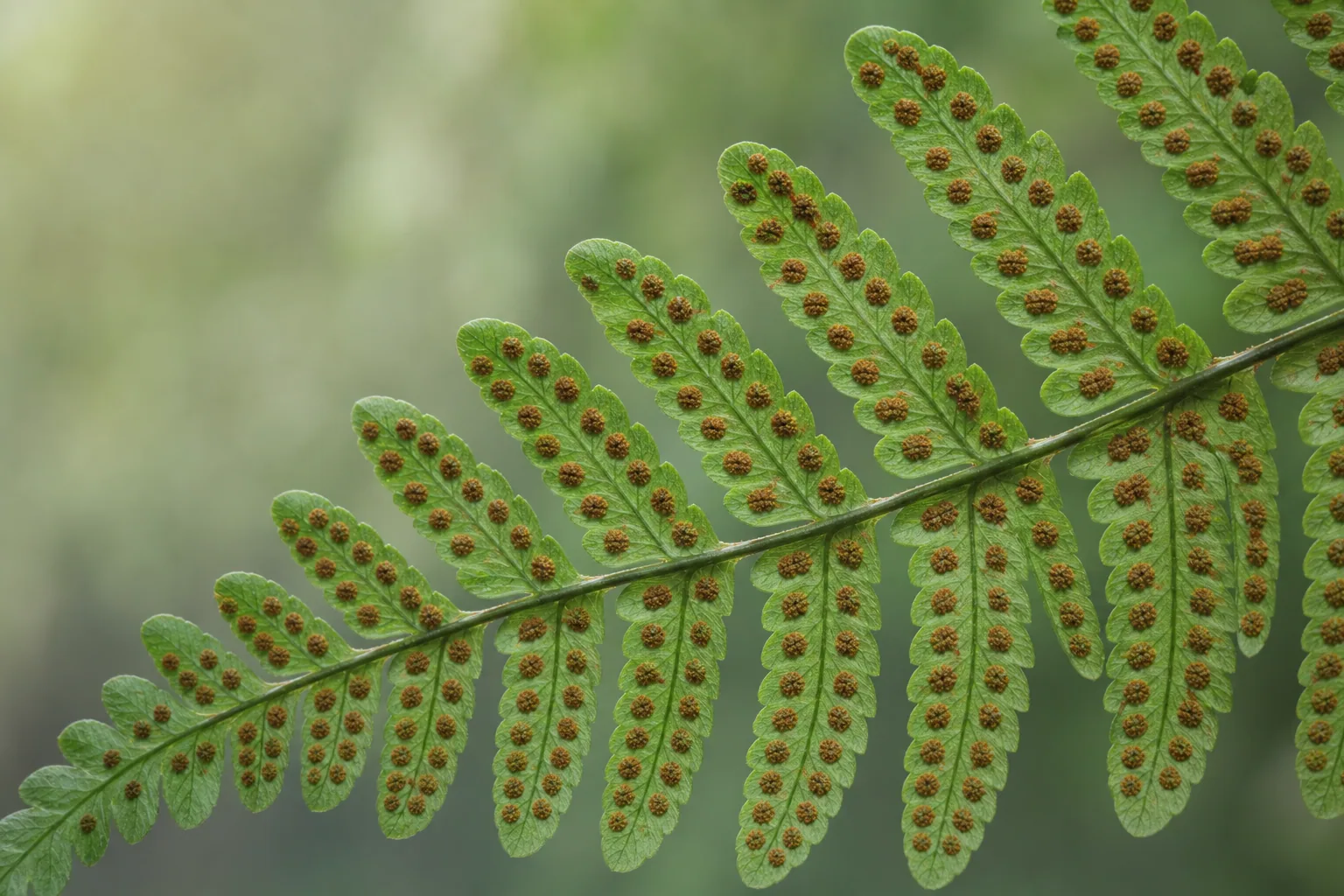
One important distinction starts here: true ferns do not use flowers, fruits, or seeds to start the next generation. Sori are visible structures associated with the next stage of the fern life cycle, not piles of seeds or pollen.
What stages does fern reproduction pass through?
You can think of the fern life cycle as a relay:
mature sporophyte → sporangia → spores → a small gametophyte or prothallus → fertilization through a film of water → a young sporophyte → mature fern
The spore route is the full fern life cycle, including sexual reproduction when sperm and egg unite. A mature fern produces spores, a spore grows into a small gametophyte, the gametophyte produces gametes, and fertilization starts a new sporophyte.
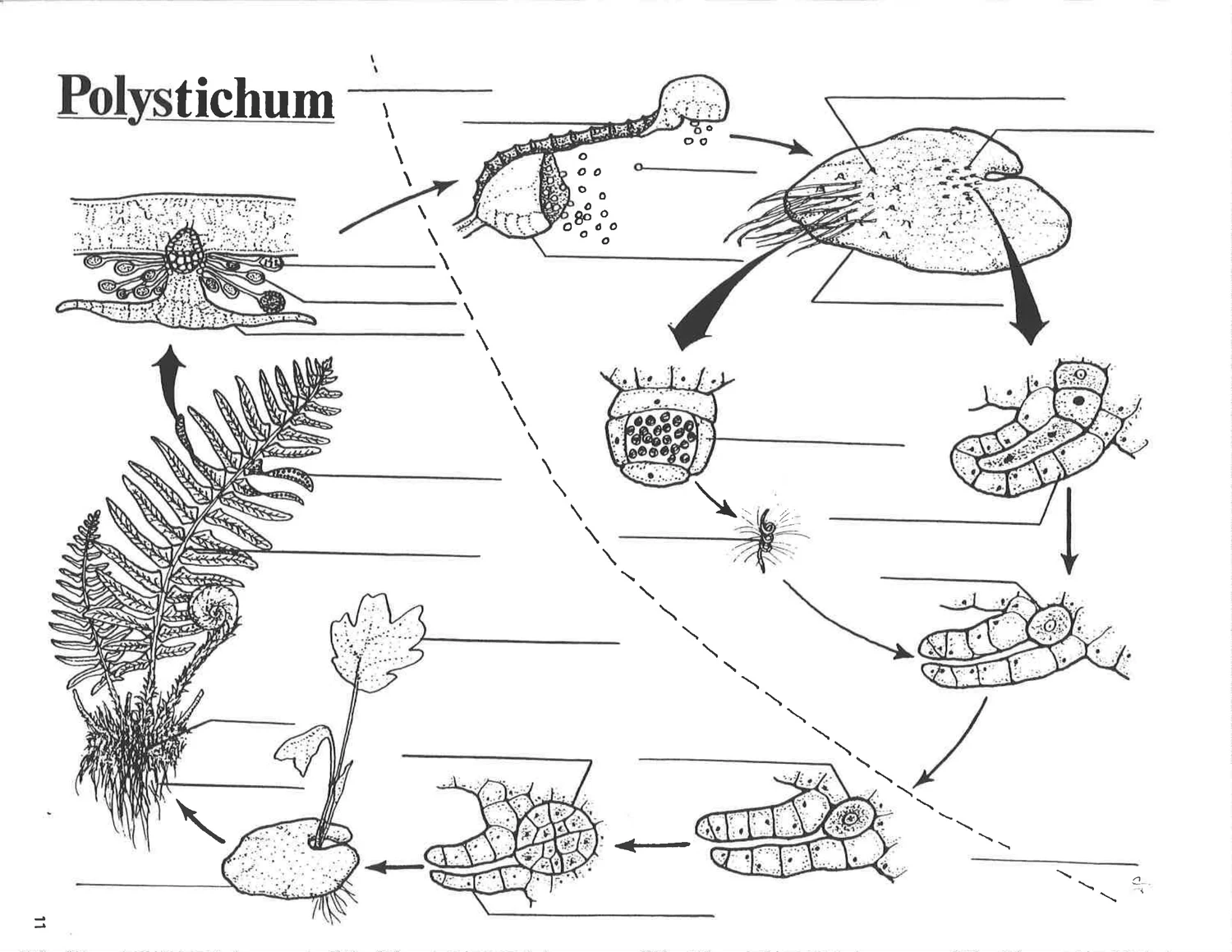
1. The familiar fern plant is the sporophyte
The large fronds, divided leaves, and unfurling new fronds that we usually notice are part of the fern’s sporophyte. In the typical life cycle, the sporophyte is the diploid stage, written as 2n. Mature fronds can bear sori containing sporangia, where spores form.
2. Sporangia produce and release spores
Inside a sporangium, cells undergo meiosis and produce haploid spores, written as n. When the spores mature, they leave the sporangia and may be carried by wind.
The symbols n and 2n describe chromosome sets. They do not mean “half a plant” and “a complete plant.” For a first understanding, it is enough to remember that a spore is the starting point for the next stage after the mature fern.
3. A spore grows into a tiny gametophyte
If a spore lands in a suitable, protected place with enough moisture, it can develop into a very small gametophyte, also called a prothallus. The prothallus is often heart-shaped, leaf-like, or a thin plate. It is also an n stage, but it looks completely different from the mature fern plant. Depending on the species and conditions, it may be only a few millimetres across and easy to miss among green films or other small plants on the surface.
The gametophyte is not simply a young version of the mature fern. It is another plant stage in the life cycle. It produces the gametes that take part in fertilization. Its underside may have fine rhizoids, which are root-like anchoring structures that help it attach and contact moisture; they are not the same as the true roots of the mature sporophyte.
4. A film of water lets sperm reach an egg
The gametophyte produces gametes: sperm and eggs. The structures associated with them are called antheridia and archegonia. In common teaching models, these structures may occur on the same gametophyte or on different gametophytes, and they may mature at different times.
Fern sperm have flagella and need a thin film of water in which to swim toward an egg. This is why sexual reproduction in ferns is often associated with damp, sheltered microhabitats. It does not mean that every fern species can live only in dark, waterlogged places. The need for water refers specifically to the step in which sperm move to the egg.
When a sperm fuses with an egg, they form a zygote. The chromosome number returns from n + n to 2n.
5. The zygote develops into a new sporophyte
The zygote develops near the gametophyte into a young sporophyte. It may first show a young frond or a curled new leaf, then gradually grow into a fern that can live independently. Once the new sporophyte matures, it can form sori and sporangia on its fronds, and the cycle begins again.
This pattern, in which a sporophyte and a gametophyte take turns in the life cycle, is called alternation of generations. Both are plant stages, but they have different chromosome sets, appearances, and roles. For a broader introduction to plant life cycles, see What stages are in a plant life cycle?. That article uses common flowering plants as an entry model; ferns do not follow a simple seed–flower–fruit sequence.
What is the difference between spores and seeds?
A fern spore is usually a single haploid cell that can develop into a gametophyte. A seed is a multicellular reproductive structure of a seed plant. It normally contains an embryo, protective outer layers, and tissues that support early development. The embryo inside a seed is already the starting point of a new sporophyte; a fern spore still has to pass through the gametophyte and fertilization stages.
You can compare the structures inside a seed in What Are the Parts of a Seed?, but do not treat “fern seed” as “fern spore.”
Pollen is not the same as a fern spore either. A pollen grain is part of the reproductive system of a seed plant and represents a male gametophyte that carries or produces male gametes. Fern spores develop into gametophytes, so the two terms occupy different positions in their life cycles. The brown areas on the underside of a fern frond are not piles of pollen.
Ferns can also spread through rhizomes and division
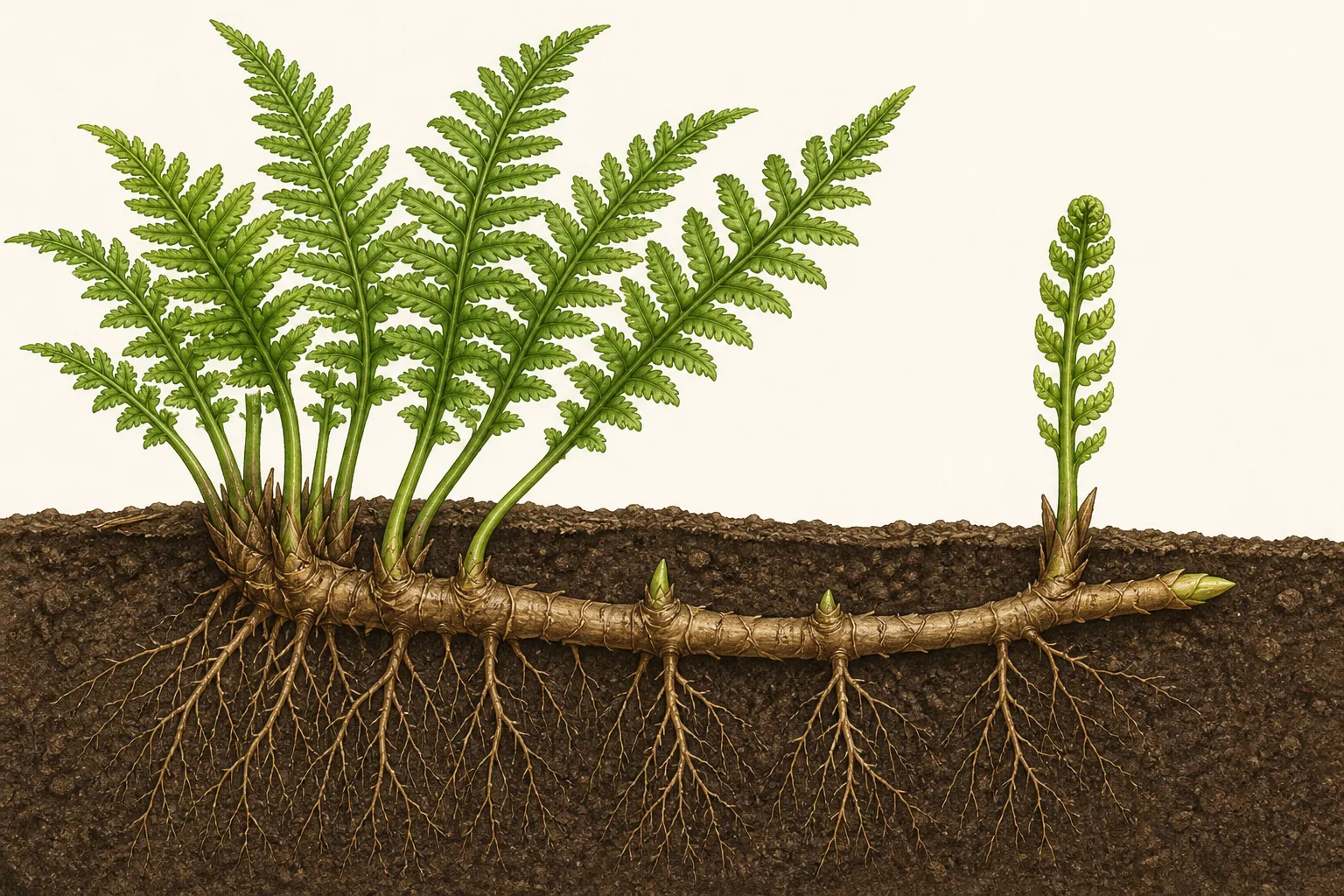
A fern’s underground or ground-hugging rhizome is a stem, not a root. A rhizome can extend sideways, with roots and new fronds emerging from different points. In this way, one fern sporophyte can form a clump or spread across an area.
This route is vegetative propagation. It starts with an existing sporophyte and does not pass through spores, a gametophyte, or fertilization. Some ferns also produce bulbils, fernlets, or new plants at leaf tips, but these are special features of particular species—not a fixed feature of every fern.
In gardening, some ferns can be multiplied by division, using existing rhizomes, roots, crowns, and growing points. Whether division is suitable depends on the fern’s growth form, so one species’ method should not be treated as a universal fern-propagation recipe. For the broader distinction, see What is the difference between sexual and asexual reproduction in plants? and What is plant division?.
The two routes should not be drawn as one continuous sequence. The spore route is the alternation-of-generations life cycle. Rhizome spread and division start directly from an existing 2n sporophyte and increase the number of plants without first producing an n gametophyte.
What can you observe in a pot or garden?
- Look at the underside of a mature frond. Brown dots, lines, or patches may be sori, but use their position and arrangement as observation clues rather than treating a text description as a guaranteed identification. Sorus shape, position, and protective structures vary among ferns.
- Use a hand lens to compare the scale of a sorus with the scale of an individual spore. The brown cluster visible to the eye is not one giant spore.
- If a clump gradually spreads along the soil surface, observe whether rhizomes, crowns, or new growing points could explain the pattern. This is a different route from spores dispersed by wind.
- On a damp, sheltered surface, you may occasionally see a very small, thin, heart-shaped or plate-like green body. It could be a gametophyte or prothallus, but one observation is not enough to confirm its identity or predict that it will become a mature fern.
- If a leaf tip touches the growing medium and forms a small plant, treat it as a special example of vegetative propagation in certain ferns, not as a method shared by all ferns.
Common confusions
- ✕ A fern spore is just a very small seed.
- ✓ A spore is typically a haploid cell that first develops into a gametophyte. A seed is a multicellular reproductive structure containing an embryo and other tissues.
- ✕ A fern spore grows directly into the mature fern plant we see.
- ✓ The typical route is spore → gametophyte or prothallus → fertilization → young sporophyte → mature fern.
- ✕ One brown spot on the underside of a frond is one spore.
- ✓ What the eye usually sees is a sorus, a cluster of many sporangia. The spores themselves are much smaller.
- ✕ A fern’s rhizome is its root.
- ✓ A rhizome is a stem that can produce roots, fronds, and new growing points.
- ✕ Fern spores are pollen.
- ✓ Pollen belongs to the reproductive life cycle of seed plants. Fern spores develop into gametophytes and cannot be used as a synonym for pollen.
- ✕ A gametophyte is just a smaller mature fern.
- ✓ A gametophyte is a separate, usually thin and small plant stage. It does not have the mature sporophyte’s familiar root, stem, and frond form.
- ✕ All ferns reproduce only through spores, or all ferns have the same sori and rhizomes.
- ✓ Spores are the typical life-cycle route, while some species also use rhizomes, crowns, bulbils, or fernlets for vegetative propagation. Sori and growth forms vary among species.
Frequently Asked Questions
Do ferns have seeds?
True ferns do not use flowers, fruits, or seeds to reproduce. Their typical life cycle begins with spores, which develop into gametophytes before fertilization produces a new sporophyte. In gardening, some ferns can also be multiplied by division or rhizome growth.
Where are fern spores, and what are sori and sporangia?
In many ferns, spores form in sporangia on fertile fronds, often on the underside. A sorus is a cluster of sporangia; sori is the plural. The brown dots, lines, or patches that are easy to see are often sori, not individual spores. Their position and shape vary by species and stage.
What is a fern gametophyte?
A gametophyte is the small n stage that develops from a spore. It is often a thin, heart-shaped or plate-like prothallus with rhizoids. It is a separate plant stage, not simply a young version of the mature fern plant. It produces the sperm and eggs involved in fertilization.
Why do ferns need water to reproduce?
During the gametophyte stage, flagellated sperm need a thin film of water to swim to an egg. This explains why the fertilization step is linked to moisture. It does not mean that every mature fern must live in standing water or that all stages require the same conditions.
Can ferns be propagated by division?
Some ferns can be propagated by division, especially when their growth form includes a spreading rhizome, separable crowns, or distinct growing points. Division uses existing parts of the sporophyte and is vegetative or asexual propagation. Whether it is suitable depends on the species and its structure.
Are the brown spots on fern leaves pollen or seeds?
Usually not. Brown spots on the underside of a frond are often sori, clusters of sporangia that contain developing spores. Fern spores are not seeds or pollen: they develop into gametophytes, while pollen is part of the life cycle of seed plants.
Related Terms
- Spore: A reproductive or dispersal cell made by the sporophyte; in the fern life cycle, it can develop into a gametophyte. It is not a seed or pollen.
- Sporangium / sporangia: The structure or structures in which spores form.
- Sorus / sori: A cluster or clusters of sporangia, often visible on a fertile frond.
- Sporophyte: The
2nplant stage that produces spores; the mature fern plant we usually recognize is a sporophyte. - Gametophyte: The
nplant stage that develops from a spore and produces gametes. - Prothallus: The usually small, thin gametophyte of a fern.
- Gamete: A sperm or egg that takes part in fertilization. A spore is not a gamete.
- Rhizome: A stem that can grow horizontally underground or along the surface and produce roots and fronds.
- Vegetative or asexual propagation: Increasing plant numbers from existing plant parts such as rhizomes, crowns, or special buds, without the spore–gametophyte–fertilization route.
- Alternation of generations: The life-cycle pattern in which a sporophyte and a gametophyte follow one another.
- Film of water: The thin layer of moisture that allows fern sperm to swim to an egg during fertilization.
Read Next
Evidence and attribution
Sources and image rights
These sources were used to check the plant-science concepts and gardening context in this article.
View sources and further reading (9)
- openstax.org — 25 1 early plant life
- openstax.org — 25 4 seedless vascular plants
- fs.usda.gov — reproduction.shtml
- fs.usda.gov — structure.shtml
- sciencelearn.org.nz — 57 fern life cycle
- commons.wikimedia.org — File:Leptosporangiate Fern Life Cycle.pdf
- botanicalgarden.berkeley.edu — fern reproduction
- rhs.org.uk — growing guide
- content.ces.ncsu.edu — 13 propagation
Image sources and rights
- Dennis K. Walker and students of Humboldt State University / Wikimedia Commons · CC BY-SA 4.0 — The diagram was exported from the source PDF and converted to WebP.