
Turn over a mature fern frond, and you may see rows of brown dots or patches. It is easy to think of them as seeds, but ferns do not make seeds. Those brown areas are often sori, clusters of sporangia, and the sporangia are where spores form.
A spore can first be understood simply: it is a small cell that carries the life cycle into its next stage. To describe it accurately, two ideas matter: chromosome set number and alternation of generations.
Start with two symbols:
n: haploid, meaning the cell has one set of chromosomes.2n: diploid, meaning the cell has two sets of chromosomes.
Haploid does not mean “half a plant,” and diploid does not mean “more complete.” These symbols describe chromosome sets. The large fern plant most people recognize is usually a 2n sporophyte. The spores it produces are n. A spore is not a seed because it belongs to a different position in the life cycle, not simply because it is smaller.
Start with sori on the underside of a fern
Many mature fern fronds develop brown dot-like or line-like structures on the underside. These are often sori, which are clusters of sporangia. A sporangium is the structure that makes spores.
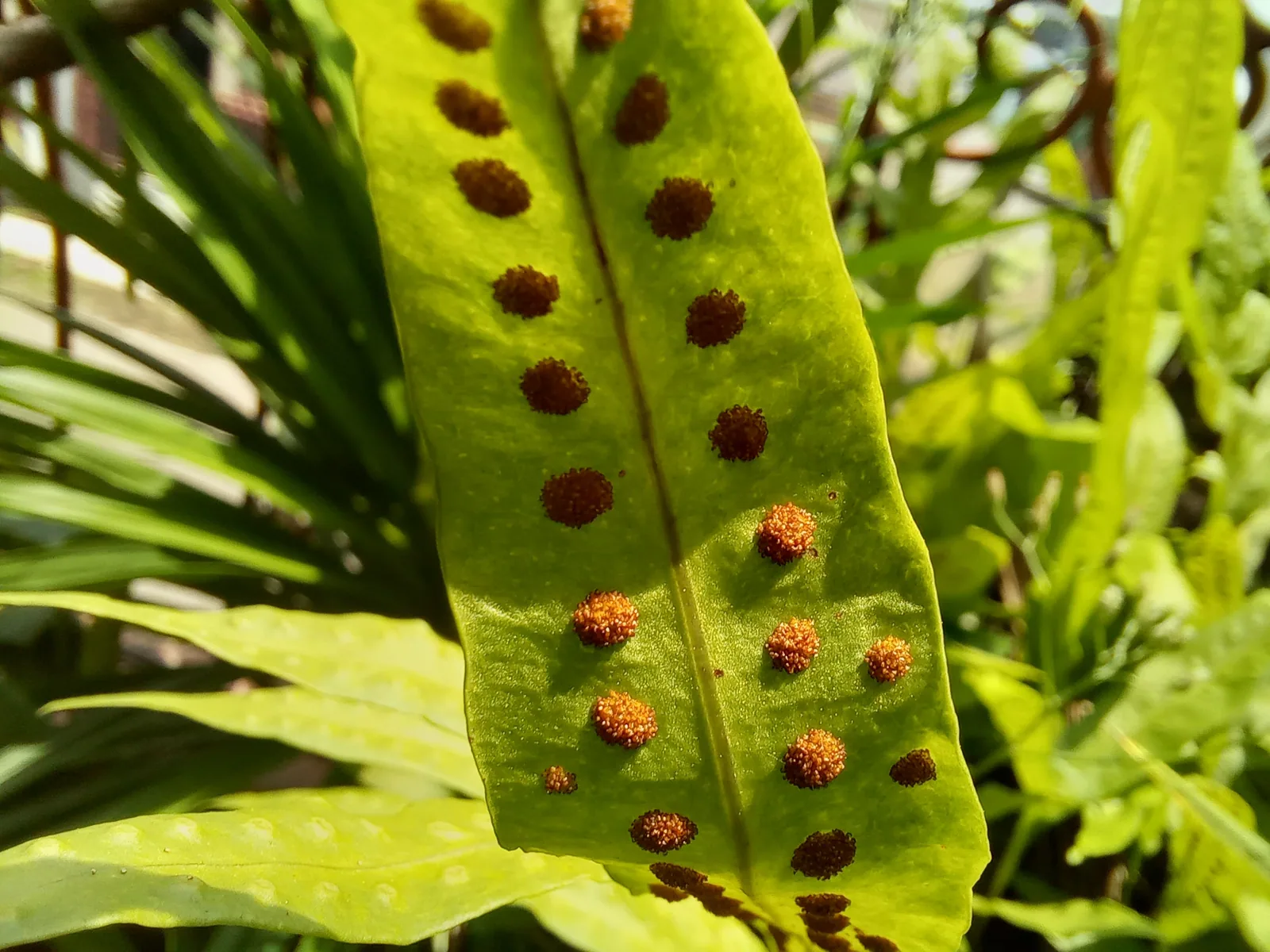
What you see with the naked eye is usually a cluster of sporangia, not individual spores. Spores are much smaller and usually need magnification to see clearly. On a fern frond, the first visible clue is often the position, shape, and pattern of the sori.
Alternation of generations: sporophyte and gametophyte
The important point in ferns is that a spore does not simply grow straight into a large fern. Ferns have alternation of generations: a sporophyte stage and a gametophyte stage alternate in the life cycle.
A simplified fern life cycle looks like this:
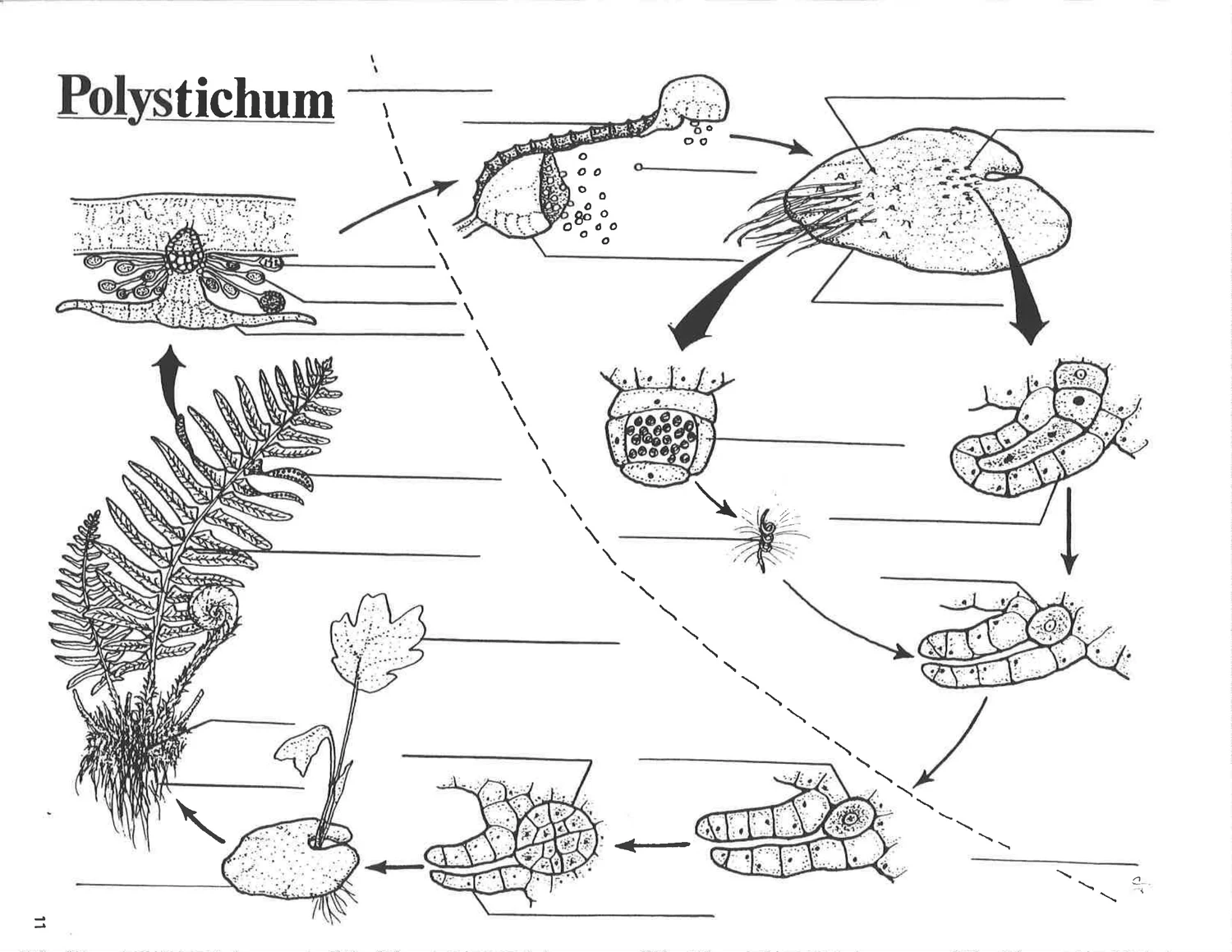
Meiosis reduces chromosome number from 2n to n, forming spores. Fertilization does the opposite: two n gametes join, making a 2n zygote. This is why spores, gametes, and seeds should not be treated as the same kind of thing. Their roles in the life cycle are different.
How does a sporangium release spores?
When fern sporangia mature, they open and release spores. Details vary among ferns, but in many leptosporangiate ferns a sporangium has a ring of thick-walled cells called an annulus. As the sporangium dries, the annulus changes shape, the capsule opens, and spores are released.
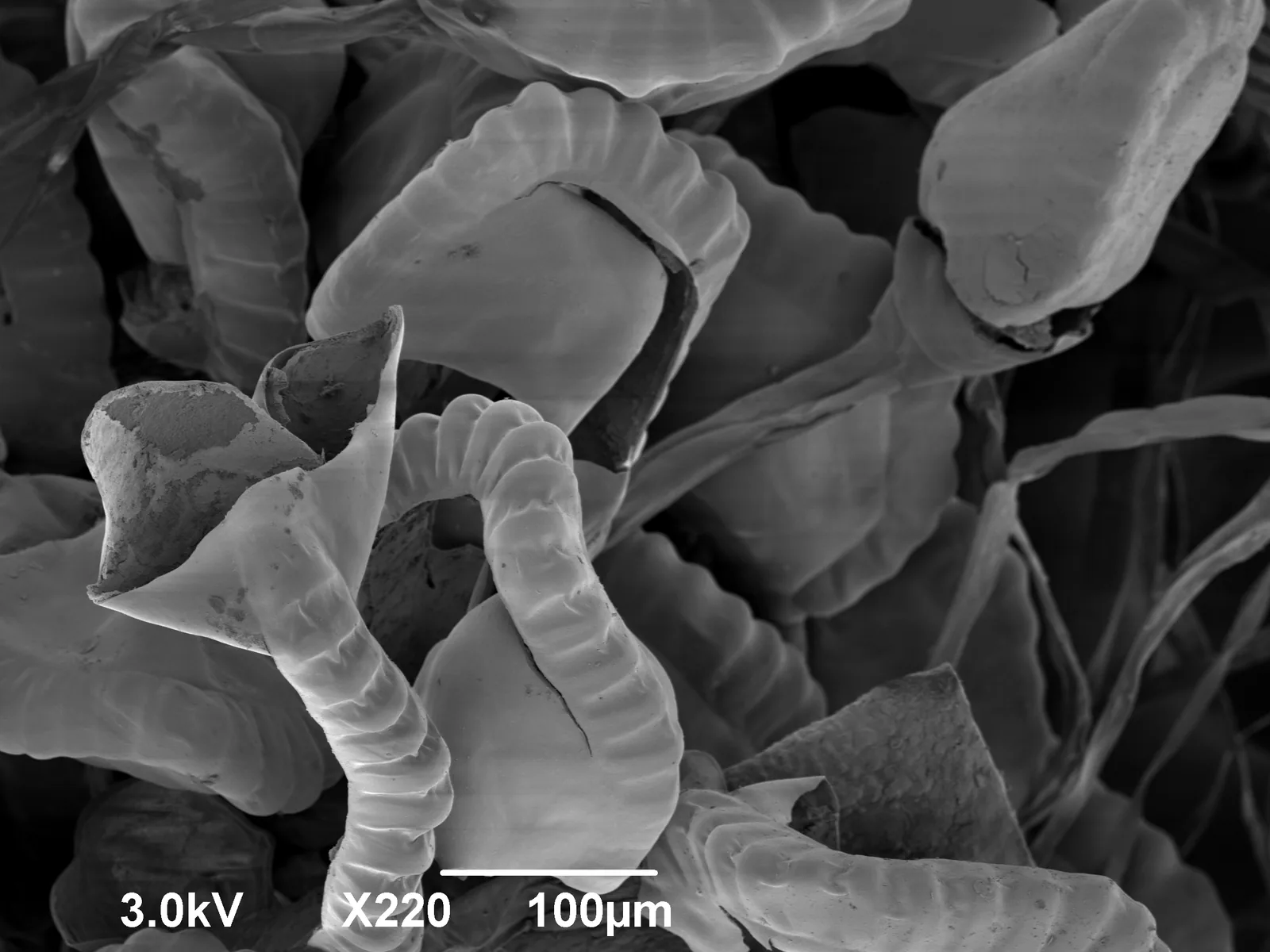
This real microscopy image is useful because spore release is not a fruit-like opening that people usually watch with the naked eye. It is a small-scale structural process in mature sporangia.
Spores and gametes are both n, but not the same
Spores and gametes are both haploid in this cycle, but they do different jobs.
A spore grows into a gametophyte. In ferns, when a spore lands in a suitable environment, it can develop into a small gametophyte. The gametophyte then produces gametes.
Gametes are the cells that take part in fertilization. Sperm cells and egg cells are gametes. When two gametes join, chromosome number returns from n + n to 2n, and a new sporophyte begins.
So “haploid” alone does not define a spore. A spore and a gamete can both be n, but a spore begins the gametophyte stage, while a gamete participates in fertilization.
How are spores different from seeds?
A seed is a structure of seed plants. It usually contains an embryo, a protective coat, and stored tissue or support for early growth. The embryo inside a seed is already the beginning of a new sporophyte.
A fern spore is not packaged that way. It is a haploid cell that first develops into a gametophyte. Only after gametes and fertilization does the life cycle return to a new diploid sporophyte. This is the real reason spores are not tiny seeds: they differ in life-cycle position, chromosome set, and developmental path.
At a more advanced level, seed plants also have spore stages. Pollen and ovule development involve microspores and megaspores. But those spores are usually retained within reproductive structures, unlike fern spores that are released from sori on frond undersides.
Mosses and ferns emphasize different generations
Mosses also produce spores, but mosses and ferns emphasize different stages. The large fern plant you notice is usually a 2n sporophyte. In many mosses, the green plant body people notice is mostly the n gametophyte, while the spore capsule growing from it belongs to the sporophyte generation.
That difference matters because alternation of generations is not only a fern topic, and not every plant makes the same generation the most visible one. Plant life cycles do not all fit the flowering-plant path of seed, seedling, flower, and fruit.
Spores, pollen, and seeds are not interchangeable
Pollen is the male gametophyte of seed plants and is involved in delivering sperm cells toward the ovule. A seed is usually a post-fertilization structure that contains an embryo. A spore is a cell produced by a sporophyte that can develop into a gametophyte.
Here is the short comparison:
| Name | Chromosome set | Role in the life cycle |
|---|---|---|
| Spore | n | Produced by the sporophyte; develops into a gametophyte |
| Gamete | n | Takes part in fertilization |
| Zygote | 2n | Forms after fertilization; develops into a new sporophyte |
| Seed | Not a single cell | Contains an embryo plus protective and storage-related structures in seed plants |
Common Mix-Ups
- ✕ A spore is just a very small seed.
- ✓ A spore is a haploid cell; a seed is a multicellular reproductive structure with an embryo and protective tissues.
- ✕ Spores and gametes are both
n, so they are the same. - ✓ A spore grows into a gametophyte; a gamete participates in fertilization.
- ✕ A fern spore directly grows into a large fern.
- ✓ A spore first grows into a gametophyte; after fertilization, a new sporophyte forms.
- ✕ The brown cluster under a fern leaf is one spore.
- ✓ The visible cluster is usually a sorus; individual spores are much smaller.
Frequently Asked Questions
What do n and 2n mean?
n means one set of chromosomes. 2n means two sets. The large fern plant is usually a 2n sporophyte, and meiosis in its sporangia produces n spores.
Why is a spore not a seed?
A spore is a haploid cell that usually grows into a gametophyte. A seed usually contains an embryo, a protective coat, and stored or supporting tissue. They are different structures in different places in the life cycle.
What are the brown dots under fern leaves?
They are often sori, clusters of sporangia. Mature sporangia release spores.
How are spores different from gametes?
A spore develops into a gametophyte. A gamete participates in fertilization. They can both be n, but their roles are different.
Do mosses have spores too?
Yes. Mosses produce spores too. In many mosses, the visible green plant body is mostly the gametophyte, unlike ferns where the familiar large plant is usually the sporophyte.
What are the brown areas on a staghorn fern frond?
Mature fertile fronds of staghorn ferns may form sori or spore-producing areas. They are part of fern reproduction, not flowers, fruits, or seeds.
Related Terms
- Spore: a haploid cell produced by a sporophyte that can develop into a gametophyte.
- Sporangium: a structure that produces spores.
- Sorus: a cluster of sporangia, often visible on fern frond undersides.
- Sporophyte: the generation that produces spores; the familiar large fern plant is usually a sporophyte.
- Gametophyte: the generation that develops from a spore and produces gametes.
- Gamete: a haploid reproductive cell involved in fertilization, such as sperm or egg.
- Meiosis: cell division that reduces chromosome number from
2nton. - Fertilization: fusion of gametes, returning chromosome number from
n + nto2n. - Alternation of generations: the life-cycle pattern in which sporophyte and gametophyte stages alternate.
Related Reading
Evidence and attribution
Sources and image rights
These sources were used to check the plant-science concepts and gardening context in this article.
View sources and further reading (8)
- openstax.org — 25 1 early plant life
- openstax.org — 25 3 bryophytes
- openstax.org — 25 4 seedless vascular plants
- openstax.org — 26 1 evolution of seed plants
- fs.usda.gov — structure.shtml
- sciencelearn.org.nz — 20 underlay of a fern
- web.extension.illinois.edu — c3facts2.html
- hort.extension.wisc.edu — staghorn fern platycerium bifurcatum
Image sources and rights
- Dennis K. Walker and students of Humboldt State University / Wikimedia Commons · CC BY-SA 4.0 — The diagram was exported from the source PDF and converted to WebP.
- Korporal / Wikimedia Commons · CC BY-SA 3.0 — The source JPEG was prepared as WebP for delivery.
- Vitaium / Wikimedia Commons · CC BY-SA 4.0 — The source JPEG was prepared as WebP for delivery.

