
How bulb plants can make new plants
Bulb plants can produce new plants from vegetative growth units formed by the parent plant. These may be underground or near-surface structures such as bulblets, cormels, stem tuber eyes, or rhizome buds; in some plants, bulbils form above ground. Another route starts with flowers, pollination, fertilization, and seeds. The first route is usually asexual reproduction; the second is sexual reproduction.
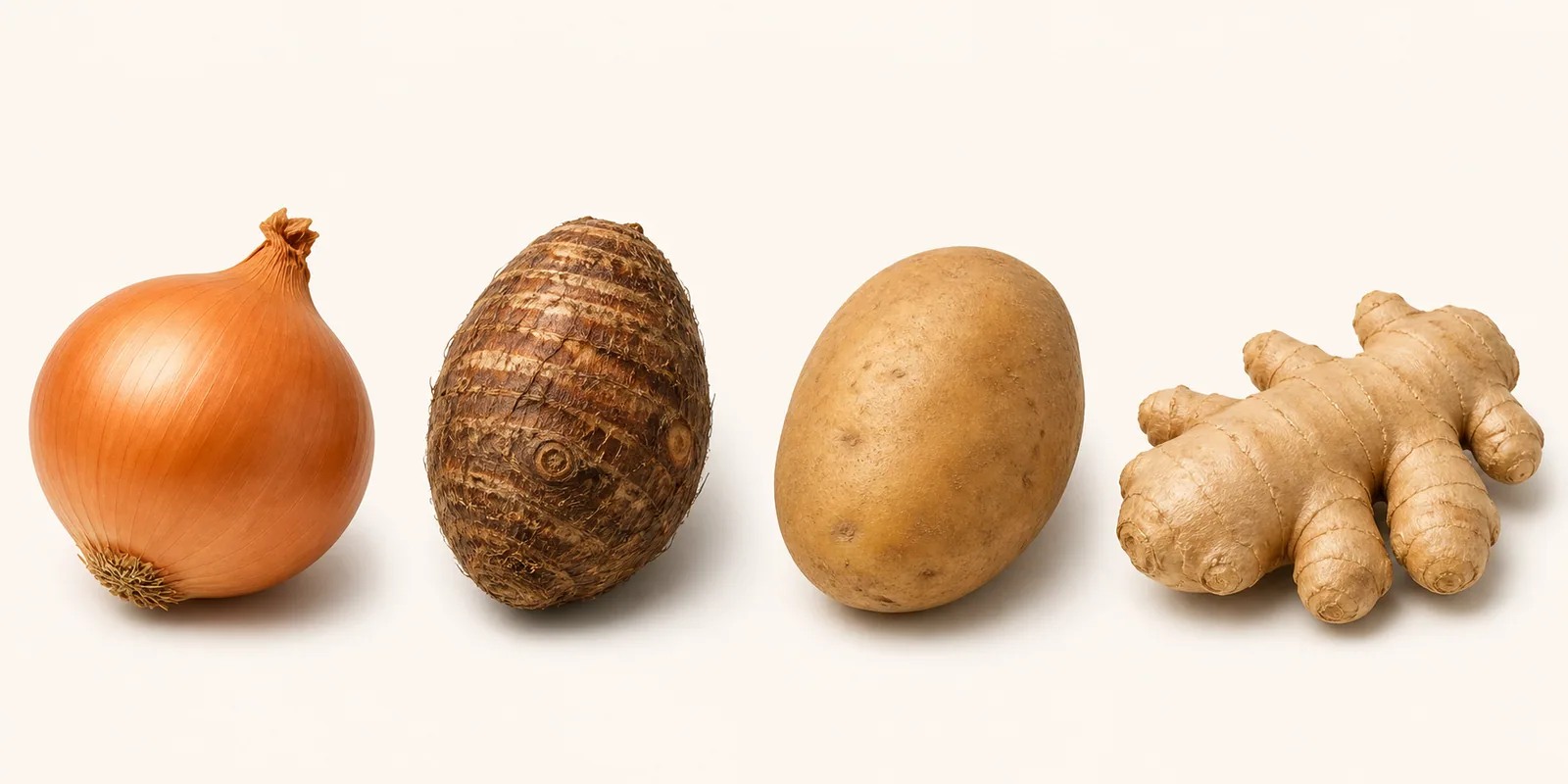
In everyday gardening, “bulb plant” is broader than the strict botanical meaning of a true bulb. Gardeners may use the term for true bulbs, corms, tubers, tuberous roots, and rhizomes. The most useful first question is therefore not “Is this technically a bulb?” but “Does this storage organ have a growth point that can continue producing a new shoot?”
Bulblets, cormels, and bulbils: new growth units from the parent plant
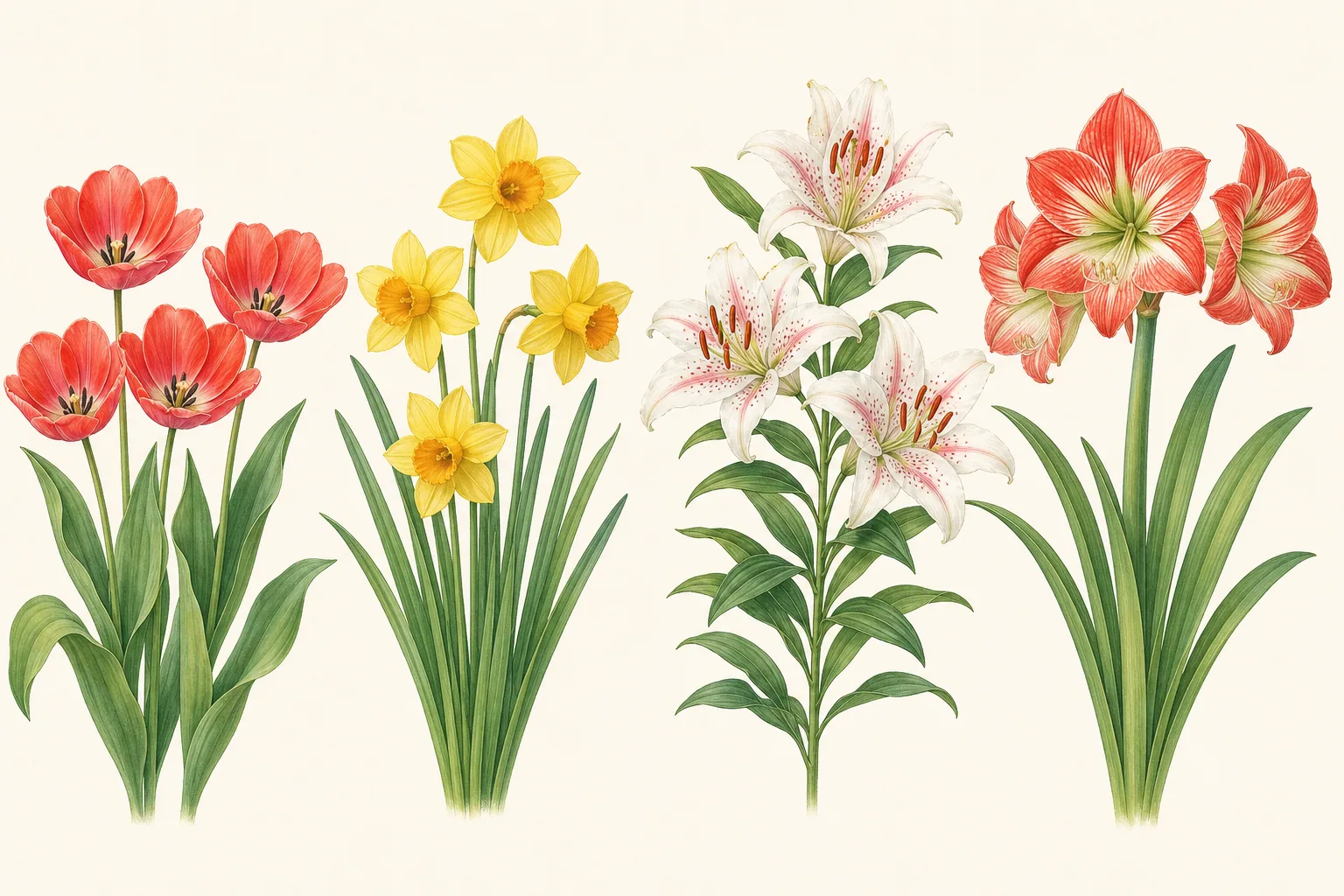
Many true bulbs form bulblets near the parent bulb’s base. A bulblet starts smaller than the parent, but it already has its own growth point and storage tissue. As it grows, it may become a separate plant that can live and grow on its own. Daffodils, tulips, and some lilies are useful examples for understanding this pattern.
A corm follows a similar reproductive idea, although its structure is different. A corm is a swollen stem base, and smaller corms called cormels may form around it. Cormels are not seeds; they are vegetative reproductive units that continue from the parent plant’s body.
Some plants also form bulbils, which are small vegetative buds above ground. In some lilies, for example, bulbils can form in leaf axils. Once mature, they may detach and later develop into new plants. This is a reminder that a new plant does not always have to begin with a flower and a seed. A small growth unit can first form on the parent plant itself.
Bulblets, cormels, and bulbils usually retain the parent plant’s main genetic traits, so they can help continue a cultivated plant’s familiar appearance. “Similar to the parent” does not mean “guaranteed to look exactly the same,” though. Plant variation and growing conditions can still produce differences among individual plants.
Eyes and rhizome buds: not every piece can grow
In some bulb plants, the important clue is not an extra small bulb beside the parent. It is a bud on the surface of a storage organ or at a stem node.
The potato is an easy example. A potato is a stem tuber, and the eyes on its surface are buds that can develop into new shoots. A rhizome is a horizontally growing underground stem. Rhizomes such as those of iris, ginger, and canna can continue growth from their nodes and buds. Roots commonly emerge from the underside of a rhizome, while buds are positioned where new stems and leaves can continue. This is one important difference between a rhizome and an ordinary root.
Simply cutting an underground organ into many pieces is not the propagation principle. Each new unit must retain a growth point and enough tissue to support early growth. The location of the growth point differs among plants, so the way people understand potato eyes cannot be applied directly to every swollen root.
Dahlias are a useful reminder. Their underground parts are mainly tuberous roots, and the buds are concentrated near the crown close to the stem base. Not every thick root that looks somewhat like a potato has buds on its surface. Similar-looking storage tissues can therefore have different ways of producing new plants.
Seeds take a different route: sexual reproduction
Many bulb plants can also reproduce from seeds. When a plant flowers and pollen and ovules take part in the reproductive process, fertilization can lead to a seed. This is a different starting point from a bulblet, cormel, tuber eye, or rhizome bud.
Seed reproduction usually recombines genetic information from the parent plants, so a seedling does not have to look exactly like the plant that produced the seed. This can create new variation, but it also means that sowing a cultivated plant’s seeds should not automatically be understood as a way to preserve every feature of that cultivar.
A bulb plant grown from seed may pass through several growth stages before it flowers. Some plants first form a small underground storage organ and flower only after that organ has accumulated enough resources. A bulblet or cormel, by contrast, already begins as a growth unit from a mature parent plant. It is continuing an existing body structure rather than beginning with a seed embryo.
Dormancy is a pause in visible growth, not automatically death
One confusing feature of bulb plants is that their leaves can disappear, making the plant look as if nothing remains underground. Some storage organs enter dormancy, a period when visible growth is temporarily reduced while the underground organ retains buds and stored resources. When the season, temperature, or other conditions become suitable, an underground bud may begin extending again.
Leaves are not only green decoration during the growing season. Through photosynthesis, they make organic materials, and some of those resources can be stored in the underground organ. The next round of leaves or flowers is therefore connected to the plant’s earlier growth. Reproduction, dormancy, and the plant life cycle are linked: new growth does not appear from nowhere, but is supported by a growth point and storage tissue working together.
What to look for in the garden
When observing a potted or garden plant, three clues can help you understand how it may be continuing its growth:
- Are small bulbs or bulb-like units appearing beside the parent plant year after year?
- Can you see buds on the surface of an underground organ or at a rhizome node?
- After the above-ground leaves die back for a time, does an intact storage organ remain underground?
These clues can suggest which reproductive route is involved, but no single outside appearance reveals the plant’s entire condition.
Common mix-ups
- ✕ Every plant called a “bulb plant” has a true bulb underground.
- ✓ “Bulb plant” is often a gardening umbrella term that can include true bulbs, corms, tubers, tuberous roots, and rhizomes. Their buds and reproductive routes are not identical.
- ✕ If an underground storage organ is cut into many pieces, every piece will grow into a new plant.
- ✓ A new unit must retain a bud or another growth point, along with enough tissue to support early growth. The important location differs among plants.
- ✕ Bulblets, cormels, bulbils, and seeds are the same kind of thing.
- ✓ Bulblets, cormels, and bulbils are vegetative units formed by the parent plant and usually represent asexual reproduction. Seeds generally form through pollen, ovules, and fertilization, so they represent sexual reproduction.
- ✕ If the leaves disappear, the underground storage organ must be dead.
- ✓ Some bulb plants let their above-ground growth pause while buds and storage tissue remain underground. Leaf loss alone cannot determine whether the plant is alive.
- ✕ Bulb plants can reproduce only through underground storage organs.
- ✓ Many bulb plants can also flower and produce seeds. Seeds and bulblets, eyes, or rhizome buds are different reproductive routes.
Frequently Asked Questions
Is reproducing from a bulblet an example of asexual reproduction?
Usually, yes. A bulblet, cormel, or rhizome segment comes from an existing vegetative organ of the parent plant and does not begin with the fusion of pollen and an ovule. The new plant usually retains the parent’s main genetic traits.
Can corms, tubers, and rhizomes all be used to make new plants?
Many types can, but the reproductive clues differ. A corm may form cormels, a tuber may produce shoots from eyes, and a rhizome may continue from nodes and buds. Being grouped under the everyday word “bulb” does not mean their structures or treatment are identical.
Why do some bulb plants keep producing more small bulbs?
The parent plant may form new vegetative growth units near its underground storage organ. These small units begin with their own storage tissue and growth point, then can gradually develop into more complete plants. The speed and location of formation vary among plants.
Can every piece with an eye grow into a plant?
No. An eye is an important clue, but a new propagation unit also needs enough tissue to support early growth. Bud position, dormancy, and growth requirements differ among plant types, so one example should not be treated as a guarantee for every plant.
Will a bulb plant grown from seed look like its parent?
Not necessarily. Seed reproduction usually recombines genetic information, so seedlings can differ from the parent plant. Bulblets, cormels, and rhizome buds are usually more genetically similar to the parent, but later appearance can still be affected by plant variation and growing conditions.
Why do some bulb plants have no leaves for a while?
Some bulb plants enter dormancy. Their above-ground growth pauses or decreases for a period while the underground organ stores resources and waits for suitable seasonal signals. The timing and conditions differ among plant types, so one dormancy schedule should not be applied to every bulb plant.
Related Terms
- Bulb plant: A gardening term for plants with underground or near-surface storage organs; it can include more than one botanical structure.
- True bulb: A shortened underground stem surrounded by fleshy scales; a true bulb can form bulblets near its base.
- Corm: A swollen stem base whose storage tissue is mainly in the stem; it may form cormels.
- Tuber: A swollen storage organ. A stem tuber such as a potato can have eyes, while a tuberous root such as a dahlia root has a different bud pattern.
- Stem tuber: A swollen underground stem; a potato’s eyes are buds that can produce new shoots.
- Tuberous root: A swollen root; in dahlias, buds are concentrated near the crown or stem end rather than across each thick root.
- Rhizome: A horizontally growing underground stem whose nodes and buds can continue new stems and leaves.
- Offset: A small vegetative unit formed beside a parent plant; in bulb plants, it may be a small bulblet.
- Bulblet: A small bulb-like vegetative unit formed beside a parent bulb and carrying a growth point.
- Bulbil: A small vegetative bud formed above ground on some plants, such as in a leaf axil.
- Vegetative propagation: A form of asexual reproduction that uses roots, stems, leaves, or specialized structures to form new plants.
- Dormancy: A period when a plant’s visible growth is reduced; an underground storage organ may still retain buds and stored resources.
Read Next
Evidence
References
These sources were used to check the plant-science concepts and gardening context in this article.