Dormancy is not death. It is a temporary pause in visible growth
Dormancy is easiest to understand this way: a plant, seed, bud, bulb, or growing point slows down obvious growth and waits until conditions are better.
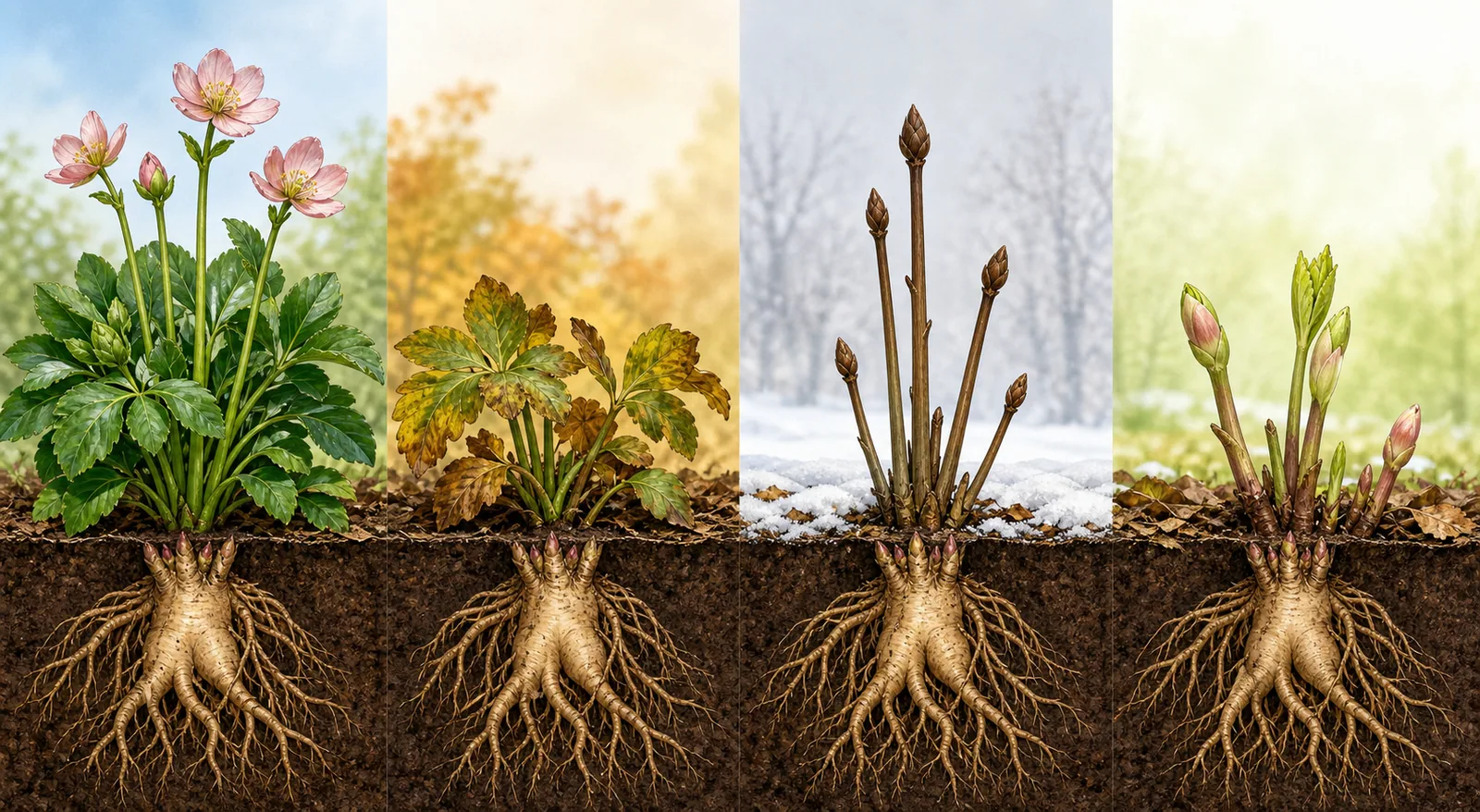
A dormant plant is not simply dead. Dead tissue cannot resume growth. A dormant bud, seed, bulb, tuber, or rhizome may still be alive. In some plants, the crown—the basal region where roots and shoots meet—may also retain living buds or growing points, even when those parts are not making new leaves, stretching new shoots, or germinating right now.
This matters because plants cannot walk away from winter, drought, short days, or other difficult conditions. If a plant keeps pushing tender new growth at the wrong time, that growth may be easily damaged. Dormancy helps the plant keep important parts alive and delay growth until the timing is safer.
Why would a plant need to pause?
Growth costs energy and resources. New leaves, shoots, roots, and flowers are not made for free. A plant needs light for photosynthesis, water, minerals, stored food, and active tissues that can support that growth.
When the outside world is unfavorable, fast growth can become risky. Tender new shoots may be more vulnerable to cold than mature stems. In a dry or cold season, producing many new leaves can also increase water stress. For seeds, sprouting too early can place a young seedling in conditions it cannot survive.
Dormancy reduces those risks. Instead of investing in new visible growth immediately, the plant protects structures that can restart growth later.
That restart is not always instant. Many plants must first come out of an internal dormant state. After that, they still need suitable temperature, moisture, light, and overall plant condition before growth becomes visible. This is why a warm day in late winter does not always make a plant “wake up” right away.
Dormancy can happen in different plant parts
Dormancy is not only “the whole plant sleeping in winter.” Different plant parts can enter a low-growth state.
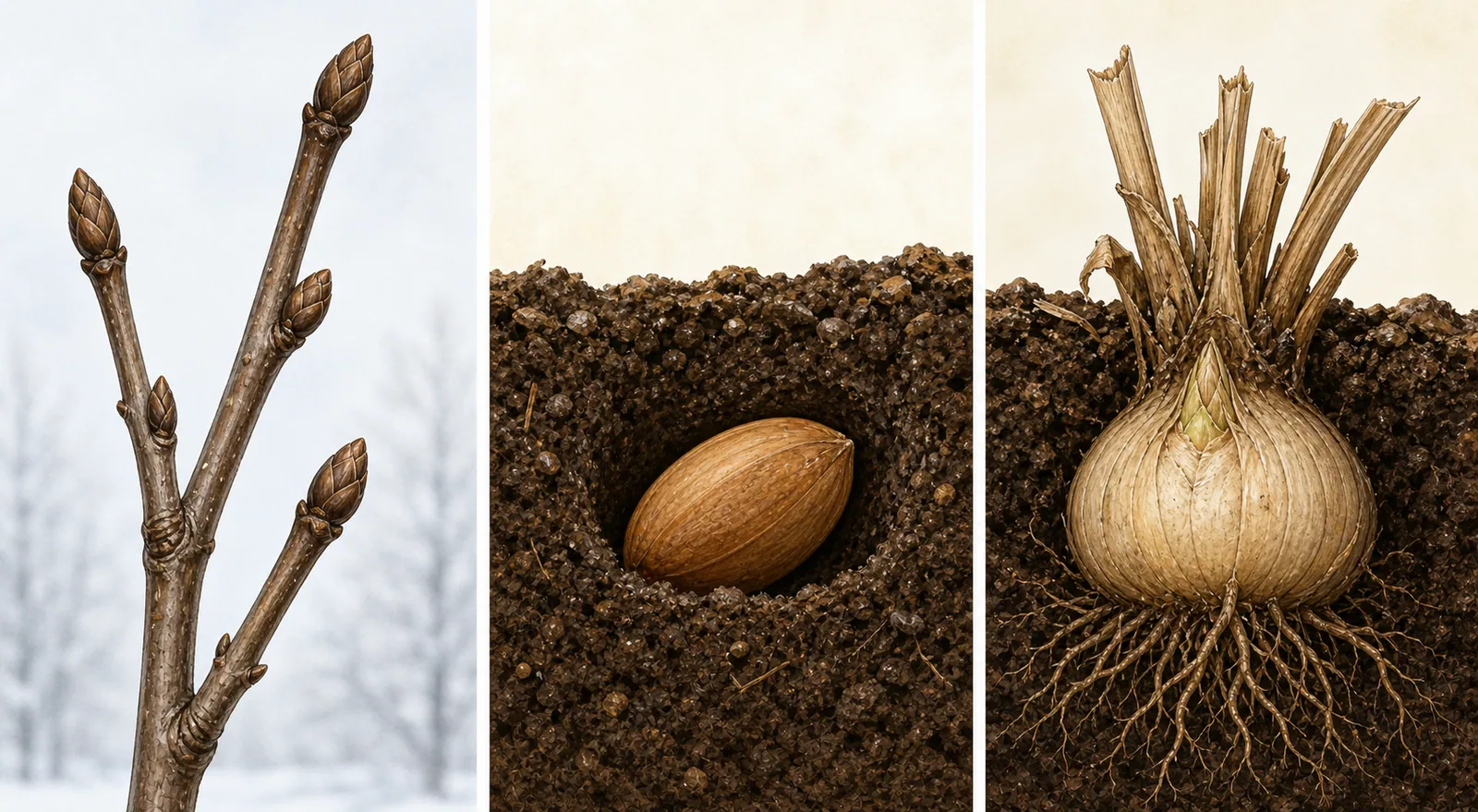
Bud dormancy is common in woody plants and many perennials. A winter branch may look bare, but small buds at the stem tip or leaf nodes can still contain future leaves, shoots, or flowers. Those buds are not expanding yet, but they can remain alive.
Seed dormancy is a different case. Some seeds do not germinate immediately even when they encounter water and a seemingly reasonable temperature. The seed coat may limit water or gas movement, the embryo may not be ready, or internal signals may still be holding germination back. This helps seeds avoid sprouting during a poor season.
Bulbs, tubers, rhizomes, and crowns can also carry plants through unfavorable periods. A plant may lose its aboveground leaves and look as if it disappeared, while underground storage organs still hold food reserves and growing points. When the next suitable season arrives, new leaves or flowers can grow from those protected parts.
These are all forms of dormancy, but they are not the same mechanism. The central idea is simple: dormancy keeps future growth possible.
Day length, cold, and internal plant signals can work together
Plants do not read calendars, but they can respond to environmental patterns. Day length, also called photoperiod, is one important seasonal signal. Shorter days and longer nights can help many temperate plants prepare for winter. Longer days and warming temperatures may help support renewed growth in spring.
Cold can also be involved. Some woody plants and perennials need a period of cool temperatures before internal dormancy is gradually released. This does not mean that every plant resumes growth after a cold period, and it does not mean cold always causes flowering. Species and cultivars differ, and conditions after the cool period still matter.
A plant’s internal signals also matter. Plant growth regulators such as abscisic acid are often discussed in relation to seed dormancy, bud dormancy, and stress responses. The important point is that dormancy is not caused by the outside environment alone. The plant’s own internal state is part of the timing system.
Dormancy, slow winter growth, and vernalization are not the same thing
Dormancy often appears in winter, but not all slow winter growth is true dormancy. Many evergreen houseplants simply grow more slowly in winter because there is less light, shorter day length, cooler rooms, or slower water use. They may still keep leaves and continue respiration, just with fewer new leaves and slower expansion.
Dormancy is also not the same as vernalization. Vernalization is the process in which some plants gain, or speed up, the ability to flower after experiencing a period of cold. It can be related to seasonal timing, but it is not identical to dormancy release.
Seed dormancy is also different from a failed seed. A dormant seed may delay germination because it has a built-in mechanism that prevents sprouting too early. A failed seed may have lost viability, or the environment may not support germination. Whether the seed is still viable and when dormancy may be released depend on the seed and its conditions.

What can gardeners observe?
When thinking about dormancy, the goal is not to force a plant awake. A better first question is whether the plant’s current appearance matches its natural seasonal rhythm.
A deciduous shrub or tree without leaves in winter is not automatically dead. Look for firm buds, flexible twigs, and gradual spring bud break. A bulb plant whose leaves have died back may still have a living underground structure. But if the underground part is rotten, badly shriveled, or foul-smelling, that is a different problem and should not be explained as dormancy alone.
For indoor potted plants, be more cautious. Some plants have clear dormancy. Others are only growing slowly. If a plant still has stable leaves but makes fewer new ones, it is usually better to describe the situation as slow growth unless the species is known for a marked dormant period.
Common mix-ups
-
✕ A dormant plant is dead.
-
✓ Dormancy means visible growth has slowed or paused while living buds, seeds, crowns, or underground organs may still remain viable.
-
✕ All plants go dormant in winter.
-
✓ Some plants have clear winter dormancy. Others, especially many tropical houseplants, may simply grow more slowly under lower light and shorter days.
-
✕ Once dormancy is released, the plant should grow fast immediately.
-
✓ Internal dormancy release is only one part of the process. Temperature, moisture, light, and plant condition still affect visible growth.
-
✕ A seed that does not germinate is always bad.
-
✓ Some seeds are dormant and delay germination. Whether a seed is still viable is a separate question.
-
✕ Vernalization is the same thing as dormancy.
-
✓ Vernalization is a cold-related process that helps some plants gain or speed up flowering ability. It can overlap with seasonal dormancy, but it is not the same concept.
FAQ
Are dormant plants dead?
Not necessarily. A dormant plant or plant part may look inactive because it is not making new leaves, shoots, roots, or flowers. But living buds, seeds, crowns, bulbs, tubers, or rhizomes can still resume growth later. The difference is that dead tissue cannot restart growth, while dormant tissue may.
Do all plants go dormant in winter?
No. Many temperate deciduous plants, bulbs, and perennials have obvious seasonal dormancy. Many tropical houseplants may only slow down in winter because light, day length, temperature, and water use have changed. The plant species matters.
Why does a plant not sprout right away when the weather gets warm?
Dormancy does not respond only to one warm day. Some plants need internal dormancy to be released first. After that, they still need suitable temperature, moisture, light, and general plant condition before buds open or shoots grow.
Is seed dormancy the same as bud dormancy?
No. Seed dormancy delays germination. Bud dormancy keeps a bud from expanding into leaves, shoots, or flowers. Both can help plants avoid poor timing, but they involve different structures and mechanisms.
Can a bulb still be alive after its leaves die back?
Yes, it can. Many bulbous or underground storage plants let aboveground leaves decline after a growth season while the underground part keeps stored resources and growing points. However, rot, severe shriveling, or injury should not be dismissed as normal dormancy.
What is the difference between dormancy and slow winter growth?
Slow winter growth is a broad observation. It can result from lower light, shorter days, cooler temperatures, and slower water use. Dormancy is a more specific low-growth state in which buds, seeds, crowns, or storage organs delay visible growth. The two can overlap, but they are not identical.
Is dormancy required before a plant can flower?
Not always. Some plants connect seasonal dormancy, cold exposure, and flowering time, but many do not follow one simple rule. Vernalization is specifically about cold helping some plants become able to flower or flower sooner; dormancy is about pausing growth until conditions and internal timing are more suitable.
Related terms
- Dormancy: a temporary state in which a plant or plant part reduces visible growth and waits for more suitable conditions.
- Bud dormancy: a state in which a bud does not yet expand into leaves, shoots, or flowers.
- Seed dormancy: a state in which a seed delays germination even when some outside conditions seem suitable.
- Bulb dormancy: a horticultural term often used for the quiet period when an underground storage organ remains while aboveground growth declines.
- Photoperiod: the length of light and darkness in a day, which plants can use as a seasonal signal.
- Crown: the basal region where a plant’s roots and shoots meet; in some plants, it may retain buds or growing points.
- Chilling requirement: the amount of cool exposure that some plants need before dormancy can be released or normal growth can resume; it varies by species, cultivar, and conditions.
- Vernalization: a cold-related process that allows or speeds flowering in some plants.
Read Next
Evidence
References
These sources were used to check the plant-science concepts and gardening context in this article.
View sources and further reading (8)
- canr.msu.edu — winter dormancy and chilling in woody plants
- blog-fruit-vegetable-ipm.extension.umn.edu — understanding dormancy and chilling.html
- openstax.org — 30 6 plant sensory systems and responses
- brahmsonline.kew.org — 13b Germination testing dormancy.pdf
- agsci.oregonstate.edu — germination seed dormancy
- extension.illinois.edu — planting bulbs
- extension.oregonstate.edu — print
- extension.umn.edu — plant winter hardy adapted varieties