Start with how the pollen moves
The difference between wind-pollinated and insect-pollinated flowers is not that one kind is “pretty” and the other is not. The main difference is the usual pollen vector. Wind-pollinated flowers release pollen into moving air. Insect-pollinated flowers usually bring insects into contact with anthers and stigmas so pollen can be carried from flower to flower.
The shared goal is still pollination: pollen reaches a stigma. Pollen drifting through the air, sitting on a petal, or sticking to an insect’s body is not the same as pollen reaching a receptive stigma. That distinction matters because pollination is only one step before possible fertilization, seed formation, and fruit development.
Wind-pollinated flowers: release pollen and catch pollen
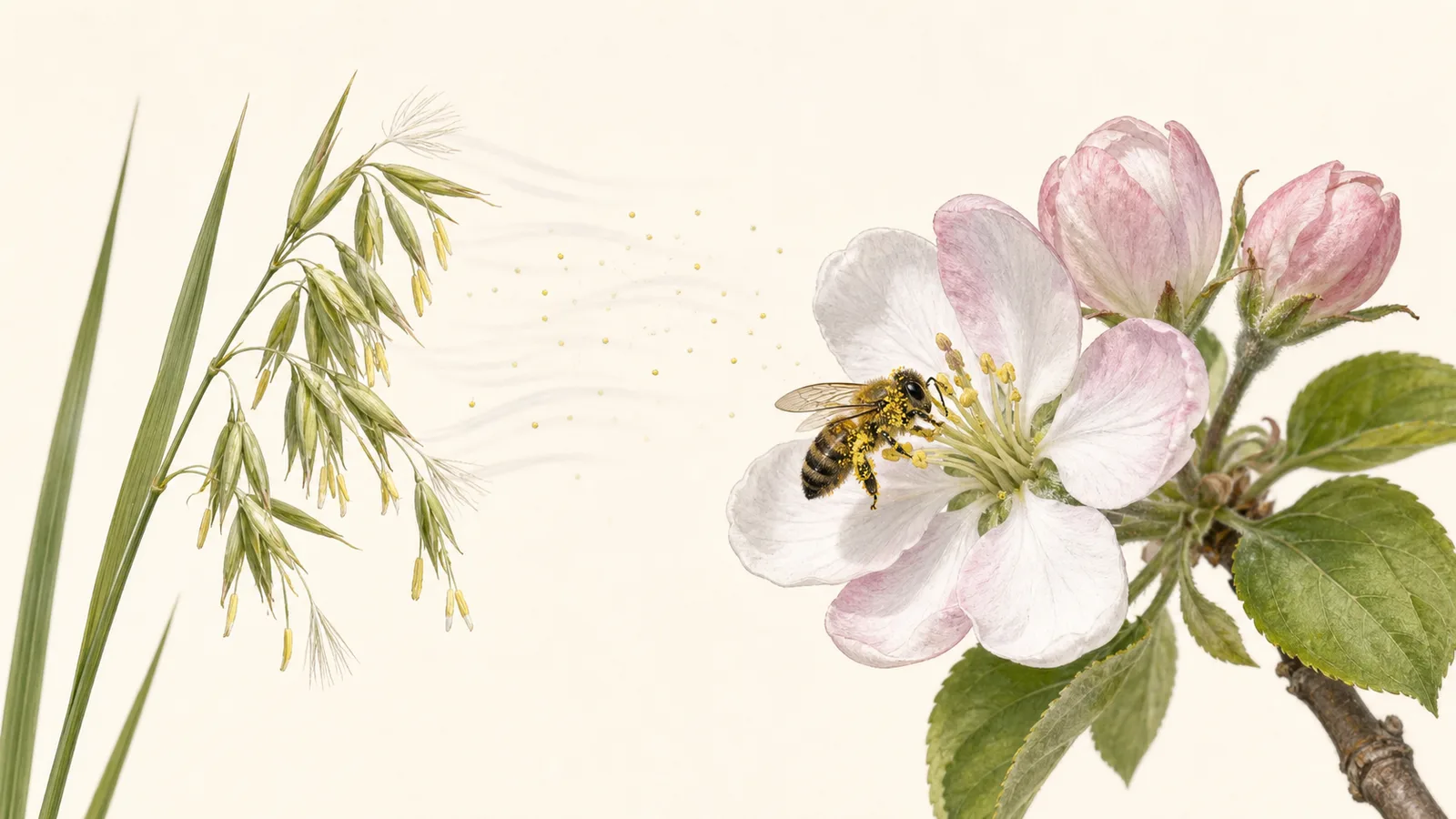
Wind-pollinated flowers often do not need large colorful petals, strong fragrance, or nectar. They are not mainly trying to attract an insect visitor. Their structure is often arranged around releasing pollen into the air and catching pollen from the air.
Many wind-pollinated flowers produce large amounts of small, light pollen. Their anthers are often exposed, sometimes hanging outside the small flowers, so air currents can carry pollen away. The receiving side may also be exposed, and the stigma may be feathery, giving it more surface area to intercept airborne pollen.
Grasses, corn, many cereal relatives, and some trees are common beginner examples. Their flowers may not look like the showy flowers people first imagine. They may be small, greenish, reduced, or clustered, but their anthers, pollen, and stigmas are still doing important reproductive work.
Insect-pollinated flowers: bring insects to the right place
Insect-pollinated flowers often invest in signals that attract or guide insects. These signals may include showy petals, color, scent, nectar, pollen rewards, landing shapes, or floral patterns.
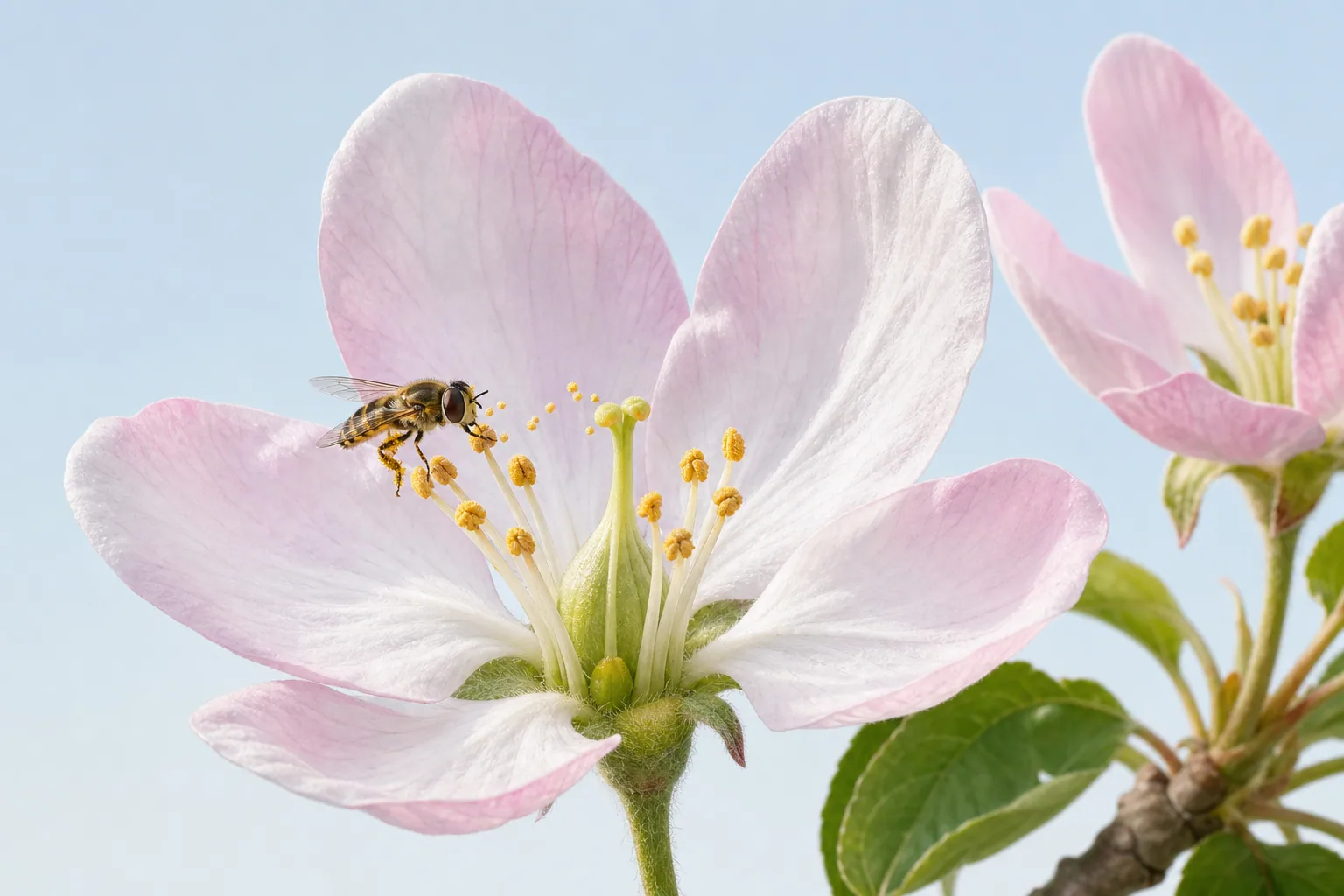
When an insect visits a flower for nectar or pollen, its body may brush against anthers and pick up pollen. When it visits another flower of the same species, some of that pollen may contact the stigma. This is why many insect-pollinated flowers position anthers and stigmas where a visitor is likely to pass.
Common tendencies side by side
| Clue | Wind-pollinated flowers often | Insect-pollinated flowers often |
|---|---|---|
| Main pollen vector | Air movement and wind | Insect body contact during visits |
| Petals and color | Small, reduced, or not showy | More often showy, colored, shaped, or patterned |
| Scent and nectar | Often little or none | May use scent, nectar, pollen, or nectar guides |
| Pollen | Often abundant, small, light, and easily airborne | Often needs to attach to visiting insects rather than drift far in air |
| Anthers and stigmas | Often exposed; stigmas may be feathery | Often placed where an insect will brush past |
| Beginner examples | Grasses, corn, many cereal crops, some trees | Many garden flowers, fruit tree flowers, cucurbit flowers, and other showy flowers |
These are useful tendencies, not strict rules. Some plants may be affected by both wind and insects. Some flowers cannot be assigned confidently by color, scent, or size alone.
Do not turn the comparison into two rigid boxes
The wind-versus-insect comparison is useful because it connects flower form with pollen movement. But real flowers do not exist to fill out a school table. Flower color, shape, scent, nectar, pollen, and stigma form can suggest likely pollen vectors, but they do not always identify the whole pollination system.
A more careful way to say it is this: certain trait combinations can make a flower better suited to certain pollen vectors. These combinations are often called pollination syndromes. They can help us form a hypothesis. For example, a small inconspicuous flower with exposed anthers and feathery stigmas may suggest wind pollination. A flower with showy petals, nectar, or a landing shape may suggest insect or other animal pollination. To confirm a particular plant, you still need species-level information or careful observation.
What to look for in a garden
When you see a flower in a garden, balcony, or field edge, ask three questions.
First, how might pollen move? If the flowers are small and not showy, with exposed anthers and stigmas, especially on grasses or grass relatives, wind pollination is a reasonable observation path. Second, does the flower show signs of attracting animals? Petals, scent, nectar, shape, and insect visits may point toward insect or animal pollination. Third, does pollen actually reach the stigma? That is the core of pollination.
These clues help you understand plant reproduction. They are not a diagnosis of fruit set. Flowers can open, wind can blow, and insects can visit, yet pollination, fertilization, and seed or fruit development may still depend on flower structure, timing, compatibility, and environment.
Common Mix-Ups
- ✕ Wind-pollinated flowers are not real flowers.
- ✓ They still have reproductive flower parts, but the petals may be small, reduced, or not visually important.
- ✕ Insect-pollinated flowers are always large, fragrant, and brightly colored.
- ✓ Many use attractive signals, but the signal may be color, scent, nectar, pollen, shape, timing, or a combination.
- ✕ An insect landing on a flower proves pollination succeeded.
- ✓ The insect has to move suitable pollen to a suitable stigma for pollination to happen.
- ✕ Wind and insect pollination are always either-or categories.
- ✓ Some plants may involve more than one pollen vector, and flower traits are often tendencies rather than absolute rules.
- ✕ Lots of pollen always means a flower is wind-pollinated.
- ✓ Abundant pollen is one clue, but anther position, stigma form, flower shape, and species information also matter.
Frequently Asked Questions
What is the biggest difference between wind-pollinated and insect-pollinated flowers?
The biggest difference is the main pollen vector. Wind-pollinated flowers mainly rely on air movement to carry pollen to stigmas. Insect-pollinated flowers mainly rely on insects brushing against anthers and stigmas while visiting flowers.
Why are wind-pollinated flowers often small and not colorful?
They are usually not investing in attracting insects. Many invest instead in exposed anthers, large amounts of light pollen, and stigmas that can intercept pollen from the air.
Do insect-pollinated flowers always have nectar?
No. Nectar is common, but flowers may also use pollen, scent, color, shape, or patterns to attract or guide insects.
What does a feathery stigma do?
A feathery stigma increases the surface available to catch pollen moving through the air. That is why it is often used as a wind-pollination clue.
Is corn wind-pollinated?
Corn is a common example for learning wind pollination. The tassel produces pollen, and pollen can move by wind to the silks associated with the female flowers. This article explains the concept only; it does not give crop management advice.
Does an insect visit mean the flower is insect-pollinated?
Not necessarily. An insect may feed, rest, or collect pollen without being an effective pollinator. The key question is whether it carries suitable pollen to a suitable stigma of the same species.
Related Terms
- Pollination: the transfer of pollen to a stigma.
- Pollen vector: the factor or organism that moves pollen, such as wind, water, insects, or other animals.
- Wind-pollinated flower: a flower whose pollen is mainly moved by wind.
- Insect-pollinated flower: a flower whose pollen is mainly moved by insects.
- Anther: the part of a stamen that produces pollen.
- Stigma: the receptive surface where pollen lands.
- Feathery stigma: a branched or hairlike stigma form that increases pollen-catching surface.
- Nectar: a sugary liquid some flowers provide to animal visitors.
- Nectar guide: a visual pattern that helps guide visitors toward the flower center or nectar.
- Pollination syndrome: a set of flower traits associated with certain pollen vectors or pollinator groups.
Read Next
Evidence
References
These sources were used to check the plant-science concepts and gardening context in this article.
View sources and further reading (7)
- fs.usda.gov — wind.shtml
- openstax.org — 32 2 pollination and fertilization
- fs.usda.gov — syndromes.shtml
- extension.missouri.edu — m402
- extension.illinois.edu — 2023 08 23 taking closer look grass pollination
- openstax.org — 14 4 seed plants angiosperms
- pure.northampton.ac.uk — a global test of the pollination syndrome hypothesis