
The Short Answer
A fruit and a seed are not the same thing. A simple way to remember the difference is this: a fruit is often the mature structure that surrounds, protects, or helps move seeds; a seed is the part that contains an embryo and can begin a new plant when conditions are suitable.
Not every seed plant produces fruit. Gymnosperms do not have an ovary enclosing their ovules, so a pine cone is not a botanical fruit. Continue with Gymnosperm vs. Angiosperm Reproduction.
In everyday speech, “fruit” often means something sweet and juicy. In botany, “fruit” is defined by its relationship to a flower, the ovary, and the seeds. That means pods, tomatoes, winged fruits, and some small dry structures can all count as fruits in a botanical sense. The seed is the part inside, or sometimes carried by the fruit, that can develop into the next generation.
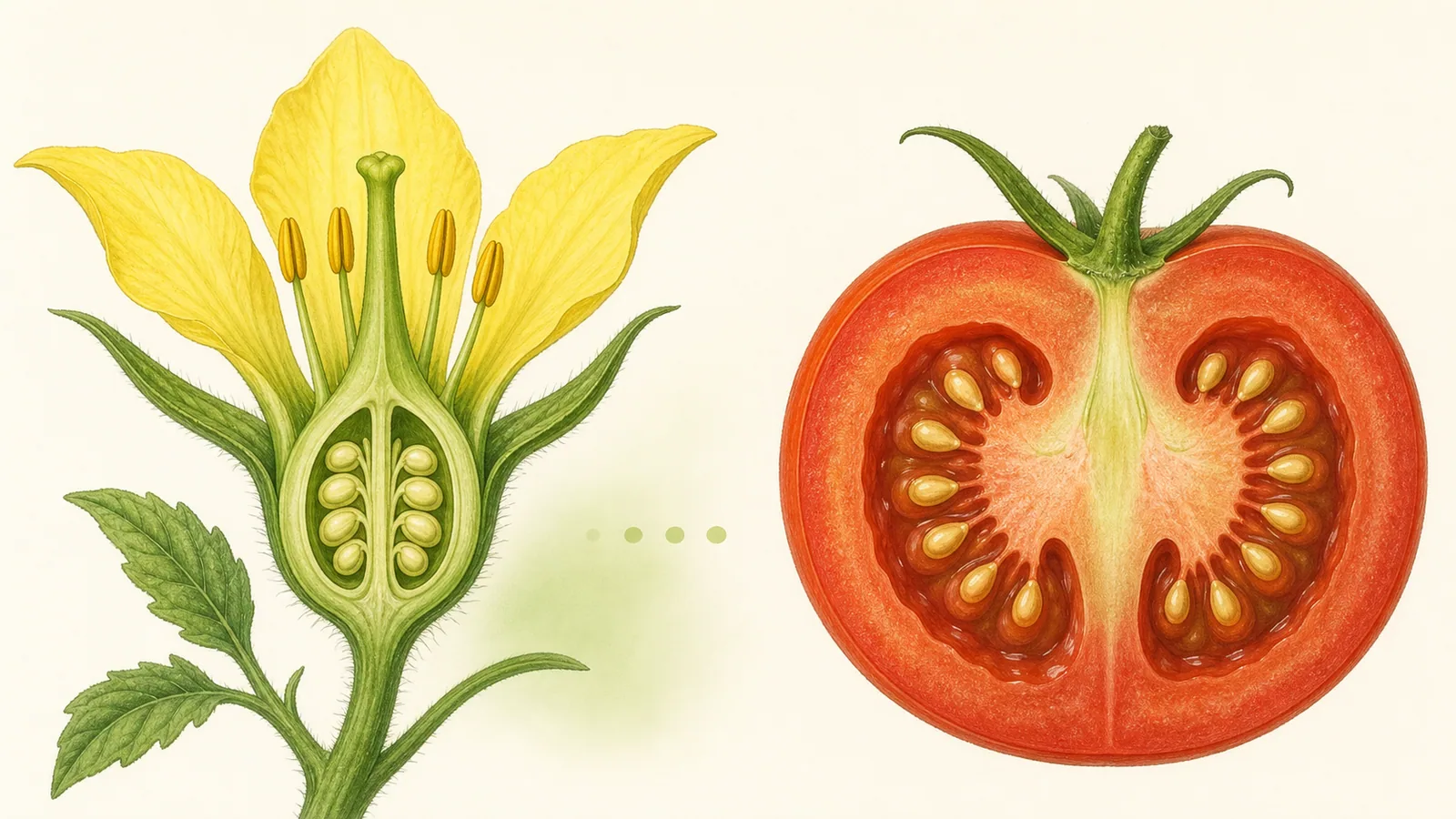
They Start from Different Places in the Flower
If we rewind to the flower stage, the distinction becomes easier to see. In many flowering plants, the center of the flower includes one or more carpels or pistils. At the base is the ovary, and inside the ovary are ovules.
After pollination and fertilization, an ovule may develop into a seed. The ovary and related tissues may develop into a fruit. In other words, fruit and seed are often two different outcomes of the same reproductive process: the ovule leads toward the seed, while the ovary leads toward the fruit.
More precisely, the ovary wall often becomes the pericarp, the fruit tissue around the seed or seeds. Some fruits also include other tissues, such as the receptacle, floral tube, or even parts of a whole flower cluster. So it is too absolute to say that every fruit is made only from the ovary. For an introductory understanding, the main pattern is enough: the seed is the core of the next generation, and the fruit is often the outer structure or dispersal aid.
Pods and Tomatoes Make the Difference Easier to See
A pod is a useful example. The whole pod is the fruit, while the individual beans inside are seeds. The pod wall surrounds the seeds, and in some plants it splits open at maturity to release them.
A tomato can also help, as long as we do not make the idea of “fruit” too narrow. The red fleshy part of a tomato is part of the fruit, and the small pieces inside are seeds. But not all botanical fruits are juicy like tomatoes. Dry pods, winged fruits, and hard small fruits can also be fruits in botany.
So the better question is not, “Does it look like a grocery-store fruit?” A better question is: did it develop from the flower’s mature ovary or related structures, and does it enclose, carry, or help disperse seeds?
What Does Each Part Do?
The main role of a seed is to serve as the starting point for a new plant. A typical seed contains an embryo, which is a very young plant in an early stage. It also has a seed coat for protection. Some seeds contain endosperm or other stored tissues that help support early germination.
The main roles of a fruit are covering, protection, and dispersal. Before seeds mature, fruit tissue can reduce direct exposure. After maturity, the form of the fruit may help seeds move away from the parent plant. Some fruits attract animals that carry seeds. Some dry and split open. Others have wings or hairs that make wind movement easier.
This is why fruits and seeds often appear together but should not be treated as the same plant part. The seed is like the next generation’s core; the fruit is often the structure that surrounds it or helps carry it onward.
Not Every Example Is Simple
Real plants are more varied than an introductory diagram can show. Some fruits contain one seed; others contain many. Some fruits develop mainly from the ovary, while others include additional floral tissues.
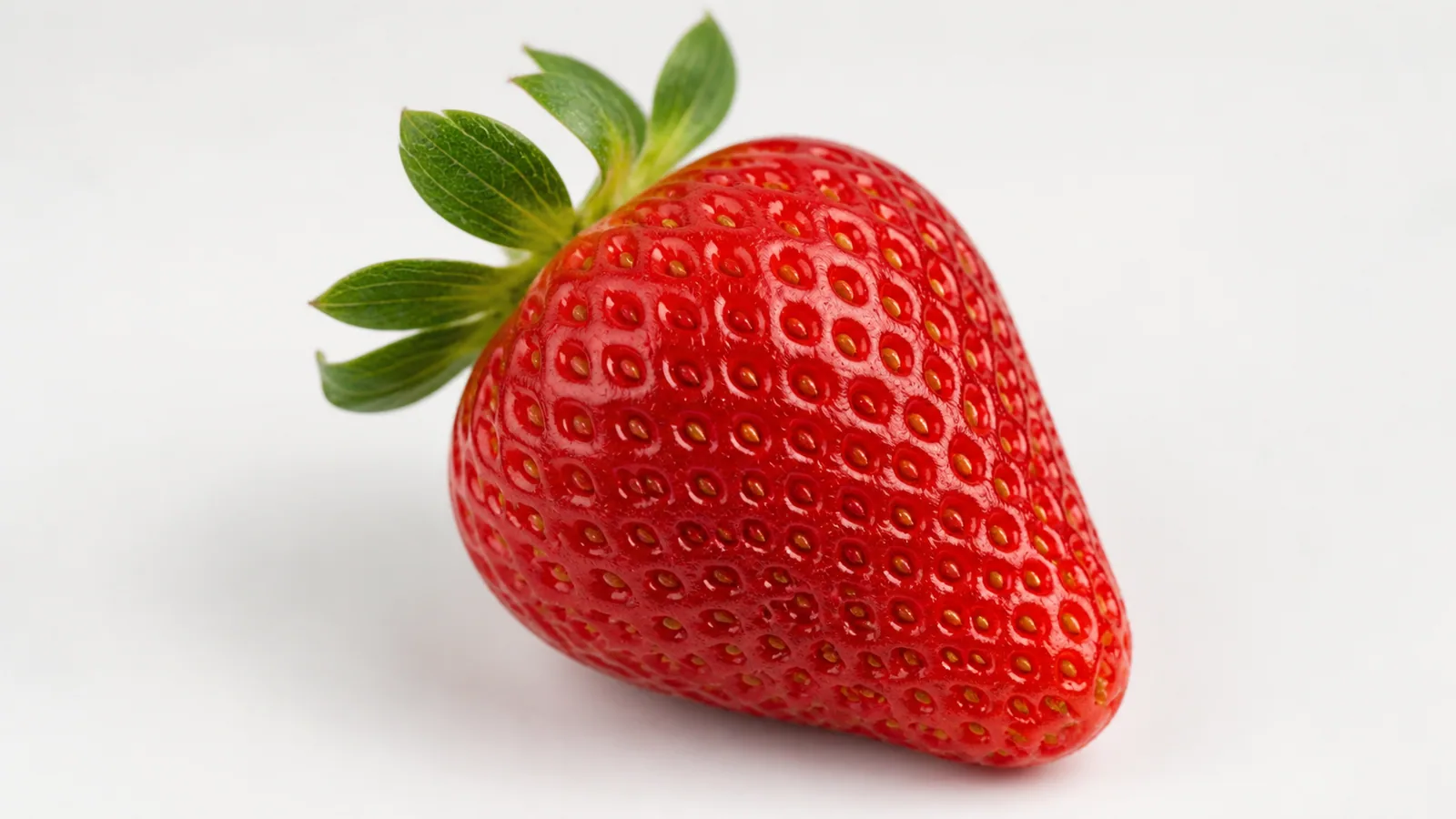
Strawberry is a common advanced example. The red fleshy part we usually notice is mainly an enlarged receptacle. The small dots on the surface are actually tiny achenes, and each achene contains a seed.
You do not need to memorize every exception at the beginning. The important lesson is that botanical classification depends on where a structure comes from, not on how people usually name it in the kitchen or at the table.
How to Observe This in Potted Plants and Schoolyard Plants
When observing a flowering plant, look at the base of a flower after the petals fade. Does that area slowly swell? If so, the ovary or related structures may be developing toward a fruit. When the fruit matures, you can look for seeds inside, or notice whether the fruit dries, splits, is carried by animals, moves by wind, or falls by gravity.
However, flowering does not guarantee a mature fruit. Pollination, fertilization, plant species, plant condition, and environment can all affect what happens next. This article is only about observing plant structures. It does not provide artificial pollination instructions, yield-improvement methods, harvest guidance, or cultivation prescriptions.
Common Mix-Ups
- ✕ A fruit is the same thing as a seed.
- ✓ A fruit is often the mature structure that surrounds or carries seeds; a seed is the part that can begin a new plant.
- ✕ A fruit must be sweet, juicy, and edible.
- ✓ A botanical fruit may be dry, hard, tiny, or very different from everyday fruit categories.
- ✕ The beans inside a pod are the whole fruit.
- ✓ The whole pod is the fruit; the beans inside are seeds.
- ✕ All fruits form only from the ovary.
- ✓ Many beginner examples can be understood through the ovary, but some fruits also include other floral or inflorescence tissues.
FAQ
What is the simplest difference between a fruit and a seed?
A seed is the starting point of a new plant and usually contains an embryo. A fruit is often the mature structure that surrounds, protects, or helps disperse seeds. Put simply, the seed is the next generation’s core, while the fruit is often the outer structure or transport aid.
Is a pod a fruit or a seed?
The whole pod is the fruit, and the individual beans inside are seeds. The pod wall encloses the seeds, and in some plants it splits open when mature, releasing them.
Why is a tomato a fruit in botany?
Botany focuses on structure and origin. A tomato develops from the flower’s ovary and related tissues, and the mature structure contains seeds. That makes it a useful example of a botanical fruit. This is separate from how people use or classify tomatoes in cooking.
Are seeds always inside fruits?
In flowering plants, seeds usually develop in relation to fruits and are often enclosed or carried by them. But fruit forms vary widely. Seed number, seed position, and how obvious the seeds are can differ from plant to plant.
Why can one fruit contain many seeds?
Because the ovary may contain many ovules. After fertilization, multiple ovules may develop into multiple seeds. Different plant species have different numbers of ovules, so the number of seeds in a fruit also varies.
Are the small dots on a strawberry seeds?
Strictly speaking, the small dots on the surface of a strawberry are usually tiny achenes, and each achene contains a seed. The red fleshy part is mainly an enlarged receptacle. This advanced example shows why everyday fruit names do not always match a single botanical fruit structure.
Related Terms
- Fruit: In flowering plants, a structure often formed from a mature ovary and related tissues, usually surrounding or carrying seeds.
- Seed: A structure that develops from a fertilized ovule and usually contains an embryo; it is the starting point for a new plant.
- Ovary: The basal part of a carpel or pistil that contains ovules.
- Ovule: A structure that may develop into a seed after fertilization.
- Pericarp: The fruit wall, often formed from the ovary wall, surrounding the seed or seeds.
- Embryo: The young plant inside a seed.
- Seed coat: The protective outer layer of a seed.
- Accessory fruit: A fruit or fruit-like structure that includes tissues beyond the ovary, such as the receptacle.
Related Reading
Evidence
References
These sources were used to check the plant-science concepts and gardening context in this article.