
Two marigolds may look much alike, yet one flowers earlier while the other stays shorter. Does that prove one cultivar is better? Not by itself. A cultivar trial begins with a clear question, then compares selected traits using the same recording approach. Its results only indicate which traits differed at the recorded site, in that season, and under those trial conditions.
Start by deciding what to compare
A trait is a plant feature that can be described or measured. First, decide which trait you want to compare; that choice determines what to observe and how to record it. A trial might record plant height, growth habit, leaf appearance, flower color, flowering time, number of flowers, or how uniform the plants look. Ornamental trials may also note vigor and flowering performance. There is no fixed list that suits every plant or purpose. Uniformity is an observed trait; giving the different cultivars the same care is part of the comparison procedure.
For example, a trial about leaf shape needs a consistent way to describe leaves, while a trial about flowering time needs a consistent way to record when flowering begins. First, it helps to distinguish plant species, varieties, and cultivars. You can also read about how parent plants relate to hybrid traits: a cultivar’s name does not tell you which traits a particular trial measured.
Keep comparison conditions clear, and account for plot position
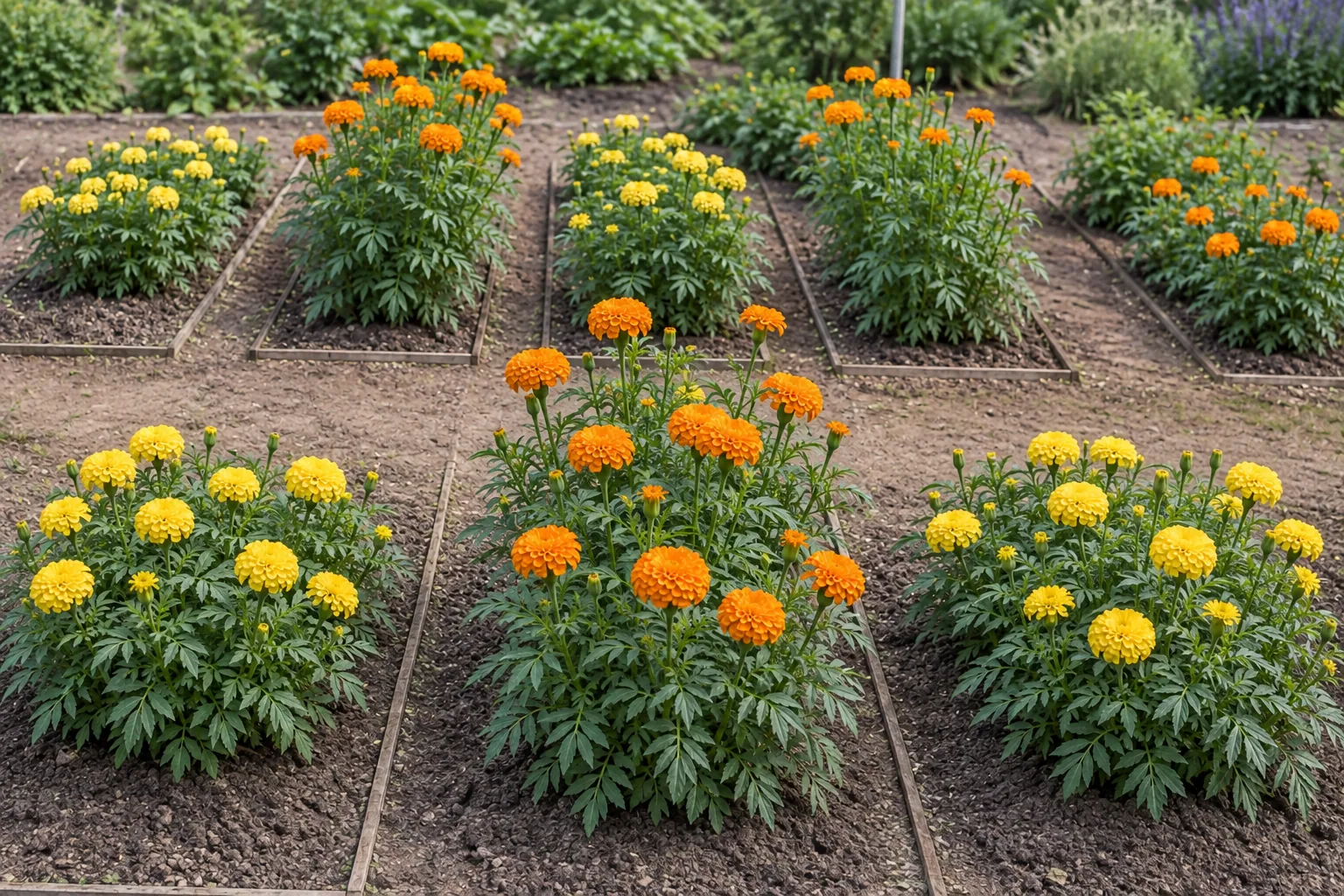
Different cultivars are usually managed and observed according to the same rules—for example, starting at the same time and using the same recording method. Trial records should also identify the site and season. Consistent rules make the comparison easier to interpret, though soil, light, weather, and plot position may still affect plant performance.
In field trials, researchers may grow each cultivar in several plots and randomly assign positions within each block. Replication means repeating each cultivar in multiple independent experimental units, such as separate plots. The plot receiving the cultivar is the experimental unit; sampling several plants within one plot does not automatically create several independent replicates. A block groups plots that may be affected by similar site conditions. Replication and varied placement can help minimize the influence of site differences on comparison results.
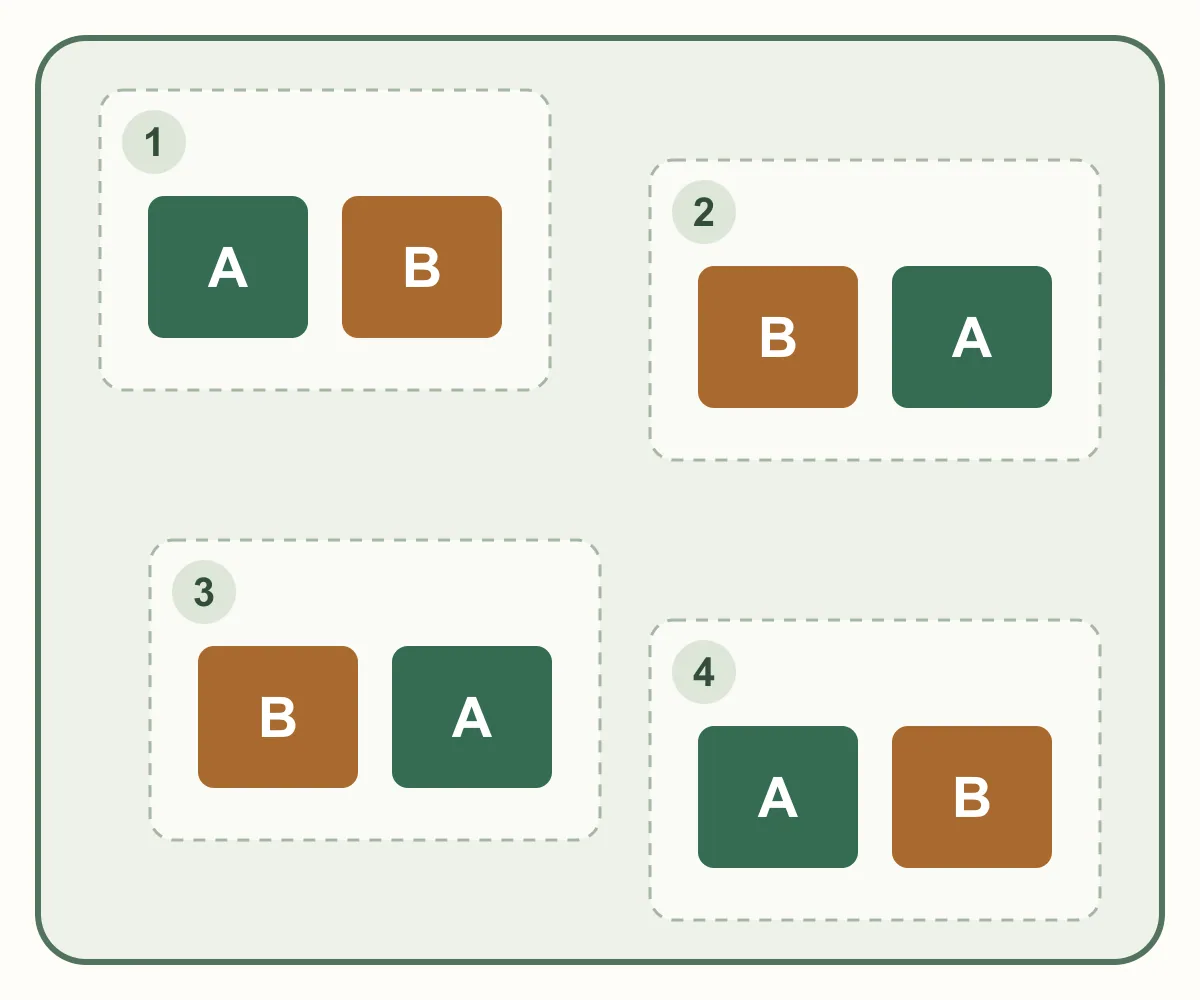
Replicated plots and repeated observations are different. Returning to the same plant at intervals to record when it flowers or how its form changes tracks change over time. Observing separate experimental units or plots can show differences among units or plot positions. Several plants sampled within one plot are subsamples of the same experimental unit, and repeated observations of one plant track that plant over time; neither creates independent plot-level replicates.
Plant performance can change with the environment
A plant’s visible performance depends on more than its cultivar. Light, temperature, water, and growing-medium conditions can interact with inherited differences. For more on environmental conditions, see how indoor and outdoor light differ and why plant growth can slow under stress.
The same cultivar can look different at two sites. Different cultivars can also respond differently to the same environmental change, sometimes changing their relative ranking. Plant scientists call this a genotype-by-environment interaction. That is why trial results should be read together with the site, season, and traits that were recorded, rather than treating one number as an answer for every place.
Flowering time, for instance, reflects plant development as well as environmental conditions; learn more about why plants flower. Visible leaf differences can also be a trial question, as explained in why plants have different leaf shapes. These basics help explain what a trial observes, but they do not replace records of the conditions under which it took place.
How do cultivar trials contribute to plant breeding?
In plant breeding and selection, researchers evaluate candidate lines—breeding materials still under assessment—against established cultivars used as checks for traits tied to a breeding goal. If the goal is a shorter growth habit or earlier flowering, those are traits to measure. Testing promising lines at relevant sites or in different seasons can show which traits are more consistent and which change with the environment, helping breeders decide which lines to retain for further evaluation.
When reading a trial report, ask what question it answers
Look for four things in a cultivar trial report:
- What was observed? Height, flower color, and flowering time are different traits; they should not be collapsed into a vague judgment of which plant is “better.”
- Where and when was it observed? The site and season help define where the results may apply.
- How were the cultivars compared? Check whether the report describes observation methods, replication, or how the data were analyzed.
- What does the numerical difference mean? Different numbers do not automatically show a reliable difference. Trial variation and the statistical analysis also matter.
A result from one site or one season describes relative performance under those conditions. More sites or years add information about environmental variation, but conclusions still cover only the conditions actually tested. A trial report is not a universal ranking.
Common points of confusion
- ✕ The cultivar that was tallest in one observation is best everywhere.
- ✓ Interpret results alongside the site, season, measured traits, and trial data.
- ✕ Recording the same plant many times is equivalent to testing many plants.
- ✓ Repeated records show change over time; separate experimental units provide independent replicates. Several plants sampled within one plot do not automatically count as several independent replicates.
- ✕ A cultivar trial compares only flower color or one number.
- ✓ A trial starts with a question, then selects suitable traits and recording methods.
- ✕ Giving every cultivar the same care removes all environmental differences.
- ✓ Consistent rules make the comparison clearer, but site and seasonal effects may remain.
Frequently asked questions
Do cultivar trials compare yield only?
No. The trial’s purpose determines what it observes. An ornamental trial might record plant appearance, uniformity, flower color, or flowering. Other trials may compare other traits. No single list applies to every plant.
Why should different cultivars be observed in the same way?
If one cultivar is observed for longer, or the recording method changes, the results are harder to compare directly. Consistent observation rules make differences easier to interpret, but they do not remove effects from soil, weather, or plot position.
Why use replicated trial plots?
Including the same cultivar in multiple independent plots lets researchers assess variation associated with trial units and site position. Several sampled plants within one plot do not replace independent replicates. The number and arrangement of plots depend on the research question.
If a cultivar performs well at one site, will it do just as well elsewhere?
Not necessarily. Light, temperature, soil, and other conditions may differ from place to place, and cultivars may respond differently. Results from one site and season describe only that observed setting.
If the numbers in a report differ, does that mean one cultivar is better?
Not necessarily. The difference may reflect trial variation, so the replication and statistical analysis matter. Even when there is good evidence of a difference, it applies to the measured trait and the conditions tested.
Related terms
- Cultivar trial / variety trial: A comparison of different cultivars for specified traits under described conditions. “Variety trial” is common in crop extension; “cultivar trial” is often more precise in ornamental horticulture.
- Trait: A plant feature that can be described or measured, such as height, leaf appearance, flower color, or flowering time.
- Trial environment: The site, season, weather, soil, and other relevant conditions during observation.
- Replication: Repeating a cultivar across multiple independent experimental units, such as separate plots.
- Block: A group of plots that may share similar site conditions.
- Genotype-by-environment interaction (G×E): Different cultivars respond differently to environmental changes, so their relative performance may shift with conditions.
Read next
Evidence and attribution
Sources and image rights
These sources were used to check the plant-science concepts and gardening context in this article.
View sources and further reading (7)
- extension.umd.edu — what do numbers really mean interpreting variety trial results fs 1119
- ask.ifas.ufl.edu — AG447
- flowertrials.colostate.edu — about us
- pmc.ncbi.nlm.nih.gov — PMC3594989
- plants.ces.ncsu.edu — tagetes
- iastate.pressbooks.pub — the process of cultivar development pure line variety
- news.irri.org — 2024 onericeph crop tour understanding.html
Image sources and rights
- Plant Note project-made image · Created by Plant Note; no third-party image license applies — The project-made SVG was adapted as WebP for delivery.